
Written by Wasiq Silan.
Image credit: Wasiq Silan.
In the month I relocated to Taiwan and started my new position as an Assistant Professor at the National Dong Hwa University, I was invited to share my perspectives on decolonising Taiwan’s multiculturalism. The following question was posed to me, “How can Indigenous cultural perspectives be genuinely integrated into long-term care policies beyond merely advocating for multiculturalism on a superficial level?” While I strongly agree with the critical perspective, the term ‘integrating’ made me pause. Is it really possible to integrate Indigenous practice and ways of knowing in the existing policy framework?
One week prior to this invitation, I had the privilege to participate in a book launch where Prof. Fikret Berkes’s seminal book Sacred Ecology, which finally got a Mandarin Chinese version. In the discussion, Prof. Berkes pointed out that in the field of traditional ecological knowledge (TEK) and Indigenous knowledge, when it comes to resource management, the terms braiding (as in Robin Wall Kimmerer’s Braiding Sweetgrass) and weaving (as advocated by Margaréta Hanna Pintér) are more accurate than integrating, as it is not possible to fully integrate the two knowledge systems due to power imbalance and structural barriers. In contrast to the concept of “integrating,” which emphasises the assimilation of Indigenous knowledge into the existing colonial governance system, the concepts of braiding/weaving center Indigenous onto-epistemologies, aiming for transformative approaches to redress entrenched power imbalances. This critical awareness of terminology was echoed by Paiwan researcher Tjuku Ruljigaljig, who has been conducting Paiwan’s TEK in post-disaster management for more than a decade. Similar awareness is also needed when discussing Indigenous knowledge of care and the social policy framework in Taiwan. I argue that the idea of integrating Indigenous perspectives in any policy system in the guise of multiculturalism, including care, is not possible without a thorough restructuring of power.
The power imbalance is most evident in the process of othering. Imperialism and colonialism frame our experience as Indigenous peoples, and the process is still continuing in how we understand ourselves, our ways of life, living and livelihood, and care. Over the past hundreds of years, settlers have gradually subjugated the Indigenous peoples in Taiwan and made us into “the Others”, the uncivilised and dispossessed primitives, as one of many examples (Wu Hao-Jen’s 2019 book is a must-read). Meanwhile, colonialism traumatises the Indigenous peoples deeply; it succeeded by relocating and separating us from ancestral lands, suppressing our languages, dehumanising our ways of being and stigmatising our ways of knowing, all of which contribute to the theft of our sovereignty. Under the gaze of colonial apparatus, we were disqualified from humanity itself. Settlers created themselves as the saviour as they ascended and “granted” us “civilisation” by imposing their education, language, religion, buildings, agricultural trainings and societal institutions. The struggle to reclaim humanity—to regain autonomy and self-determination—has been key to healing from the wounds caused by the colonial past and present. Healing means giving power and voice to the community and privileging Indigenous tribal knowledges. Ultimately, we envision living in a world where indigenous societies are recovered, and our intellects and the beauty of our knowledges are revitalised and re-valued.
One of the colonial narratives to push us into “the Others” was that we did not have the intelligence to use land, nor were we capable of managing resources so to live a sustainable life. Under the code of colonialism, we are pushed into the category of secluded, backward and not-enough-civilised through the State’s resource management and land policies. The binary grammar of coloniser and colonised is inextricably entrenched in the basis of the state-indigenous relationship in Taiwan. The colonial grammar made out Indigenous peoples as “volatile and aggressive monsters” when it came to high-altitude agriculture and romanticised us as the deeply spiritual “guardians of the mountains”. This reflects the imbalanced power relations that permeate the conditions between Taiwan and the Indigenous peoples, which has a profound impact on the development of contemporary indigenous societies today. Let us turn the discussion into care for the elders.
Taiwan’s long-term care (LTC) system for the Indigenous elderly is built on a simplistic hierarchical manner; to put it bluntly, “the state generously helps the Indigenous areas in need” scenario. The divide between the state and the Indigenous peoples are antagonised into “the Center”, where the care resource is abundant, and “the Outside/periphery”, where the resource is depleted. Yet this perspective fails to challenge the power imbalance, injustice and coloniality that are perpetuated in the dynamics between the Indigenous peoples and the state. The resource distribution of the LTC system in Taiwan was based upon neoliberalism and managerialism, which effectively excluded indigenous peoples from participating in the delivery process. Traditional collective care of indigenous people is dismantled and replaced by commodified care (Wang & Yang, 2017). What’s worse, receiving care means the Indigenous peoples become regulated under the gaze of Han Chinese culture, which further stigmatises Indigenous people’s culture and even continues to assimilate Indigenous peoples into the dominant society. The problem has its roots in the oblivion of Taiwan towards its own colonial history and the LTC design that consolidates marginalisation perpetrated against Indigenous Peoples.
Indeed, the establishment of the Council of Indigenous Peoples (CIP) within the central government in 1996 marked the start of inserting Indigenous perspectives into the policy making of Taiwan. However, instead of attempting to build a separate welfare system for the Indigenous peoples in Taiwan, CIP adopted add-on policies that focused on cash benefits, which failed to reflect the indigenous worldview and, therefore, did not alleviate the root of the problem. The only exceptions are the Day Clubs for the Indigenous elderly and Indigenous Family Service Centers. CIP organised them and viewed them as the main social services for and by the Indigenous peoples. However, these services are severely impeded due to irregular and limited funding. CIP’s failure reflects the fundamental flaw in Taiwan’s recognition politics. As its mandate and monetary resources have been minimised, CIP’s role within the governmental structure has been merely symbolic. CIP has been unable to provide an alternative welfare discourse and to define care based on an indigenous worldview that reflects indigenous cultures. Instead, CIP is only capable of emulating the mainstream welfare logic, i.e., adding on cash benefits as the form of indigenous welfare it advocates. This is the colonial presence that Taiwan Indigenous peoples are facing today.
Paying lip service to Indigenous perspectives won’t fix any problem, and raising the flag of multiculturalism will not help either. Our path forward lies in the commitment to decolonising methodologies and re-centering of Indigenous onto-epistemologies. Drawing on my own home-coming experience and multiple years of ethnographic research among the Tayal people in my grandmother’s community, I argue that Tayal epistemology, such as Gaga, continues to be at the centre of Tayal’s knowledge system, and it continues to play a central role in defining who the Tayal are. The same goes with LTC. For the bnkis, Tayal elders, care is more than just a means to an end: it is instead an indispensable process in itself. Mqyanux (to live) simultaneously entails the crucial elements of care/living well, including responsibility and reciprocity through continuous everyday practice such as sharing, story-telling and reclaiming qnxan na Gaga (culture). In other words, care is broad-based and holistic, encompassing a return of our land, relations between people and cosmos, ecologies, language and culture.
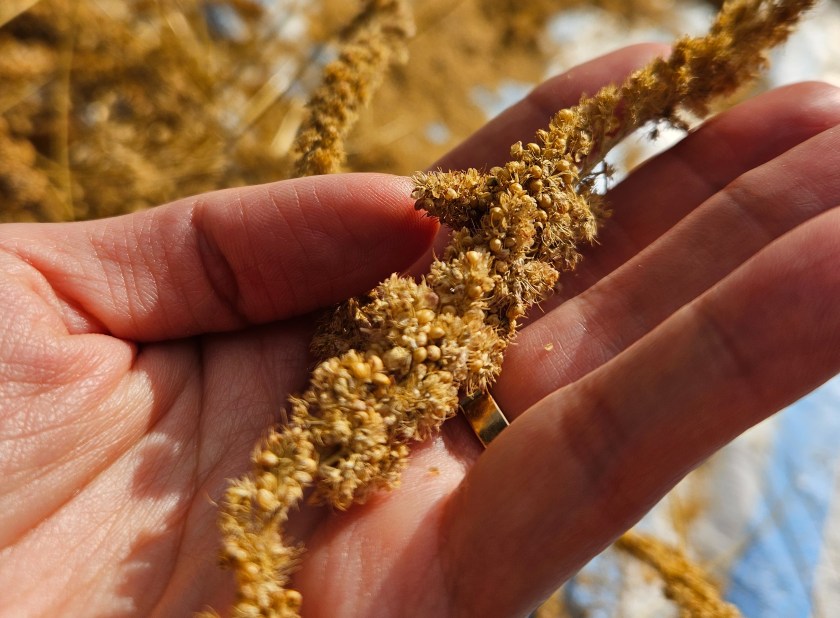
Several Indigenous development and community-based projects have been challenging the dominant concepts used in well-being, care, livelihood and diversity as a whole, such as the Millet Ark initiative. We do not need to reinvent the wheel when it comes to a good care system for the Indigenous peoples. Multiculturalism is more about elevating the already existing knowledge systems that have been present in Taiwan for centuries. To transform care, we do not need the state-sponsored multiculturalism boilerplate but more genuine pathways that allow the weaving of knowledge systems to take place.
Wasiq Silan (also published under her Mandarin name I-An Gao) is an Assistant Professor at the College of Indigenous Studies, National Dong Hwa University, and a researcher at the Centre for Research on Ethnic Relations and Nationalism at the University of Helsinki. She is a Tayal woman from llyung Taranan (river Taranan) in the northern region of Taiwan.
This article was published as part of a special issue on ‘Unsettling Multiculturalism in Taiwan‘.
 Taiwan Insight