
Written by Meng Kit Tang.
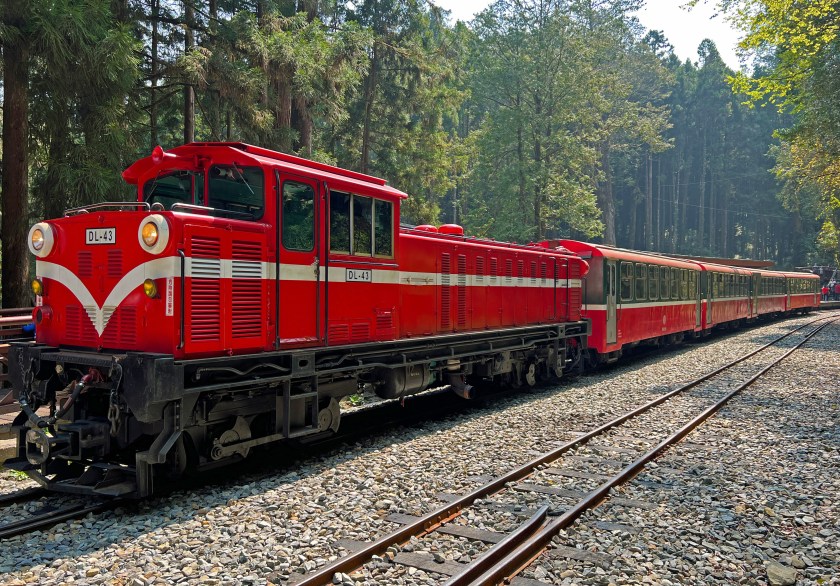
Image credit: Alishan Forest Railway – Alishan National Forest, Taiwan by Kirk K/ Flickr, license: CC BY-NC-ND 2.0.
Introduction
Taiwan and Japan share a close and historically meaningful relationship. Their bond is rooted in decades of trade, diplomatic engagement, and cultural exchange. Taiwan’s decision to honour former Japanese official Tarumi Hideo for his contributions to bilateral relations reflects a broader trend of deepening goodwill between the two nations.
Trade remains a key pillar of their partnership, with bilateral exchanges surpassing $75 billion in 2023. Taiwan’s move to lift restrictions on Japanese food imports from Fukushima was not only an economic decision but also a diplomatic gesture that reinforced trust. Security cooperation has also intensified, with Japan increasing its defence presence on Yonaguni Island and both nations conducting joint maritime exercises in 2024.
Beyond trade and security, Taiwan and Japan share an important cultural connection. Railways, in particular, symbolise this historical and modern relationship. Initially built under Japanese rule, Taiwan’s railway system has evolved into a platform for both heritage conservation and technological innovation. Through railway diplomacy, Taiwan and Japan have transformed a historical legacy into a diplomatic asset. Their approach contrasts with infrastructure-driven diplomacy, which is often linked to economic and political influence.
Historical Foundations of Taiwan-Japan Railway Relations
The development of Taiwan’s railway system was heavily influenced by Japanese colonial rule from 1895 to 1945. Japan saw rail transport as essential to integrating Taiwan into its empire, investing in extensive railway expansion to facilitate trade, governance, and economic control. By the end of World War II, Taiwan had one of the most developed railway networks in the region.
Even after the war, Japanese influence remained embedded in Taiwan’s railway infrastructure. Many of the design principles, safety regulations and management structures established during colonial rule persisted. Today, Taiwan’s rail network is a fusion of history and modern efficiency. Scenic railway routes, urban transit systems, and high-speed rail developments all reflect Japan’s early contributions.
While colonial history is often a sensitive subject, the Taiwanese government has chosen to reinterpret its railway heritage as a shared legacy rather than a symbol of past subjugation. By embracing railway culture as a tool for reconciliation, both nations have been able to work together on heritage preservation, tourism development, and smart railway innovation. A once-imperial railway system has been transformed into a diplomatic bridge that fosters mutual appreciation and collaboration.
Taiwan-Japan Railway Collaborations
The partnership between Taiwan’s Alishan Forest Railway and Japan’s Yanase Forest Railway serves as a prime example of railway diplomacy. Initially constructed for logging purposes, both railways have evolved into sought-after tourist attractions. In 2024, the Alishan Forest Railway reopened after a 15-year hiatus caused by Typhoon Morakot, celebrating the event with cultural exchanges and conversations about heritage preservation, underscoring how railways can enhance international relations.
Taiwan and Japan are strengthening cultural ties through railway initiatives. Themed trains for Expo 2025 in Osaka, launched by Taoyuan Metro and Nankai Electric Railway, aim to boost tourism and highlight innovation. Railway culture is also being promoted through a railway stamp book by Taiwan Railways Corporation and Yomiuri Travel, encouraging Japanese rail fans to explore Taiwan’s stations and collect stamps. This initiative enhances cultural exchange and appreciation of Taiwan’s railway heritage.
Culinary collaborations have also flourished. The “Wafu Cuisine Meets Taiwanese Flavors” exhibition at Japan’s Railway Museum in Saitama highlighted the history of train bento boxes in both countries. Taiwan Railways later introduced Japanese-inspired bento options, blending flavors flavours from both nations to enrich the train travel experience.
Taiwan’s partnership with Japan on the High-Speed Rail (THSR) showcases the use of Shinkansen technology. Taiwan sought Japan’s expertise in building its high-speed rail network, with Japanese engineers playing a key role in design, emphasising safety and efficiency. Unlike China’s debt-heavy rail projects, Taiwan’s collaboration with Japan is based on mutual knowledge sharing and lasting cooperation, highlighting how technology exchange can enhance diplomatic relations without economic dependency.
Railway Diplomacy vs. China’s Belt and Road Initiative
Taiwan and Japan’s approach to railway diplomacy differs greatly from China’s Belt and Road Initiative. While Taiwan and Japan focus on cultural exchange, tourism and sustainable technology transfer, China uses railway investments to expand its geopolitical influence.
The China-Laos Railway, completed in 2021, illustrates China’s approach. While the project improved regional connectivity, it also increased Laos’ economic dependence on Beijing. Similarly, the Jakarta-Bandung High-Speed Railway in Indonesia has faced delays and cost overruns, raising concerns about financial sustainability.
Taiwan and Japan have taken a different approach. Their railway collaborations prioritise mutual benefit and cultural engagement over financial leverage. However, China may attempt to counteract these initiatives by offering alternative infrastructure deals to Southeast Asian nations.
Railway Culture as a Soft Power Tool
Railways are more than just modes of transportation. They serve as symbols of connection, movement, and shared progress. Taiwan and Japan have recognised this potential, using railway diplomacy as a form of soft power. Unlike security alliances or trade agreements, railway diplomacy fosters engagement through cultural heritage, tourism, and technical cooperation.
Soft power is about influence through attraction rather than coercion. Taiwan and Japan’s railway diplomacy perfectly embodies this idea. It provides a non-political way to strengthen bilateral ties, enhance mutual trust and engage the public. This model stands in contrast to China’s Belt and Road Initiative, which focuses on economic expansion through large-scale infrastructure investments.
Railway diplomacy, however, is not without its challenges. Maintaining public interest in railway heritage, securing funding for long-term preservation and adapting to technological advancements are ongoing concerns. Taiwan and Japan must integrate modern innovations such as AI-driven railway systems, smart train operations and digital heritage platforms to sustain and expand their railway diplomacy efforts. By leveraging technology, they can ensure that railway diplomacy remains relevant and continues to shape regional influence in the digital age.
Geopolitical Challenges and China’s Response
China closely monitors Taiwan-Japan railway collaborations. While these projects are framed as cultural and economic initiatives, Beijing views them as part of a broader effort to strengthen Taiwan’s international presence. China has historically pressured Japan to limit official engagement with Taiwan, particularly in trade and security. If Taiwan and Japan deepen their railway partnerships, China may respond by accelerating infrastructure investments in Southeast Asia, using economic incentives to discourage third-party countries from participating in Taiwan-Japan initiatives.
Taiwan and Japan must anticipate these challenges and diversify their railway diplomacy strategies. Strengthening partnerships with Southeast Asian nations, investing in regional railway heritage projects and promoting railway-based tourism alliances could provide a counterbalance to China’s economic influence.
Future Prospects: Expanding Railway Diplomacy
Taiwan and Japan’s railway diplomacy has the potential to grow further. Integrating AI-driven train operations and digital railway heritage experiences will modernise their approach. Japan’s JR Central has implemented an AI-based system for inspecting catenaries on the Tokaido-Shinkansen line, enhancing maintenance efficiency at high speeds. Similarly, Taiwan’s National Taiwan Museum’s Railway Department Park offers digital archives and interactive exhibits, making railway history more engaging for visitors. Expanding railway tourism initiatives into Southeast Asia will create new cultural exchange opportunities while countering China’s economic dominance in the region.
Academic partnerships can also support railway diplomacy. Joint research programmes, scholarships for railway engineering students and railway heritage initiatives will ensure long-term collaboration. By investing in education and fostering people-to-people exchanges, Taiwan and Japan can make railway diplomacy a lasting diplomatic tool.
Conclusion
Taiwan and Japan have successfully transformed railway diplomacy into a strategic asset. Through shared railway heritage, they have built a non-political yet impactful form of cultural diplomacy. Their approach prioritises sustainability, tourism, and technological cooperation rather than economic control.
Despite geopolitical challenges, railway diplomacy continues to strengthen Taiwan’s international presence and reinforce Japan’s regional influence. Expanding railway collaborations, integrating smart technology, and forming multilateral railway partnerships will ensure long-term success. By nurturing their shared railway legacy, Taiwan and Japan can continue using railway diplomacy as a powerful tool for stability and cooperation in the Indo-Pacific.
Tang Meng Kit is a master’s student in the MSc in International Relations Programme at the S. Rajaratnam School of International Studies (RSIS), Nanyang Technological University (NTU), Singapore. His research interests include cross-Straits relations, Taiwan politics and policy issues and aerospace technology. He currently works as an aerospace engineer.
 Taiwan Insight