
Written by Janelle Umana-Limon.
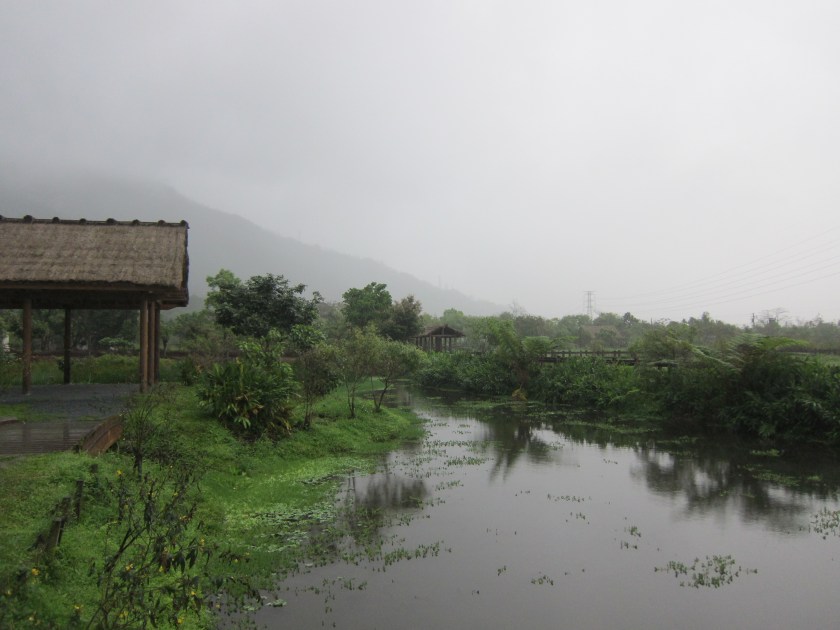
Image credit: Fataan Wetland in Guangfu, Hualian, Taiwan by Bellenion/ Wiki Commons, license: CC BY-SA 3.0.
Indigenous communities in Taiwan have been subjected to years of colonial oppression, beginning with the Dutch in the 17th Century, followed by Japanese and Chinese rule. These early colonial powers displaced Indigenous communities from their ancestral lands, forcing them to leave territories they had known for generations and relocate primarily to the mountains or the eastern part of the island. Some scholars point to the Japanese colonial period’s forced resettlement and educational imposition as the start of severe Indigenous cultural erasure, but others argue that the Kuomintang’s (KMT) subsequent rule brought the most devastating assimilation policies. Unlike the Japanese, who primarily sought control without full assimilation and allowed some cultural practices to continue, the KMT actively suppressed native languages and ceremonial traditions, causing significant cultural loss for younger generations. While colonial powers like Japan and China played a key role in suppressing Taiwanese Indigenous cultures, one Western colonial power that has had, and continues to have, a significant impact on Indigenous communities, particularly on Taiwanese Indigenous women, is the Christian Church.
Christianity not only helped to impose patriarchal structures but also undermined Indigenous women’s autonomy and spiritual practices. These challenges, however, have given rise to Indigenous resistance movements in Taiwan. This article examines the rise of these movements through the voices of two Indigenous women, Liglav Awu and Ayah Demaladas, who are outspoken advocates for Indigenous struggles. Both women emphasise the church’s role in addressing these issues. They are leading efforts to resist colonial influences in their respective fields: Awu in literature and Ayah in academia and the media. Through their work, they are reclaiming cultural heritage and challenging the lasting effects of colonisation.
One powerful way these movements have sought to reclaim what was lost through colonisation is by using literature as a form of resistance. Fanny Caron, in Taiwan Literature in the 21st Century, introduces Liglav Awu, a Paiwan author who, in the 1990s, embarked on a journey across the island to document the life stories of Taiwanese Indigenous women. Awu’s writings reflect the gradual loss of women’s freedoms and social positions, particularly during the periods of Japanese and KMT rule. In addition to those two colonial powers, Awu’s stories also mention Christian missionaries who arrived after the KMT, converting 70 per cent of the island’s Indigenous population between 1945 and 1960 and condemning many of their customs as “sins.”
Before Han rule, Indigenous women, especially in Paiwan society, held significant social and political power. They could inherit leadership roles, such as becoming village chiefs, and had autonomy in personal matters like divorce. Women also had the right to pass on their kinship through adoption within the tribe. Others noted this shift in the position of Indigenous women in a story shared by Awu about Vuvu Agan and Mulidan. Mulidan, who has just given birth, is depicted crying as she announces the birth of her daughter, as in Han society––reinforced by Church teachings––a son was viewed as a blessing, while daughters were considered less so. Amid Mulidan’s cries, Agan asks, “Why must you have a boy? The tribe’s idea of being proud of a first-born daughter is strongly impacted.” Agan’s question acts as a form of resistance, challenging the imposed norms of a dominant Han and Christian society while reaffirming Indigenous women’s autonomy.
On the other hand, Mulidan’s reaction to giving birth to a daughter reveals the impact of internalised colonial norms on Indigenous women, affecting their self-perception and social standing. The contrast between Agan’s questioning and Mulidan’s reaction highlights the complex dynamics of cultural resistance and assimilation. While Agan seeks to reclaim cultural space, Mulidan’s emotional response reveals just how deeply these norms have shaped and often limited the roles of Indigenous women within their communities. This moment reflects a broader struggle to reclaim cultural identity and gender autonomy in the wake of the lasting impact of colonialism.
Ayah Demaladas, a member of the Kasavakan community of the Pinuyumayang tribe, addresses this very struggle in the podcast Indigenous Perspectives, where she discusses how the Christian church became a tool for cultural suppression. Demaladas shares two stories that illustrate the persistent influence of Christianity on Taiwanese Indigenous communities. The first story comes from the Fata’ang community, where a proposal to revive ancestral commemoration services—discontinued for over 40 years due to an agreement between the Fata’ang Presbyterian Church and community leaders—led to a significant debate over cultural preservation versus religious assimilation. While older generations of Indigenous Christians argued that ancestral rituals were “sinful” and should be abandoned in favour of Christian beliefs, younger members of the community sought to reconnect with their cultural heritage by reviving these ceremonies. As Demaladas points out, this conflict highlights the colonial legacy of Christianity on Taiwanese Indigenous communities, where the imposition of foreign religious practices continues to challenge the cultural practices of Taiwanese Indigenous communities. It also points to a disconnect between older and younger generations, with Indigenous movements and the revival of culture being particularly popular among the younger generation, who feel a need to reconnect with their roots. In contrast, older generations appear to have internalised colonial ways and assimilated to some extent.
This disconnect between older and younger generations becomes even more apparent when Demaladas recounts another personal story from the Fata’ang community. Demaladas begins by describing a woman from a long line of Indigenous Presbyterian Christians who were taught to view her cultural practices as “evil.” One day, the woman decided to participate in an annual harvest festival held by her tribe despite her family’s disapproval. Demaladas explains that she first encountered the woman when she noticed she was dressed incorrectly for the event and approached her to offer help. The woman shed tears upon realising her mistake, confessing that it was her first time attending the harvest festival and that she had done so in an attempt to reconnect with her cultural roots. She went on to explain her mother’s strong disapproval, even going so far as to pray for her “cleanness,” as her mother believed traditional Indigenous practices contradicted the Christian beliefs she had been taught. Later, Demaladas goes on to explain that after interviewing the woman, she learned that it was her grandparents who had converted to Christianity and that her grandfather had assumed authority in the household—something that was not traditional in the matriarchal system of the Pangcah community.
This story is particularly powerful as it highlights the tension between older family members, who may be more open to the idea of assimilation, and the younger generation, who, after feeling disconnected from their Indigenous culture, feel a stronger need to reconnect with their identity. This tension is especially evident in the contrast between the mother’s disapproval and the woman’s desire to reconnect with her culture despite it. It is important to note that the mother’s reaction should not necessarily be interpreted as inherently negative, as it likely stemmed from a genuine concern for her daughter’s well-being. Nevertheless, it does highlight the internalised colonial teachings of Christianity that devalue certain Indigenous spiritual practices.
Like many Indigenous communities worldwide, Taiwanese Indigenous communities have traditionally passed down history through oral stories. Since there is little to no written record of early Taiwanese Indigenous history, the work of Awu and Demaladas becomes crucial in retelling the stories of Indigenous people, who are often overlooked due to their small population—about 2.38 per cent of Taiwan’s total population, according to Rogerson. Storytelling is vital to Indigenous history, which is why this article explores the rise of Indigenous movements through these narratives. Through these stories, it becomes clear that while the impact of colonialism on Indigenous cultures cannot be attributed to a single factor, the Christian Church warrants special consideration in future research for its significant role in altering social structures and maintaining a strong presence in contemporary Taiwanese Indigenous culture. As seen in many of these stories, the Christian Church plays a significant role in shaping the values and views of many Indigenous people. Therefore, understanding the role of Christianity, along with the tensions it creates, is crucial in the fight for cultural restoration within Taiwanese Indigenous movements.
Janelle Umana-Limon is a graduate of the School of Public and International Affairs at Princeton University. She is a Fulbright Research Award (2025-26) recipient conducting independent research on education in El Salvador. Following her Fulbright, she intends to pursue a career in law or public service, with a focus on international affairs and foreign policy. She can be contacted at nelleumana@gmail.com.
 Taiwan Insight
