Every Journey Begins with a Single Step: Taiwan’s National Action Plan on Business and Human Rights

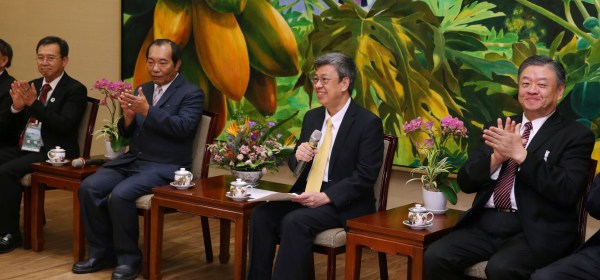
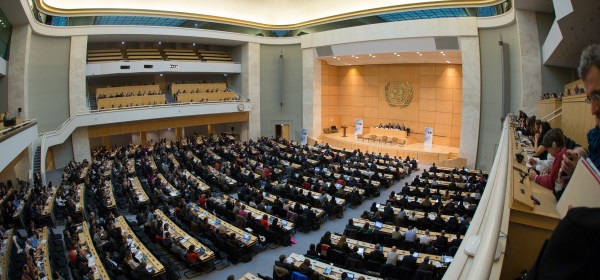
Written by Bonny Ling. Last year, on Human Rights Day marking the adoption of the 1948 Universal Declaration of Human Rights on 10 December by the UN General Assembly, Taiwan’s executive branch of the government (Executive Yuan 行政院) released the Taiwan National Action Plan on Business and Human Rights (NAP) (臺灣企業與人權國家行動計畫). The Action Plan was celebrated, with Premier Su Tseng-chang (蘇貞昌) enthusiastically describing it as “aid[ing] Taiwan’s efforts to become integrated in international trade and supply chains.”
From Taiwan to Macau in 16 Years: A Domestic Worker’s Migration Biography

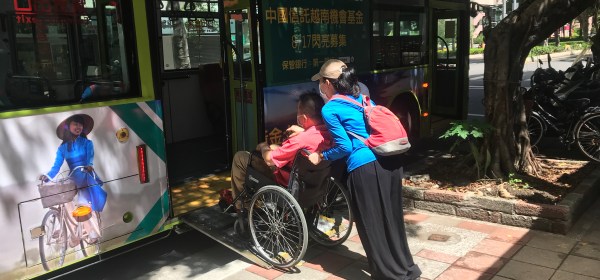
Narrated by Yosa Wariyanti, written by Isabelle Cheng. I have spent a total of 16 years abroad. When we return home, we have our savings, and we may open businesses. But businesses do not always go well. It is difficult for us to find jobs because we do not have good education or professional certificates. No one would hire us. Soon my daughter will go to university. I want to give her a good education. I need to work for at least another five years to pay for her tuition fees. So, I will just go on, and on, and on working abroad.

Covid-19 and the Environmental Impacts of Domestic Tourism

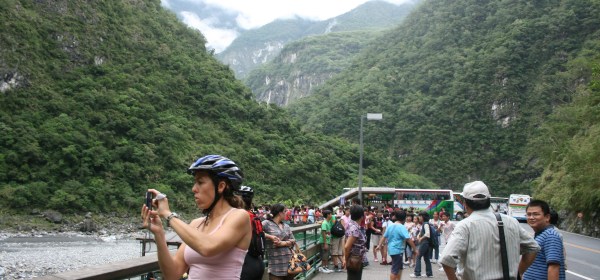
Written by Tzu-Ming Liu. The outbreak of COVID-19 has significantly affected Taiwanese’ travel destination choices. One of the most significant changes is the recent boom of citizens’ participation in nature-based outdoor recreation. These changes have clear influences on the environment. Some are positive, and some are negative. This impact can be observed in Taroko National Park and Yushan National Park. However, for destinations that have been heavily impacted by tourism, such as Lanyu, the sudden tourist increase makes environmental problems much worse.

Synergies Between Taiwan’s New Southbound Policy and Biden’s Free and Open Indio-Pacific Strategy

Written by Grace Faerber. The Biden administration is strengthening its recognition of the strategic importance of Taiwan to the FOIP, the greatest indicator being the appointment of Sandra Oudkirk as Director of the American Institute in Taiwan (AIT), the de-facto U.S. embassy in Taipei. Director Oudkirk previously served as a Senior Official for APEC at the Bureau of East Asian and Pacific Affairs (APEC’s member countries include the nations of Australasia and ASEAN).

The International Community Should Follow the U.S. by Referring to Taiwan’s Missions Abroad as the “Taiwan Representative Office”

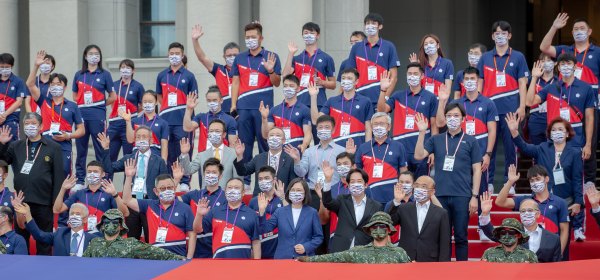
Written by Milo Hsieh. During the Olympics, Taiwan’s “Chinese Taipei” name was on display for two weeks, reminding the world that “Taiwan” remains not to be mentioned at the Olympics. That name, a less than preferred one for the people of Taiwan, was introduced in 1979 due to the Nagoya Resolution. That year, the People’s Republic of China representatives agreed to participate in the 1980 Olympics only if athletes representing Taiwan used the name “Chinese Taipei.” Though the name is today unrepresentative of the country Taiwan has become, it was nevertheless accepted by Taiwan’s Republic of China government at the time.

COVID-19 Ushered in a New Era of Urban Governance in Taiwan

Written by Roman Shemakov. As the metabolic flow of a city is commandeered by a virus, urban sensing is amplified. The proximity of animals, people, and capital in markets is one of the foundational functions of city life. Random evolutions of ingenuity, community, and viruses thus become a natural by-product of urban proximity. Since the invention of every technology (and a city is certainly a technological mechanism) is also an invention of a new accident, we must think of viruses as a feature of cities, not an anomaly.

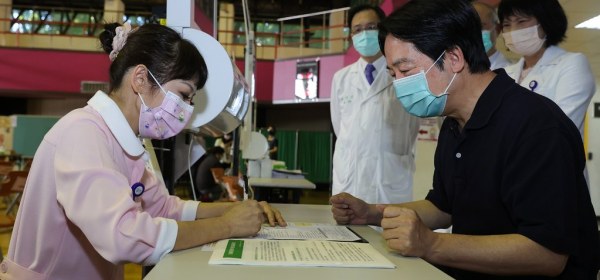
To Ensure Vaccine Equity, Taiwan Should Adjust its Vaccination Program

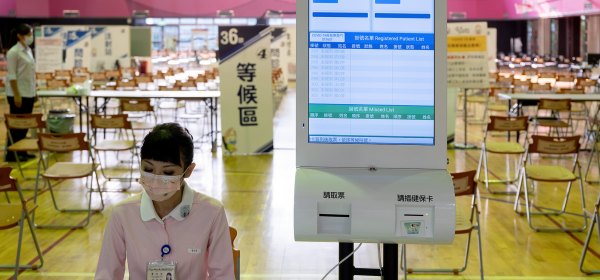
Written by Kai-Ping Huang. To fight against Covid-19, there is only one solution for every country striving for a return to normality: vaccination. Herd immunity is the goal as advanced countries aim to vaccinate at least 75 per cent of their citizens. The discovery of different variants worldwide makes booster shots increasingly necessary to prevent severe symptoms even for the fully vaccinated. Although speed is vital, it is also essential to determine the proper order of vaccinations.

Taiwan’s COVID-19 Vaccination Against Biological and Political Viruses

Written by Chunhuei Chi. For Taiwan to move toward the post-pandemic era, it must be understood that its main challenge is political rather than biological. Besides fighting disinformation and external and internal attempts to divide Taiwan and undermine its control effectiveness, it needs to consider the vaccines’ critical role in ending this pandemic. Further, the criticism of its government’s vaccine under-preparedness has shifted Taiwanese to inward-looking and toward vaccine nationalism.

Political Contention About Vaccines in Taiwan

Written by Brian Hioe. Vaccines have proved a contentious issue in Taiwan from the beginning. As the first vaccines that arrived in Taiwan were AstraZeneca vaccines, the Taiwanese public was initially unwilling to get vaccinated. The public was discouraged from being vaccinated by reports of blood clots and other adverse reactions after using AstraZeneca. As Taiwan had gone for more than a year mostly COVID-free, it is probable that members of the public did not see the need to get vaccinated.

The “Lost Outlying Island” of the Tachen Diaspora

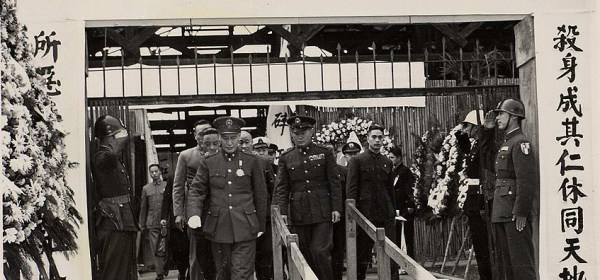
Written by Kai-yang Huang. As Taiwan’s identity debates are slowly eking towards a consensus, it is essential to also pay attention to the diverse marginal voices of the people of Taiwan. Thus, because discourse about Taiwan as a “maritime nation” is increasingly common, more attention has been paid to marine conservation—for example, the IOC established the Maritime Protection Agency and has preserved traditional fishing techniques (for example, the Marine Science Museum exhibits traditional Han fisheries). For the Tachen diaspora, the ocean has long been an important part of their customs and a poignant reminder of their forced migration from their homeland due to the Chinese civil war and their subsequent migration to the United States. Supposing that Taiwan perceives itself as a “maritime nation.” In that case, these narratives deserve a place in Taiwan’s modern historical understanding.

The Penghu Migrants Behind Kaohsiung’s Post-war Boom

Written by Tshinn-Hun Miguel Liou. Strictly speaking, there’s nothing inherent about the connection between the people of Kaohsiung and Penghu, and the route that many people from Penghu took from Kaohsiung was often more treacherous than the path for those emigrating within Taiwan. However, the consensus linking people from these two places should give pause for thought. So, why is Kaohsiung the first choice for people from Penghu who move to Taiwan? 

At the Edge of State Control: The Creation of the “Matsu Islands”

Written by Sheng-Chang Lin. As well as creating Matsu as a region, the Cold War also tied Matsu to Taiwan. Communication had been minimal between the two before the war—Taiwan was a colony of Japan, whereas Matsu was part of Fujian—but not both regions were part of a new post-war state. Especially due to the prosperity on Taiwan Island, migration from Matsu to Taiwan has become increasingly common. Nowadays, the Bade district of Taoyuan City(桃園市八德區) and Keelung City (基隆市)are known for their large Matsu population.

1 4 5 6 7 8 58