Cat-Warriors vs Wolf Warriors: How Taiwan Promotes Its Brand in the Face of a More Assertive China

Written by Simona Grano. According to China, Taiwan is a splinter province to be re-conducted under Beijing’s sphere of influence at all costs; likewise, China forbids international recognition of Taiwan under its “One China” principle. Through dealing with such hindrances for decades, the island has become skilled at swerving Chinese diplomatic aggression. Taiwan uses its soft – or “cat warrior” – diplomatic power to counter attacks on its sovereignty, promoting itself as a freedom-loving, peaceful nation in contrast to a belligerent China.


Fat-Shaming and Beauty Related Tensions in Contemporary Taiwanese Families

Written by Amélie Keyser-Verreault. One of the most important criterion determining whether a woman is considered beautiful is thinness in Taiwan and elsewhere. Under the influence of an increasing cult of beauty, my field works reveal the existence of various forms and causes of multiplying and exacerbating fat-shaming and beauty-related conflicts within the contemporary Taiwanese family. Although the idea that a close linkage between physical appearance and womanhood is certainly not new, recent research on women’s experiences of body transformation underscores that the degree of beauty pressure is unprecedented in contemporary societies. 

Taiwan’s Asylum Policy: A Lack of Political Will to Implement the Law?

Written by Kristina Kironska. Taiwan is considered one of the most progressive countries in Asia but has no asylum law. Although debates on the issue occasionally occurred for more than ten years, there has been no progress on the draft asylum law since its second reading in 2016. One significant point of contention is to what extent an asylum law should address not only people from “uncontroversial” foreign countries, such as the Rohingya in Bangladesh, but also people from China, Hong Kong, and Macau. As with any issue that touches on cross-strait relations, the situation is complicated: on the one hand, the government celebrates Taiwan’s status as a beacon of human rights; on the other, extending asylum to PRC citizens risks stoking tensions with Beijing. 

Bridging Islands of/beyond Borders: Dongyin and Yonaguni

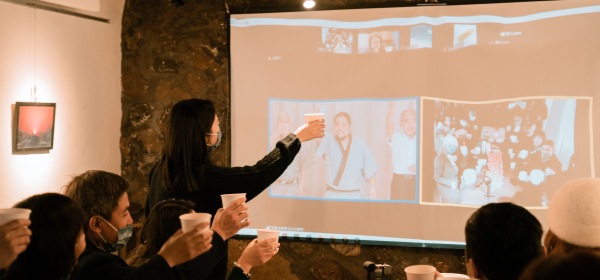
Written by Yi-Yu Lai. While the COVID-19 has stopped many individuals from travelling and interacting over the last two years, some cultural exchanges that we never expected to see have emerged during the pandemic. For example, on February 18th, 2022, people in Dongyin, an insular township in Taiwan’s Matsu Islands, had their first online workshop with those from Yonaguni, an island that belongs to Okinawa. Both islands are considered frontiers in their respective countries, and they had many comparable fates throughout history. Therefore, such a cultural exchange between the islands was particularly impressive because it was an activity with the islands as the focal point.

Matsu Language: A Language Too Unique To Forget

Written by Kai-Yang Huang. In 2019, President Tsai Ing-wen signed the National Language Development Act and announced its implementation. For a long time, pragmatism has had a significant impact on Taiwan. People believe that by promoting the use of English to become a “bilingual country,” Taiwan will be able to keep up with the rest of the world. Little do they know that what distinguishes Taiwan in the international community is the very distinctiveness of Taiwanese cultures. As a result, the primary principle of promoting natural language as a national language is to re-inherit a local worldview that has been around for a long time. This will strengthen the worldwide competitiveness of Taiwanese college students. 

Reaching Beyond Traditional Voting Blocs: Taiwan’s DPP Launches Campaign in the Matsu Islands

Written by Wen Lii. As Taiwan’s ruling Democratic Progressive Party (DPP) enters its primaries ahead of the November 2022 midterm elections, DPP candidates in the Matsu Islands face a different challenge: the party has never nominated candidates for local posts in Matsu. The county has long been considered a stronghold for the opposition Chinese Nationalist Party (KMT). The DPP could potentially nominate ten or more candidates in Matsu at various levels of government, although nominations are yet to be finalised until May or June. The upcoming races will mark a historic first for the DPP’s participation in these local posts in Matsu. This will signal an unprecedented scale and scope for DPP campaign activities in Matsu, with the opportunity to further solidify grassroots support. 

Serendipity: Matsu Islands, Taiwan & Me

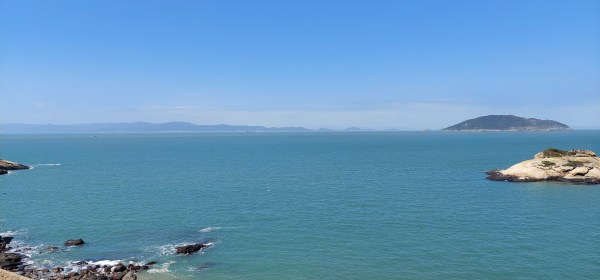
Written by Tammy Yu-Ting Hsieh. It was not until 1949 that the concept of “Matsu” was first established. Before the civil war in China, this group of islands were mostly the seasonal resting stops of fishermen from the south-east shore of China. Residents on the archipelago can clearly see the outline of Fujian, whereas “Taiwan” was an island they hardly knew nor had any relationship with. But suddenly, in 1949, Kuomintang armies arrived at Matsu Islands, and in no time, Matsu became the frontline of the Republic of China, aiming cannons at the opposite bank, a place they used to call “home.” To put it romantically, serendipity is how the “Taiwan-Penghu-Kinmen-Matsu Community” came to be today. And I tend to think that serendipity also guided me, a descendant of Minnan and Hakka from Taoyuan City, to embark on this back-and-forth journey to Matsu since 2020. 

Matsu Migrants in Bade, Taoyuan City

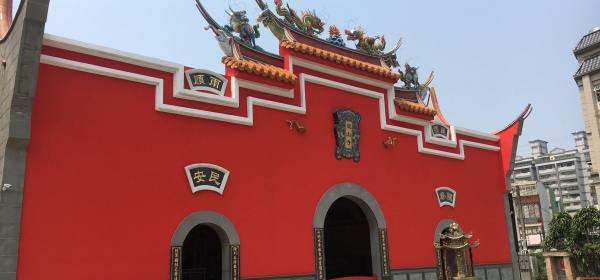
Written by Cheng-Chung Wang. In Taiwan, we rarely see Matsu in the textbooks, maps, or other materials we’ve been exposed to since childhood, let alone how much we know about Matsu people. Some of us may be unaware that there are many descendants of Matsu migrants living around us. Their moving and settling experiences are very attractive stories that deserve to be told. 

Taiwan Diplomacy: Worth the Effort?

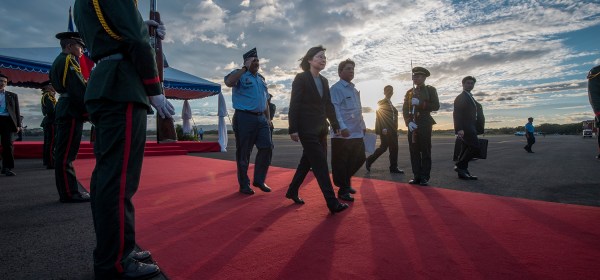
Written by David Pendery. Commentary has recently focused on Taiwan’s diplomatic ties, following the loss of a number of allies under President Tsai Ing-wen’s tenure, most recently Nicaragua, which caused quite a stir internationally. The state of affairs has worsened to the point that many in the nation are now questioning the value of diplomatic relations in general and whether it is even worth the trouble for Taiwan to maintain its diplomatic relations with its remaining official allies. This is a query worth addressing.

How Taiwan is Strengthening its Relations with Europe: And How Lithuania is Leading the Way in Pushing Back against China

Written by Gerrit van Der Wees. strength, it laid out the advantages of improving relations with Taiwan in the EU parliament and national legislatures. The Tsai Ing-wen administration had also emphasised time and again that Taiwan as a democracy was on the front line of the global fight against authoritarianism. If the West did not support Taiwan sufficiently, what happened in Xinjiang and HK could also occur in Taiwan one day.

A Great Linguist with a Scientific Mind and Poet’s Soul: In Memory of Professor Robert Blust

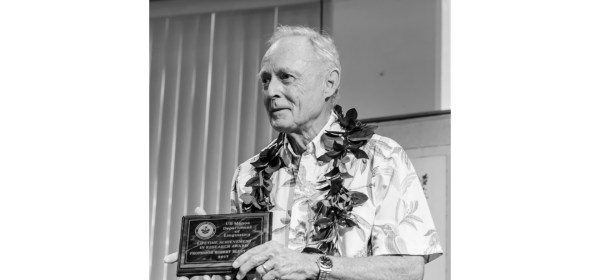
Written by Hsiao-Chun Hung. Professor Robert (Bob) Blust was a world-renowned linguist whose contributions will be sorely missed by his many colleagues. Bob’s ideas sometimes provoked controversy. Small groups sometimes seek fleeting moments of fame in academia by targeting well-known scholars, often without sufficient or relevant supporting evidence. This approach attracts attention as a “newsworthy” difference of opinion, at least temporarily, until it can be dispelled. Facing such challenges, Bob consistently retained stoic confidence in his scientific methodology, regardless of the enthusiasm of his critics.

1 6 7 8 9