Indigenous Language Education in Taiwan: From Language Preservation to Community-Based Learning 

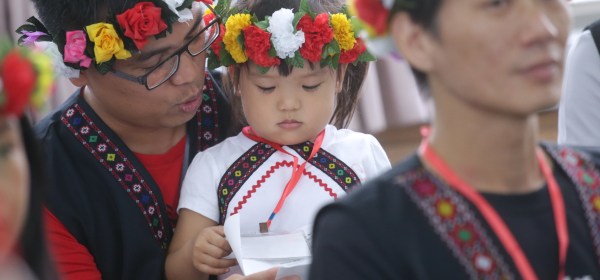
Written by Yang-Hsun Hou, Nikal Kabala’an (a.k.a. Margaret Yun-Pu Tu), and Huiyu Lin. As the Taiwan government has been pushing efforts for Indigenous Language Revitalization and Reclamation, this article highlights the importance of transitioning from government-led preservation to community-based, Indigenous-led education approaches, ensuring that culturally sustaining practices are truly integrated into Indigenous language teaching and learning.  
Is Integrating Possible? Towards weaving knowledges to transform care

Written by Wasiq Silan. This article critiques the superficial integration of Indigenous perspectives within Taiwan’s multiculturalist policy framework, arguing for a transformative approach that prioritises Indigenous knowledge systems in long-term care policies. Highlighting the idea of “weaving knowledge,” it seeks to recentre Indigenous onto epistemologies and challenge the deep-rooted colonial present.

Decolonisation of Multicultural Taiwan

Written by Yulia Nesterova. Although Taiwan has made remarkable progress in transforming into a flourishing multicultural democracy over the past three decades, it still faces challenges in fully decolonising its multicultural vision. Focusing on education policies, this article highlights the need for further actions to address historical injustices and reconciliation.

Neither Green nor Just: The DPP’s Reckoning with Environmental Justice 

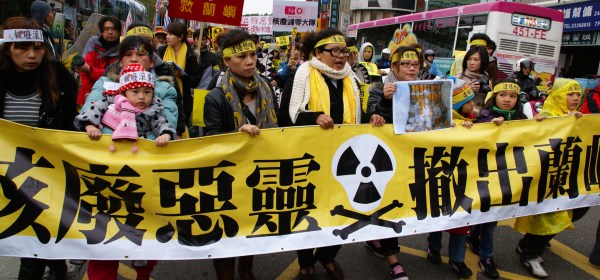
Written by Dominika Remžová. The Russian weaponisation of gas supplies has sparked a renewed interest in Taiwan’s energy security, placing the DPP’s anti-nuclear policies at the centre of attention. On the one hand, both energy and national security experts have criticised the DPP’s continuing nuclear phase-out for pushing Taiwan, which in 2022 imported more than 97% of its energy, into an increasingly precarious position. The opposition, on the other hand, has criticised the party’s 2025 energy mix formula (i.e., 20% renewable energy, 30% coal, and 50% LNG) for its inconsistency with international trends, namely the increasing role of nuclear energy in global decarbonisation efforts, which the DPP countered by referring to industry-wide trends, such as the renewable energy focus of the RE100 initiative, instead.  

Inherent Powers of Objects: Resonance Across the Online Exhibition 

Written by Zuzule Demalalade & Tien-Li Schneider. When we believe that there is power behind every object, it signifies our departure from mundane perspectives and a return to the cosmic space we share with our ancestors. As Indigenous cultural curators based in Taiwan, our involvement with the Kuroshio Odyssey: Maritime Memories, Culture, and Landscapes (hereafter KO) exhibition project began on an ordinary workday when KO’s curator, Jiun-Yu, returned from the United States to Taiwan and visited our office one afternoon. He mentioned that the Burke Museum had some collections from Taiwan’s Indigenous tribes. Together with Nikal (Margaret), a law doctoral student at the University of Washington with Amis Indigenous roots in Taiwan, they were planning an exhibition on Taiwanese Indigenous artefacts. This sparks the idea of collaboratively establishing an online platform, a digital bridge across the 14-hour time difference between Taiwan’s Indigenous artefacts and the Burke Museum’s exhibits.

Embarking on the Kuroshio Odyssey: A Journey from Taiwan’s East Coast to the U.S. West Coast 

Written by Sra Kacaw (Bo-Jun Chen). While planning the Kuroshio Odyssey exhibition, I had a discussion with Margaret Yun-Pu and Jiun-Yu Liu. Margaret invited Indigenous communities in Taiwan to collaborate, prompting me to search for colleagues who might accompany me. I started by pinpointing the topics we aimed to share through the exhibition. As the Kuroshio Current flows through Eastern Taiwan, what are the ethnic groups living in that area? How can we introduce the marine and material culture to the people in Seattle?  

Crossing Paths: A Cultural Odyssey from Taiwan to Seattle 

Written by Sayang  Anang. In November 2023, I had the honour of being invited as a member of the Taiwanese Indigenous delegation to the Kuroshio Odyssey exhibition hosted by the Burke Museum at the University of Washington, Seattle. Before embarking on this journey, I hadn’t given much thought but to grasp the rare opportunity to share the traditional cultural practices of my tribe—the Lidaw tribe of the Amis in Hualien, Taiwan—with my foreign friends. Excitement filled me as this was my first time setting foot on American soil, and I relished every exchange I made. The thrill stemmed from meeting new people, exploring the UW campus’s rich history, or appreciating the proximity of Burke Museum’s collections. With each encounter, we absorbed different nutrients, stimulated more reflection and feedback, and made this trip a fruitful one. 

From A Black Pot to Kuroshio Odyssey 

Written by Jiun-Yu Liu. Kuroshio Odyssey: Maritime Memories, Culture, and Landscapes (follows as KO) is a mini exhibition held at the Burke Museum in Washington State, USA (Oct 14 – Nov 28). KO focuses on two key themes: the diverse Indigenous cultures and the stunning natural landscapes in eastern Taiwan. As a multi-media exhibition, KO showcases material collections from multiple Indigenous communities in eastern Taiwan and includes an immersive element as visitors can access QR codes that provide images and detailed information about the selected pieces. In addition to the onsite exhibition, two Indigenous Taiwanese guest curators working in Taiwan and New Zealand have chosen wonderful artefacts from the Indigenous Peoples Cultural Development Center collection and converted them into an online exhibition to echo and enrich the KO exhibition content.

Wandering Back and Forth in The Sea of Books and Cultural Holdings – In Searching of Indigeneity, Positionality, and Self-identity 

Written by Nikal Kabala’an (Margaret Yun-Pu Tu). This article presents a reflective account from my perspective as one of the curators. It primarily focuses on the “behind the scenes” aspects, adopting an “inside out” approach to share my personal life experiences and the journey of research and curation as a mixed-background Taiwan Indigenous person from the Pangcah/’Amis community and a Ph.D. Candidate studying abroad in the fields of Indigenous Studies, Taiwan Studies, and Law. Supported by the main organisers—the Taiwan Academy in Los Angeles, the Burke Museum, and the Tateuchi East Asia Library (TEAL)—along with the co-organizers and their collaborative and generous sponsorships, I hope to unfold the narratives and open the dialogues driven by a passion for interdisciplinary pursuits. 

Kuroshio Odyssey: Bridging Cultures and Hearts Across Continents 

Written by Ellen Y. Chang. The Taiwan Studies Arts & Culture Program at the University of Washington (UW) proudly presents Kuroshio Odyssey: Maritime Memories, Culture, and Landscapes. This initiative celebrates the rich Indigenous cultures of Taiwan and underscores their profound ties to the Pacific Northwest. It features a multi-sited exhibition at the Burke Museum and the UW Tateuchi East Asia Library, an online display hosted by Taiwan’s Indigenous Peoples Cultural Development Centre, and a series of family-friendly events. With four curators—Zuzule Demalalade, Nikal Kabala’an (Margaret Yun-Pu Tu), Jiun-Yu Liu, and Tien-Li Schneider—representing diverse ethnic backgrounds and possessing unique socio-cultural and institutional expertise, the program embraces a multitude of perspectives. Their partnership extends beyond borders, connecting Taiwan to the Pacific Northwest.

Indigenous Post-Disaster Decision-Making Mechanisms and Negotiation Strategies of Traditional Women Leaders 

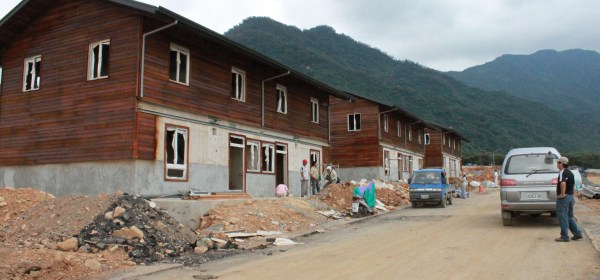
Written by Valagas Gadeljeman; translated by Yu-Chen Chuang. Since Typhoon Morakot, the government and academia have not thoroughly explored why Indigenous knowledge is fading and why Indigenous adaptation is becoming more difficult for Indigenous communities. Why can’t Indigenous people have the same freedom and right to choose where their tribe lives as they once did? What policies and laws have limited their ability to move freely? In short, there’s a lack of Indigenous perspectives in Taiwan’s post-disaster recovery discussions, especially when it comes to the importance of ancestral traditional territories. In this article, I’ll discuss the traditional decision-making processes and negotiation strategies in Indigenous communities, with a focus on Paiwan women leaders’ insights. 

1 2 3 4 5 10