The Mysterious Tsou Shaman: The Guardian of Traditional Culture

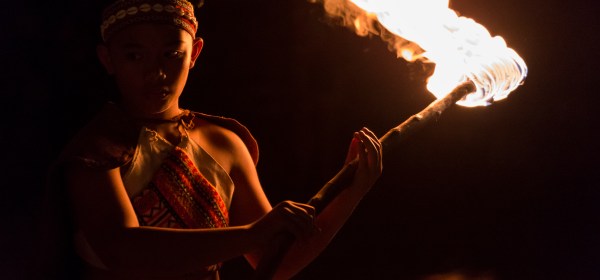
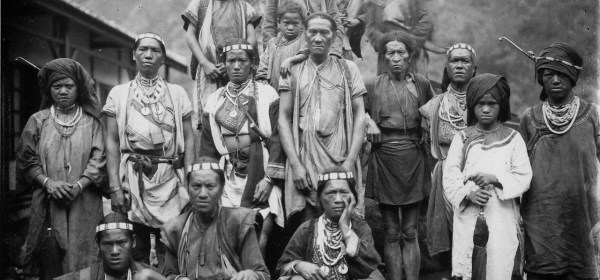
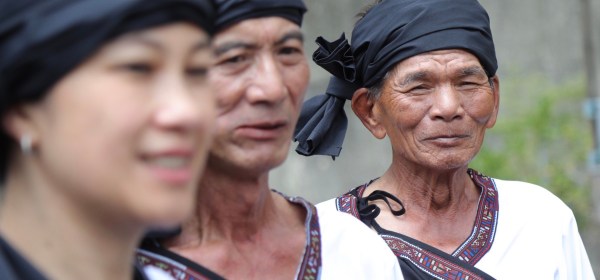
Written by tanivu yasiungu and Aaron Valdis Gauss. Living high up in quiet Ali Mountain, the Tsou shamans intimately connect with the earth and the ancestral spirits. But, of course, they are also connected with the most beloved god of the Tsou tribe––Hamo. Another important role of the Tsou shamans is to preserve, perpetuate and affirm Tsou myths, thereby maintaining a connection with the ancestors. Tsou shamans believe that working with nature is the most suitable way for everyone to live. We, the Tsou people, have always believed that being simple and pure in our beliefs is the only way to maintain the closest relationships with our god Hamo.

Displaying Indigenous People’s “Heirlooms” in Museums? Lessons from the Heirloom Exhibition of Pingtung Indigenous Peoples Museum

Written by Drangadrang Kaljuvucing. “The Family Heirlooms of Slop-Dwelling Peoples” exhibition was the fruit of a competition to discover Indigenous heirlooms that still exist in Indigenous communities. It was the Pingtung Indigenous Peoples Museum (PIM) partnering with four other Indigenous museums in Pingtung County, including Wutai Pavilion, Sandimen Pavilion, Laiyi Pavilion, and Shizi Pavilion, to conduct exhibition collection, field surveys, and promotion as part of a project with the Ministry of Culture in Taiwan. The thirteen heirlooms for the exhibition, which included clothing, accessories, paintings, weaves, wood carvings, clay pots, and other living implements, originated from seven Indigenous towns in Pingtung County, except for Chunri Township. While the exhibited pieces were grouped into three categories: “Living Etiquette,” “Decorating Life,” and “Cultural Heritage,” the exhibition highlighted the diversity and uniqueness of the heirlooms revealed by their owners through interview processes.

Revitalising Indigenous Weaving Cultures Across Borders: Conversations and Collaborations between Taiwan and the Philippines

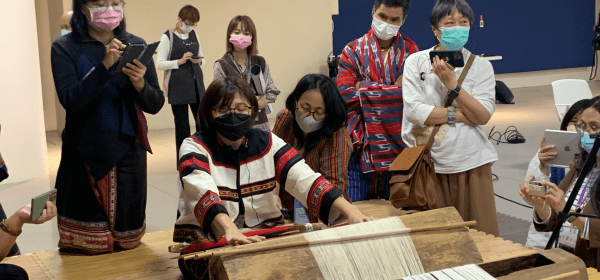
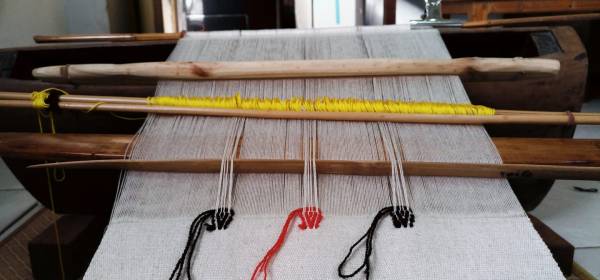
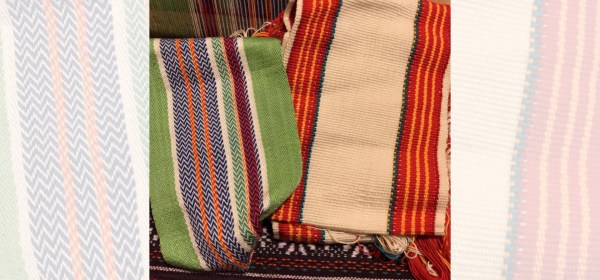
Written by Shau-lou Young. Weaving is a significant material culture in Indigenous Peoples’ society in Taiwan and the Philippines. In the past, hand-made textiles were necessities in their daily lives. However, with the introduction of fabrics into their society, only a few women continued to weave. Today, Atayal weavers in Taiwan and Ifugao weavers in the Philippines are working hard to revive their weaving culture. They brought back and conserved disappearing weaving techniques and knowledge and remade some long-lost textiles.

When You Weave, You Are Planting Seeds on the Land: An Indigenous Weaving Practitioner’s Experience

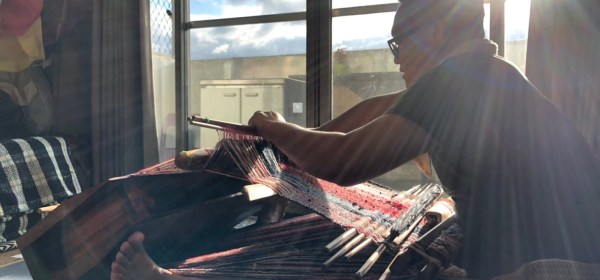
Written by Ipiq Matay. My name is Ipiq, which means “tiny” in Truku, and I am an Indigenous person from the Truku community of Taiwan. Despite my lack of height, I have a big heart. As a weaver in my community, I’d like to share ‘mhuma’, a Truku weaving skill which translates to “be planting”. This weaving technique can be seen in diamond-shaped patterns on women’s traditional clothing. Learning how to weave and create this pattern began my journey of connecting to my family history and the people of my community.

Tminun: Weaving from My Heart as an Indigenous Male

By Peydang Siyu (Chu, Hao-jie); translated by Huang, Hsing-hua. I am a member of the Truku people; the twelfth officially recognised Indigenous nation in Taiwan. We believe in our ancestors’ spirits (utux rudan) and adhere to their teachings (gaya) throughout our entire lives. Cloth weaving (tminun), similar to facial tattooing (ptasan), is a significant part of Truku culture, and many of our customs are related to it. For example, there is a strict gender division of labour in traditional Truku society, with men hunting and women weaving. Men were prohibited from learning how to weave or even touching the tools. As a male, it wasn’t until 2018 did I dare to learn it. But once I began, I never stopped. It was definitely a dream-come-true journey that I would forever remember.

Weave for an Identity: Learning Indigenous Weaving as a Han Person

Written by Nai-Wen Chang. It all started from my experience representing Taiwan at an international youth forum in 2010. A section required every participant to introduce one’s country, offering a chance to engage in cultural interactions. It was our turn to present after India, Russia, Germany, the United States, and China. Everything went smoothly until an Indian participant in a dazzling sari raised a question. The Indian representative, out of pure curiosity, asked, “What does your traditional dress look like?” A moment of embarrassed silence filled the air. My senior, the eldest of us, eventually replied, “We don’t wear traditional dress much, but we do have cheongsams.” A Chinese participant immediately countered, “Cheongsam is Chinese dress, not Taiwanese.”

Encountering Ancestors Along the Path of Weaving

Written by Langus Lavalian. Ibu is currently the youngest weaver in Haitutuan Township. When she was learning to weave with our grandmother, she had a dream in which she met a silent elderly female who requested Ibu to watch her weaving process. Traditionally, outsiders are not allowed to watch or learn the weaving process. However, this old lady appeared to be weaving purposely for Ibu and instructing her step by step. Since taisah, which refers to dream, is vital to the Bunun, Ibu believes that this is the path guided by our ancestors. 

Return to the Land and People: Contemporary Indigenous Knowledge System Project in Taiwan

Written by Yi-tze Lee. Following the Construction of the Taiwanese Indigenous Knowledge System (hereafter IKS) Project initiated by the Council of Indigenous Affairs (原住民族委員會), the establishment of the regional Indigenous Knowledge System Center is booming in 2022. The commissioned project results from a long fight for the indigenous cultural right, an example of autonomy in indigenous studies, and efforts on identity awakening. This article will explain the background of the IKS project, discuss the expectation, and reveal some critiques of the project in general. 

The Long and Unfinished Fight: The Constitutional Court’s Decision on Pingpu Recognition in Taiwan

Written by Wei-Che Tsai; Translated by Yi-Yu Lai. The case of Indigenous status for Siraya people has challenged Indigenous peoples’ composition and boundaries. Currently, around 580,000 Indigenous peoples are legally recognised in Taiwan. It is estimated that the population of the Pingpu peoples will increase the total number of Indigenous peoples to as high as 980,000 if the Act is declared unconstitutional, although this number may be inflated for political purposes by Taiwan’s Indigenous authorities. As a result, the authorities are worried about this judgement.

An Insider or Outsider? Lessons from the Recognition of Mixed-Background Indigenous and the Pingpu Peoples in Taiwan 

Written By Nikal Kabalan’an (Margaret Yun-Pu Tu). Regarding identity formation in Taiwan, the historical context of colonialism plays a crucial role because the arrival of each foreign ruler has resulted in varying degrees of assimilation. Such a theme has inspired numerous Taiwan Studies scholars who have produced a great number of pertinent works, including “Is Taiwan Chinese?” by Melissa Brown,“Becoming Japanese” by Leo Ching, and “Becoming Taiwanese” by Evan Dawley. One of the contestable issues in this field is the Indigenous status and recognition.

Unsettled Transitional Justices: Indigenous Sovereignty and the Limit of Democracy

Written by Yu Liang (Leeve Palrai). The justice revealed in Siraya’s ruling is in response to the national project of Indigenous transitional justice. Specifically, it responds to the promise of President Tsai Ing-Wen in her 2016 presidential apology that Pingpu groups shall be granted the equal rights and status as fellow Indigenous Taiwanese have. Yet, influential as it is, the idea of indigenous transitional justice in Tsai’s account remains unclear: Who should be held accountable for the erasure of Siraya and other Pingpu groups’ identity and status? When and how did it happen in the first place?

Roots and Routes in the Malay World and Beyond: Dialogues Between Singapore and Taiwan

Written by Doris Yang. In 2021, five artists/researchers from Singapore, Malaysia, and Taiwan gathered to present their project, The Malay World Project: Roots & Routes, in an online event held by Taipei Performing Arts Center. This event was inspired by a research project asking, ‘Where do the Malays originate?’ Not only did the project study the diaspora of Malay peoples around the Asia-Pacific, but it also created a space for dialogue between Taiwan’s Indigenous people and Malay in Singapore and Malaysia on the issues of identity and belonging. This article compares the advocacy experiences of Malay people in Singapore and Indigenous people in Taiwan. I argue that there is space to foster additional connections and collaborations between the civil societies among these two groups.

1 3 4 5 6 7 10