Assisted Reproductive Act Amendment: The Testing Ground for the New Taiwanese Parliament’s Power Dynamics

Written by JhuCin Rita Jhang, Ph.D. The 2024 Taiwanese presidential election has garnered substantial international attention due to the ever-intricate US-Taiwan-China relationship. However, this election means more to the Taiwanese than just how they want to engage with China. Contrarily, domestic issues carried much more weight than usual, including housing prices, economic policies, transportation infrastructure, and, for the first time in the centre of the competition, the Assisted Reproductive Act (ARA).  

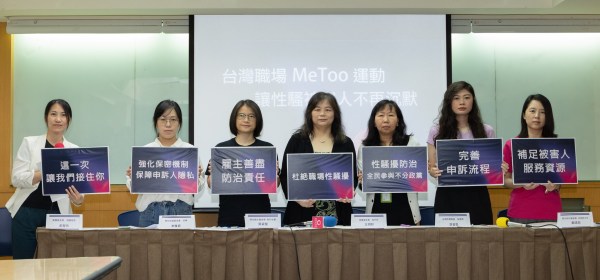
#MeToo Cases Lead to Legal Hotline for Victims. But Will This Change Engrained Social Attitudes?

Written by Darice D. Chang, Caritta Lin, and Rita Jhang. The #MeToo movement blossomed in Taiwan in May 2023 partly due to a successful TV show, Wave Makers, which features sexual harassment in the political world and partly due to several high-profile sexual harassment cases brought to light in Taiwanese politics around the same time. While increased social awareness and scandal brought swift legislative action and increased support for victims in the form of both social support and legal aid, which we will delve into more detail, amendments to laws that have failed victims previously and increasing support are not a definitive solution to an entrenched social issue — instead, we should consider the various factors that have contributed to a society where power based gender violence could be an open secret.

What have we learned from the still-unfolding #MeToo movement in Taiwan?

Written by Weiting Wu. The flames of Taiwan’s #MeToo movement have provided new opportunities to reflect on Confucian and patriarchal influences throughout society. To do so, however, Taiwan must act and work in solidarity to address the long-repressed suffering of #MeToo victims. Then, the transgender population, ethnic minorities, senior citizens, people with disabilities, and so on, may finally have the power to seek their justice.

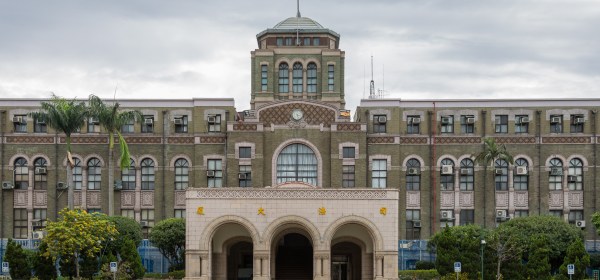
Judicial Reform in Taiwan in the context of the Citizen Judges Act

Written by John Burn. In her inauguration speech in 2016, it was claimed that Tsai Ing-Wen received her most rapturous applause for her pledges to institute reform of the judiciary and criminal law proceedings. In a climate of widespread public mistrust in a perceived detachment of judges’ interpretations of the law and public morality, Tsai embarked upon her stage of the long and slow relay of reform. So far, her administration’s most significant stride in this direction has been the Citizen Judges Act, which came into effect on the 1st of January this year. Yet this measure is only the latest legislative development in the long, complicated course of Taiwanese judicial reform.

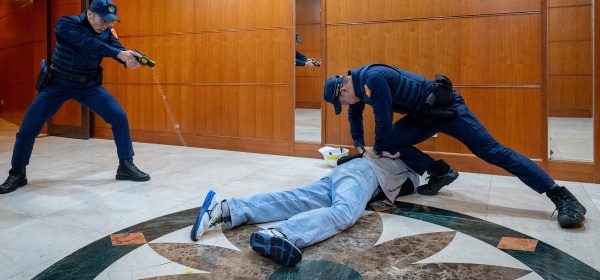
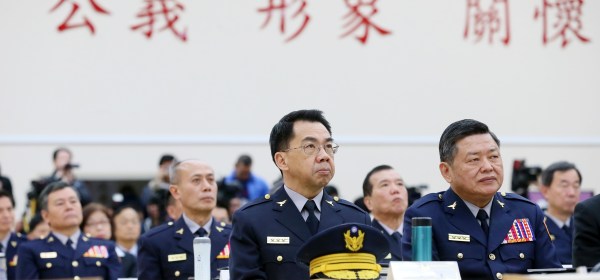
Tainan Police Murder: A Chance for Total Reform of Police Use of Force Training

Written by Wei-An Tsai. ​​In August 2022, the brutal murder of two police officers on duty in Tainan city sent shock waves through Taiwanese society. The two officers, Tu Ming-cheng (凃明誠) and Tsao Jui-chieh (曹瑞傑), were tipped about a stolen motorcycle and set out to investigate. However, they were later ambushed and killed by the suspect shortly after arriving at the scene, which was in an unpopulated area.​  
The two officers suffered fatal stab wounds, despite one carrying a gun. The issue of the timing to use firearms quickly became the centre of public debate. In apprehending the suspect on the run, the Interior Minister, Hsu Kuo-yung (徐國勇), instructed police officers “not to hesitate to open fire when faced with resistance.”

Police’s Right to Use Firearms? Lessons from the Murder of Two Police Officers in Taiwan

Written by Ting-Yi Bai. In August 2020, the murder of two police officers shocked Taiwanese society. The police officers, Tu Ming-Cheng, and Cao Ruei-Jie, investigated larceny after receiving a report that a stolen motor had been seen near Chikan Tower in Tainan. While searching for the suspect separately, Tu Ming-Cheng was suddenly attacked by the inmate Lin Xin-Wu, who had escaped from Mingde Minimum-Security Prison. Cao Ruei-Jie was also stabbed after failing to halt the culprit. Both died in the end.

An Insider or Outsider? Lessons from the Recognition of Mixed-Background Indigenous and the Pingpu Peoples in Taiwan 

Written By Nikal Kabalan’an (Margaret Yun-Pu Tu). Regarding identity formation in Taiwan, the historical context of colonialism plays a crucial role because the arrival of each foreign ruler has resulted in varying degrees of assimilation. Such a theme has inspired numerous Taiwan Studies scholars who have produced a great number of pertinent works, including “Is Taiwan Chinese?” by Melissa Brown,“Becoming Japanese” by Leo Ching, and “Becoming Taiwanese” by Evan Dawley. One of the contestable issues in this field is the Indigenous status and recognition.

Taiwan Decriminalized Adultery, But Does the Public Support The Change?

Written by Madelynn Einhorn, Josie Coyle, and Timothy S. Rich. In June 2021, the Taiwanese legislature removed a nearly 90-year law criminalizing adultery, punishable with up to 12-months in prison and fines averaging 90,000 NTD (roughly USD 3000). In May 2020, the Constitutional Court overruled Article 239 of Taiwan’s criminal code, which criminalized adultery, because it violated the Constitution. The legislature removed the article from the legal code approximately a year later. South Korea removed a similar law in 2015 and India in 2018. Taiwan was one of the last liberal democracies to keep adultery illegal and the last East Asian country aside from the Philippines.

Unpacking the Colonialist Undertones of the Indigenous People’s Basic Law: Law as a Tool of Oppression in Taiwan

Written by Aaron Chen. In May 2021, Taiwan’s Constitutional Court considered a high-profile case concerning indigenous hunting rights. First opened in 2013, the Bunun man, Tama Talum, had been convicted for violating the Wildlife Conservation Act, which limited indigenous poaching to solely ceremonial activities. He was also prosecuted under the Controlling Guns, Ammunition and Knives Act, legislation that only allowed indigenous peoples to hunt using homemade weapons, whilst Tama Talum did otherwise.

Taiwan on the eve of the International Decade of Indigenous Languages: a comparative perspective

Written by Brett Todd. Amidst the upheavals of this pandemic period, few would recall that 2019 was the International Year of Indigenous Languages, and fewer still realise that the International Decade of Indigenous Languages 2022-2032 is about to commence. Both were declared by the UN General Assembly, a space in which Taiwanese voices are not heard. However, Taiwanese Indigenous representatives have participated in the UN Permanent Forum on Indigenous Issues (UNPFII), which joined UNESCO in calling for urgent action to arrest the declining use of native tongues worldwide.

Changing Circumstances Call for Taipei to Lift Its Effort in Promoting Democracy on China and beyond

Written by Chen Jie (陈杰). There are remaining concerns urging the government of democratised Taiwan to support democratic causes and human rights in China. In fact, for the Tsai Ing-wen administration, these issues have strengthened. Despite their disdain for the one China project, politicians of the Democratic Progressive Party (DPP) share the sentiment that Taiwan’s own democratisation inspires China. This is echoed internationally. The former US Vice President Mike Pence spoke positively about Taiwan’s “embrace of democracy” and the example it had set for “all the Chinese people.”

Taiwan’s Museum Act: Culture’s Value as a Matter of Politics

Written by Susan Shih Chang. On the government’s side, the Museum Act has become a mechanism for exercising power through specific forms of knowledge and expertise; a technology that shapes society’s thoughts and understanding toward culture. On the applicant’s side, although the local government has control in the process of applying for the registration of a private museum, intentions and understanding from the private museum owners and their interaction with the public sector have added a new dimension and layer to the meaning and means of museums.

1 2 3 4