Love is Impossible, but Justice will not Suffice.

Written by Patricia Huang. This article analyses the budget cuts to Taiwan’s Ministry of Culture, including the freezing of funds for museums and the possible impacts of under-budgeting. It explores the debate around subsidising culture and the concept of “Cultural Exception”. The author also examines alternative funding sources for culture, taking examples from other countries, such as lotteries and TV licensing fees.
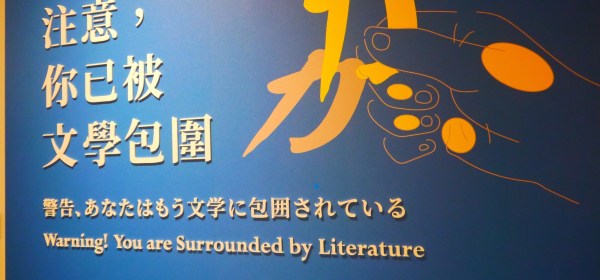
Digital Cultivation: How Taiwan’s Video Games Transform Wuxia into Cultural ‘Internal Power’ (Part 1) 

Written by Mark G. Murphy. This article explores how Taiwan’s video games use wuxia mythology to build cultural identity and soft power. The games weave local legends with historical events, focusing on themes of resistance, spiritual growth, and rootedness. The author argues that the practice of “cultivation” – developing inner strength – should be interpreted broadly, linking it to Taiwan’s cultural memory and landscapes. This allows players to engage deeply with Taiwanese culture, blending myth and real-world settings to reinforce collective identity and memory. Importantly, this means soft power becomes a kind of internal power, a key principle in wuxia philosophy.

On the Road:  A Taiwan Literary Scholar’s Routes’ of Worlding Taiwan Literature 

Written by Wei-ting Liou. This article focuses on the author’s experiences in “worlding” Taiwan literature through their academic work. This includes engaging with translation, examining Taiwanese American literature, and teaching English-taught courses on Taiwan literature and culture. The author believes these approaches can help reshape the conventional understanding of Taiwan literary studies.

Lolita Reimagined: Fang Si-Chi’s Voice in the Story of Sexual Violence

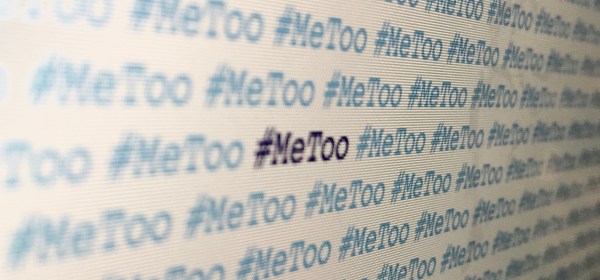
Written by Yixin Xu. This article argues that the novel Fang Si-Chi’s First Love Paradise can be considered a significant contribution to the #MeToo movement and a literary counterpoint to Vladimir Nabokov’s Lolita. It highlights the novel’s unique perspective by focusing on the victim’s experience of sexual abuse and the complexities of her emotional response. The author emphasises how the novel challenges the romanticized portrayal of the predator in Lolita and exposes the devastating reality of sexual violence.

Asian Migrants and Taiwanese Americans: A Dialogue on Identity, Activism, and History

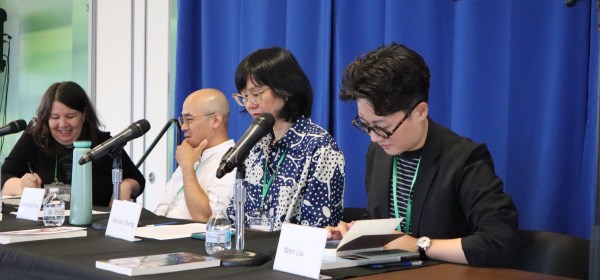
Written by Panchen Lo, Pei-Chen Cheng, and Ssu-chieh Jessica Fan (University of Texas, Austin). This article details a panel discussion at the NATSA conference featuring three scholars who discussed the experiences and identities of Taiwanese Americans. The panel focused on the intersection of Cold War geopolitics, class, and the complicated process of identity formation. It critically examined how historical context, class, and racial narratives have shaped the lives and experiences of Taiwanese Americans.

The New AI (Artificial Indigeneity): The Rise of Speculative Indigenous Fiction in Taiwan

Written by Ti-han Chang. This article explores a literary landscape where unique Austronesian cultural references blend with fantastical narratives of speculative realism which has given rise to a groundbreaking subgenre in eco-literature, Speculative Indigenous Fiction, in Taiwan. The author calls the new wave of fictional writing the new AI—‘Artificial Indigeneity’.

“Rage is a Virtue”: Re-reading Lin Yi-Han’s Fang Si-Chi’s First Love Paradise 

Written by Linshan Jiang. “Fan Si-Chi’s First Love Paradise,” the most influential book of Taiwan’s #MeToo movement, was published in English translation this May. This review points out the Confucian patriarchal system of East Asian society in which the story is embedded and underscores the novel’s powerful message that “rage is a virtue” in the fight against such oppressive situations. 

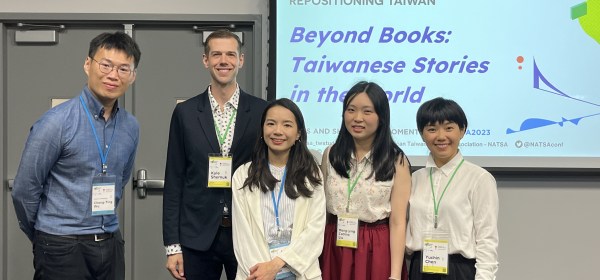
Beyond Books: Taiwanese Stories in the World

Written by Ssu-Chieh Jessica Fan and Cheng-Ting Wu. In recent years, Taiwan literature has experienced a surge in visibility and recognition within the global cultural community. To explore the border-crossing potential of Taiwanese stories, the planning team of the NATSA 2023 conference organized a special event, creating a lively platform for discussing the circulation and reception of Taiwanese fiction and non-fiction works in the international book market and academia.

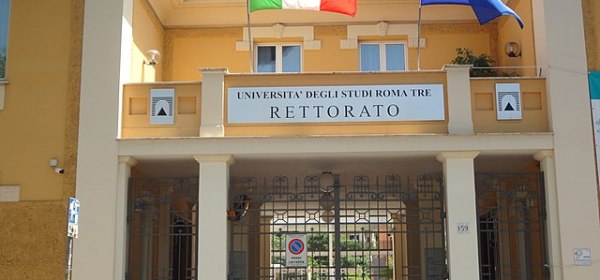
The Development of Taiwan Studies at Roma Tre University

Written by Rosa Lombardi and Silvia Schiavi. Since 2012, Roma Tre University carried out a series of activities to promote the knowledge and dissemination of Taiwanese culture and literature, contributing to the development of Taiwan studies in Italy. Before that, there was very little or no space devoted to Taiwanese literature in Italian universities, and courses in modern and contemporary Chinese literature mainly still deal with Chinese mainland literary production. Given this scarcity of studies on Taiwan in Italy, Prof. Rosa Lombardi and Dr Silvia Schiavi have promoted and implemented a series of events to raise awareness about the island and foster a better understanding of the Sinophone world through the introduction of Taiwan’s rich culture, history and literature to the students and the general public.

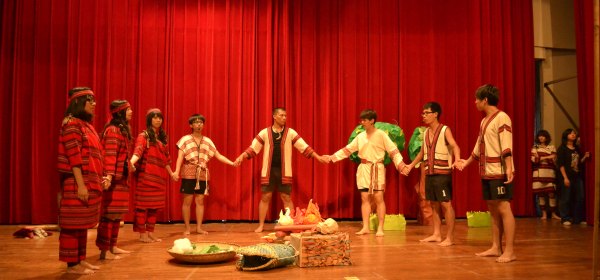
Indigenous Storytelling in and Beyond the Classroom

Written by Yi-Yu Lai. One afternoon in 2011, Hong-sui Lim visited a Kaxabu village due to his participation in an anthropological camp. This marked his first encounter with the Kaxabu people, one of the Plain Indigenous groups inhabiting the Puli Basins in central Taiwan. Lim was astonished by the small number of Kaxabu elders who still speak their mother tongue, as it is commonly believed that Plain Indigenous peoples have been assimilated by Han Chinese culture and have lost their own languages and traditions. As a result, Lim returned to the Kaxabu communities as an undergraduate student to learn more about their endangered cultural heritage and began collaborating with the Kaxabu people. 

1 2 3 4 5