Pleasing the Mainland or Island: The Politicisation of Taiwanese Stars During On-Going Cross-Strait Turbulence

Written by Jian Xu. On January 25, 2017, National Defense News, a military newspaper under the management of the Military Committee of the Communist Party of China, published a commentary titled, ‘Never allow artists to eat Chinese food and smash Chinese bowls.’ The article criticised pro-independence Hong Kong singer Hins Cheung and applauded his ban from appearing on one of China’s most popular reality shows, I Am a Singer, run by Hunan Satellite TV. It argues that ‘in front of the overall interests of the country and nation, every artist needs to stay rational within the bottom line. Overstepping the bottom line means no future. Any ‘idol’ will be discarded if they hurt the national emotion and dignity of the Chinese people.’

President Tsai’s Celebrity Marketing

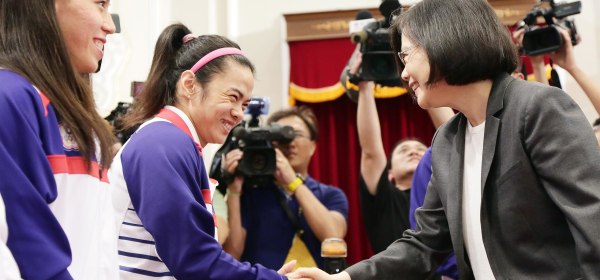
Written by Hsin-I Sydney Yueh. On November 13, 2021, NBA player Enes Kanter posted a Twitter message, stating that Taiwan is “not a part of China”; this particular video elicited a warm-hearted response from Taiwan’s President Tsai Ing-wen. She said, “Thank you, Enes, for standing with Taiwan and standing up for democracy.” Kanter quoted Tsai’s reply and said he wanted to “meet the brave people of Taiwan.”

Taiwan on the eve of the International Decade of Indigenous Languages: a comparative perspective

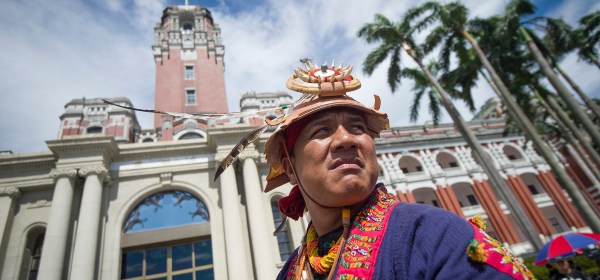
Written by Brett Todd. Amidst the upheavals of this pandemic period, few would recall that 2019 was the International Year of Indigenous Languages, and fewer still realise that the International Decade of Indigenous Languages 2022-2032 is about to commence. Both were declared by the UN General Assembly, a space in which Taiwanese voices are not heard. However, Taiwanese Indigenous representatives have participated in the UN Permanent Forum on Indigenous Issues (UNPFII), which joined UNESCO in calling for urgent action to arrest the declining use of native tongues worldwide.

Taiwan’s Music Reimagined in Garden Mingle: Is Blossoming Creativity Grounded in Resilient Infrastructure?

Written by Chen-Yu Lin. While the presence of music is found mainly in the side events of TCCF, it implies that music is an effective and powerful medium to engage the public and bring publicity. However, the relationship between music and other cultural technologies is yet to be probed, problematized, and identified. While the influence of technologies is praised and habitually presented in a positive light in TCCF, the unceasing tension between music creators and technological development—highlighted by discussions of streaming royalties and antitrust regulations—is concealed.

No Island Left Behind: Cross-Strait Relations in China’s National Museums

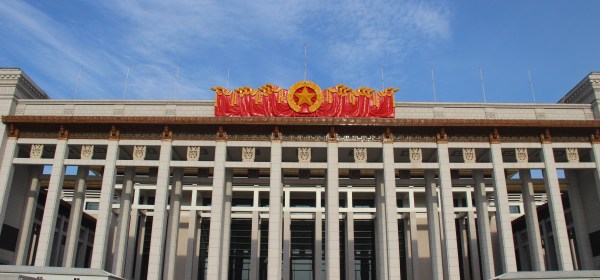
Written by Shih Chang. On October 25th, 2020, an exhibition commemorating the 75th anniversary of the recovery of Taiwan from Japanese colonial rule was held at the National Museum of China. The exhibition is divided into six sections that aim to show the “complete history” of the island of Taiwan from ancient to modern times. The first four sections: “Treasure Island, Taiwan,” “Nine States of Common Sorrow,” “Protecting Sovereignty against Japanese” Sovereign,” “Long Song as a Sword,” “Taiwan fending off the Japanese,” and “Cross-Strait Dreams,” objectively recreates the history of Taiwan’s “return to the motherland” and the development of cross-strait relations.

From Meteor Garden to BL? 20 Years of Taiwanese Pop Culture in The Philippines

Written by Yi-Yu Lai. “Have you ever watched Meteor Garden (流星花園) before? I was so crazy about Dao Ming Si and his gang before!” Many Taiwanese might be familiar with the similar conversation when they first met their Filipino friends. Since my friends know I am from Taiwan, they sometimes asked me to sing its theme song Qing Fei De Yi (情非得已) for them. They also love to hum the tune to me, though they cannot speak Mandarin at all.

Embracing Taiwan in Vietnamese Media

Written by Huynh Tam Sang and Tran Hoang Nhung. Taiwan’s popular culture—actors, idols, music, and dramas, usually known as the “Taiwanese Waves,” has gained popularity on Vietnamese media sites. The 2004—2008 period saw a boom of Taiwanese idol dramas, e.g. “It Started with a Kiss, 2005” (惡作劇之吻), “The Prince Who Turns into a Frog, 2005” (王子變青蛙), “The Tricks of Boys and Girls, 2006” (花樣少年少女), “My Lucky Star, 2007” (放羊的星星), screened on Vietnam’s TV channels. Taiwan’s singers and bands, e.g., F4, 183 Club, 7 Flowers, S.H.E, Jay Chou, were once familiar among Vietnamese youths.

Is Taiwan Ready to Go Net-Zero by 2050?

Written by Ming-sho Ho. On Earth Day (April 22) of 2021, Taiwan President Tsai Ing-wen unveiled the goal of realizing carbon neutrality by 2050. By then, Taiwan is expected to absorb or eliminate all locally generated greenhouse gas to reduce the net emission to zero. Tsai reiterated this pledge in the National Day (October 10) speech. The government is also preparing to amend the 2015 Greenhouse Gas Reduction and Management Act (GGRMA) by stipulating the net-zero commitment and adopting the measure of carbon pricing. As the world leaders are gathered for the Climate Change Conference of the Parties (COP26), more than 130 countries made official promises to go net zero.

Colonial Racial Science and Taiwan: How Indigenous Peoples Became Anatomy Data Points. Part II 

Written by Ko-yu Chiang, We received a reply confirming that the Mudan remains were indeed still stored in their collection. So, at this point, the puzzle was finally complete. This is the full story of the journey taken by these unfortunate victims. They came from a battle in Pingtung, to an anatomy lab in Yokohama, to the University of Edinburgh, where they were left in storage. 

Colonial Racial Science and Taiwan: How Indigenous Peoples Became Anatomy Data Points. Part I

Written by Ko-yu Chiang, Under the beating sun in Taiwan’s most southern tip, Mudan Township, an indigenous Paiwanese district with a current population of 5,000, opened a public committee in May 2020. Despite being in a small township in Taiwan’s far south, this committee was an international affair. In attendance was the council of Indigenous Affairs, Bureau of Cultural Heritage of the Ministry of Culture, the Pintung County government. The committee also extended to the other side of the world: Edinburgh University in the United Kingdom and the spirits of sixteen Paiwanese Mudan soldiers who have only recently returned home after 146 years abroad.

George Psalmanazar and the fake history of Taiwan

Written by Hung-yi Chien. In the spring of 1704, Psalmanazar published his book An Historical and Geographical Description of Formosa and reported many strange customs beyond people’s imagination. He claimed Formosa had a sophisticatedly organised society but was conquered by Japan in the seventeenth century. People of Formosa sacrificed thousands of boys’ hearts to worship their deities.

1 29 30 31 32 33 55