Taiwanese Popular Music as World History

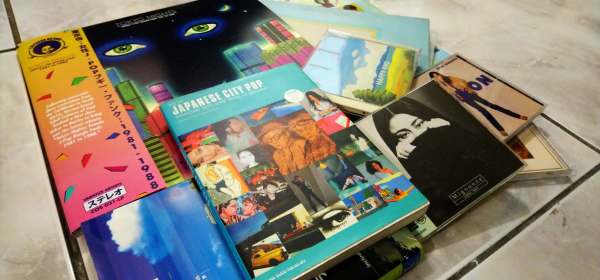
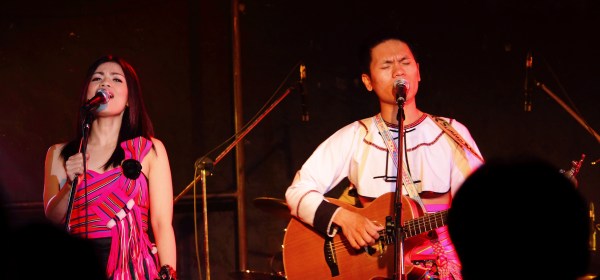
Written by Eva Tsai. Sure, I had an agenda: First, I wanted to create at the time—with popular culture details—a sense of the social and cultural space. Second, I wanted to suggest that any entry point is a good entry point into Taiwanese popular music, so long as it is put into a historical and geopolitical context, along with developing a curiosity and mindfulness about what else was going on when it was made and circulated. Such was the spirit we carried into Made in Taiwan: Taiwanese popular music as world history.

The public’s view on same-sex marriage legalisation

Written by Timothy Rich, Isabel Eliassen, Andi Dahmer and Carolyn Brueggemann. We ask to what extent has the public’s view on same-sex marriage changed in recent years and to what extent this influenced the 2020 election? The 2018 local elections clearly indicated a shift in the political saliency of the issue of same-sex marriage legislation over the past several years, while Tsai’s re-election with a continued Democratic Progressive Party (DPP) legislative majority would suggest that opposition to the issue has declined in salience.

Writing History Within/Outside of Taiwan: A Postcolonial Perspective on Shawna Yang Ryan’s Green Island (2016) and Wu Ming-yi’s The Stolen Bicycle (2015) – Part 1

Written by Ti-Han Chang. From a global perspective, today’s Taiwan is known for its cultural and ethnic diversity, its complex political relationship with China, and its recent achievements in socio-political democratisation (for instance, the Sunflower student movement and the legalisation of same-sex marriage). Yet, not many people have come to know contemporary Taiwan through its postcolonial literature, which, for me, is an important field that foregrounds Taiwan’s significance in the geographical context of the Asia Pacific in modern time.

IMAGINARY REALITY IN WUHE’S ‘THE LIFE THAT REMAINS’

Written by Julian Chih-Wei yang. Chen Kuo-Cheng (陳國城) – better known by his nom de plume Wuhe (舞鶴, literally ‘Dancing Crane’) – is a Taiwanese novelist renowned for his experimental, modernist style. His magnus opus, ‘The Life That Remains’ (餘生/Yusheng – officially translated as the ‘Remains of Life’), comprises only one single paragraph that is over two hundred pages long.

Wu Zhuoliu’s Orphan of Asia and the Madness of the Colonial Reality

Written by Makiko Mori. Wu Zhuoliu’s (1900–1976) Orphan of Asia is a renowned work of colonial Taiwanese literature. Surreptitiously written towards the end of Japan’s colonial rule in Taiwan (1895-1945), this semi-autobiographical novel bears a powerful witness to Taiwan’s deeply troubled, albeit legitimately modern, claim for the right to self-determination and self-representation.

Why are Taiwanese Politicians Collaborating with Youtubers?

Written by Sam Robbins. Taiwanese politics has been digital as long as it has been democratic. Taiwan’s first direct presidential election in 1996 was hotly debated on popular BBS systems of the time. More recent elections have been fought on blogs, PTT, facebook and elsewhere. Taiwanese politicians have always been looking for new methods to connect with voters and make themselves visible in an ever-changing digital landscape.

Taiwan’s Highly Anticipated Historical TV Drama ‘Island Nation’ to Premiere on 20 January

Written by J. Michael Cole. A long time in the making and after many challenges, a major politico-historical TV drama about Taiwan’s democratization will finally hit TV sets nationwide on 20 January. Based on political developments and figures from the 1990s, “Island Nation” (國際橋牌社) follows the hopes, fears and travails of a wide set of fictional characters in the dramatic years of Taiwan’s transition from an authoritarian state to a democracy.

The Limits of Gender Bias in Perceptions of Candidates

Written by Timothy S. Rich and Alexandrea Pike-Goff. Taiwan is notable in the region for its successful efforts towards gender parity for elected offices. The 2016 Legislative Yuan election resulted in women winning 38% of seats, comparable more to democracies in Northern Europe than other East Asian democracies. For example, women comprise only 17.1% of seats in South Korea’s 2016 National Assembly election and 10.2% of Japan’s 2017 House of Representatives election. Taiwan’s progress in this regard has been attributed to multiple factors, including gender quotas at the national level where parties allot half of their party list candidates to females, as well as local level quotas that develop a pool of female candidates with the experience to be competitive for higher offices.

How Will Conservative Backlash to Same-Sex Marriage Impact Tsai Ing-wen’s Chances for Re-Election?

Written by Jens Damm. I argue that Taiwanese society’s movement towards the acceptance of human rights as global values, multiculturalism, the rights of individuals etc. is intrinsically linked to the development of a Taiwanese identity (based what Habermas called a Verfassungspatriotismus) as used to assert Taiwan’s international status. Taiwanese LGBTQ rights could thus act as a signifier of Taiwan’s democratisation with the aim of achieving soft power and opposing any form of a ‘one China policy’.

1 43 44 45 46 47 55