Realising society in harmony with nature through the Taiwan Partnership for the Satoyama Initiative

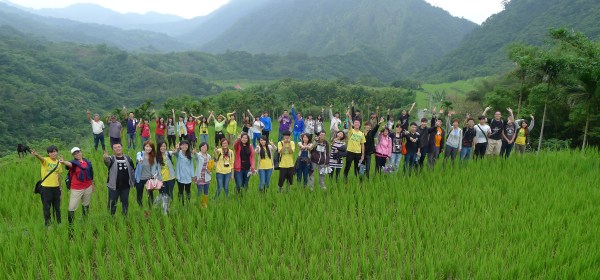
Written by Polina G. Karimova and Kuang-Chung Lee. The Satoyama Initiative’s introduction to Taiwan in late 2010 became a timely and much anticipated solution to the revival of Taiwan’s SEPLS. The Initiative’s social-ecological systems thinking was similar to that of local and indigenous communities and it benefited from Taiwan and Japan’s shared historical and cultural bonds, as well as Taiwan’s comparable socio-ecological threats and agricultural patterns.

Ivan Karamazov with a Maoist Face: Guo Songfen’s Book Collections and Third World Existential Marxism

Written by Po-hsi Chen. Guo’s concern resembled the philosophical rendition of the post-war Czechoslovakian ‘socialism with a human face’, which emphasised individual freedom and personal choice under the Soviet regime. Indeed, Guo passingly referred to ‘Second World’ Eastern European communist theorists’ re-reading of Sartre in the post-Stalin context.

Documenting Taiwanese Modernism: Le Moulin’s Untimely Historical Project

Written by Tim Shao-Hung Teng. In 2015 Taiwanese filmmaker Huang Ya-li (黃亞歷) released his documentary Le Moulin (Riyaori shi sanbuzhe/ 日曜式散步者) to critical acclaim. The film recounts the major life events of four core members of Taiwan’s prewar surrealist poetry society, Le Moulin (fengche shishe/風車詩社). Known for its experimental style that does away with interviews and voice-over narrations, the nearly-three-hour film cites, extracts, pastes, and freely associates materials such as literature, paintings, photography, sounds, film footage, diary entries, and newspaper clippings. These sources are not always readily recognisable and nor are they all directly related to the poets’ works.

The Critical Functions of Taiwanese Education Agents During the Era of Commercialisation in Global Higher Education

Written by Kenneth H. Chen. My fieldwork uncovered the critical functions played by Taiwanese education agents in sending international students abroad. These education agents served as mediators of students and parents’ feelings, emotions, and relationship with others. Studies show that middle-class parents and children are calculative and anxious about seeking college education abroad.

CASE STUDY: English-Language Media Reaction To The End of China’s FIT Policy

Written by Ben Goren. On Wednesday 31st July, China’s Ministry of Culture and Tourism announced that it would stop issuing individual travel permits to residents in 47 Chinese cities. The announcement was a single sentence issued by the Ministry stating such trips would be suspended “due to current cross-Strait relations” and did not further elaborate. This lack of detail created space for speculation in media commentary on the change in policy. Searching for “China ban solo tourists Taiwan”, I found 21 English language media reports issued within a week of the policy announcement from outlets regarded as ‘international’ or those with a globally recognised brand.

Why China’s solo tourist ban is not a big deal for Taiwan

Written by Min-Hua Chiang. Businesses and entertainers have been forced to adhere to the “One-China Policy”, and from 1st August 2019 Chinese nationals from 47 cities in China were prohibited to visit Taiwan on an individual basis. China’s new tourism restraint is another attempt to intimidate Taiwan.

Taiwanese officials estimated a reduction of NT$18,000 million (US$574 million) in tourism revenue and a fall of 0.1% GDP following China’s new tourism policy. Looking at the statistics in detail, the impact on Taiwan’s economy is limited.

The Evolving Personhood of the Fetus: Abortion Ritual in Taiwan within the Transnational Flow

Written by Grace Cheng-Ying Lin. In Taiwan, abortion rituals (嬰靈超渡, 嬰靈供養) have been gaining popularity since the 1980s. The ritual attempts to appease or rescue Yingling (fetus spirits嬰靈), the spirits of fetuses that have died from abortions or miscarriages. Within most contemporary religious discourse, abortion is seen as an inappropriate means of ending a life.

Critical Women in Seediq Bale: A Response to Professor Chin-ju Lin Concerning Seediq Cultural Politics

Critical Women in Seediq Bale: A Response to Professor Chin-ju Lin Concerning Seediq Cultural Politic. Written by Darryl Cameron Sterk. In Seediq Bale men cut these ties asunder; and though I would not expect to find the same division of labour today, my observation is that it is still tends to be women who are trying to keep things together. I relied on Temi Nawi, a former Catholic nun who devoted the last three decades of her life to Seediq education and research, for the material on weaving.

Han Kuo-yu and the Enigma of Taiwan’s Indigenous Politics

Written by Scott E. Simon. In the 2018 municipal elections, when Han emerged from the side-lines to become Kaohsiung’s first KMT mayor since 1998, his support was strongest in Indigenous mountain districts. Although he won a relatively modest 53.87% of votes overall, he won 85% of eligible votes in Namasia District, 89% in Taoyuan, and 92% in Maolin. How can we explain the Indigenous zeal for Han?

1 45 46 47 48 49 55