‘They’d rather sit in an air-coned office than work under the scorching sun’: dirty, dangerous and difficult farm labour in rural Taiwan

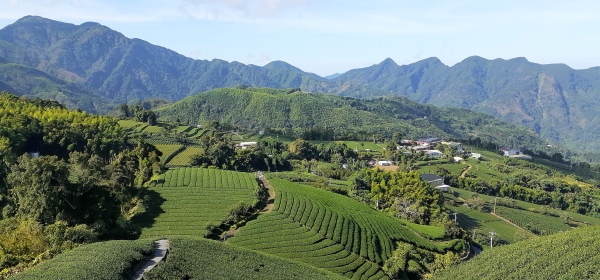
Written by Isabelle Cockel. Labour migration from Southeast Asia to Taiwan has been indispensable to Taiwan’s economic development in the last three decades. Farm work is one of the most recently opened sectors for migrant labour, and migrant farm workers, regular and irregular, have become a new and crucial source of labour in rural Taiwan. How was the recruitment of farm workers justified by the Council of Agriculture (CoA, currently the Ministry of Culture), the lobbyist for opening the farm labour market, and the Ministry of Labour (MoL), the overseer of migrant labour policy, sheds light on three critical and inter-related issues.

Taiwan’s Tibetan Buddhist Monk Dilemma and its Unintended Consequences

Written by Dolma Tsering. Taiwan is known as the beacon of democracy, and its competitive democratic principles and practices distinguish it from authoritarian China. Advocacy for promoting religious freedom is one of the important tasks undertaken by the government. For instance, as a part of this advocacy, in 2018, President Tsa Ing-Wen announced that Taiwan would donate US$200,000 per year for five years to the United States’ International Religious Freedom Fund as a part of Taiwan’s contribution to advancing global religious freedom. The government, annually in association with the American Institute in Taiwan (AIT), hosts an international forum for religious freedom to establish a more inclusive society in Taiwan. However, on 6th June 2023, more than 112 Tibetan Buddhist centres in Taiwan joined a press conference which called for the government’s unfair treatment of visa restrictions for Tibetan Buddhist monks in Taiwan and therefore demanded an amendment to the existing visa restriction.

Triangulating the Taiwanese Spirit in Southern California: Colonial Hauntings at the 228 Commemorative Concert

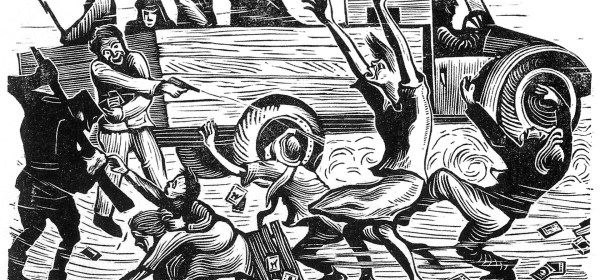
Written by Chun Chia Tai. In February, I saw a text message in a Taiwanese group chat promoting a concert commemorating the 228 massacre caused by the Kuomintang dictatorship in Taiwan on February 28th, 1947. The concert was called The Spiritual Day of Taiwan: 2-28 76th Commemorative Concert and was hosted by two Taiwanese American organisations: the Taiwanese United Foundation and the Taiwan Elite Alliance, since 2007. The performers were mainly Taiwanese. Many of them were not professionals but members of local Taiwanese church choirs. Most of the audience was familiar with the songs being performed; therefore, they sang along with the performers.

Cross-border Movement of Labour between Taiwan and the Philippines: A Taiwanese NGO Worker’s Perspective

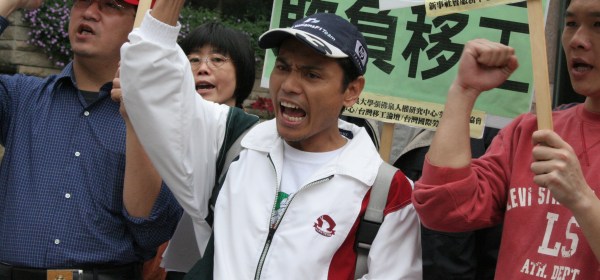
Written by Yi-Yu Lai. Lennon Wong is the director of a shelter for migrant workers in Taiwan. Before joining the shelter in the early 2010s, he was already a labour activist and worked in the Chinese Federation of Labour and the First Commercial Bank Union. Although his prior work was not directly relevant to migrant workers in Taiwan, his engagement with the labour movement may have started with the issue of migrant workers from Southeast Asia. As a result, we may thus understand the cross-border movement of migrant workers between Taiwan and the Philippines through some of his observations.

Tibetan Diaspora in Taiwan: Who are They and Why They are Invisible (2)

Written by Dolma Tsering. Taiwan’s dilemma related to TDT reflects the structural challenges of its democratic system that continues to maintain many of the ROC’s political and administrative structures. Some scholars I interviewed argued that constitutional reform related to Tibet and Tibetans would significantly impact the current status quo of Taiwan and its relationship with China. Therefore, because of this complex nexus, Taiwan has failed to reform many of the early nationalist models, and the dilemma related to Tibet is one of them.

Tibetan Diaspora in Taiwan: Who are They and Why They are Invisible (1)

Written by Dolma Tsering. The government’s official website describes Taiwan as a multicultural society. It further stated that in addition to the dominant Han population, Taiwan is home to aboriginals, Malayo-Polynesian and new immigrants that hailed mainly from China and Southeast Asian countries. The Han population constitutes 95 per cent of the total population, followed by new immigrants that constitute 2.6 per cent and the indigenous population with 2.5 per cent. However, what is missing in this description, in particular and generally in the discourse of immigrants and ethnic diversity in Taiwan, is the Tibetan diaspora.

Towards a Better New Normal: The Solidarity of Differences and Cultural Safety of Public Health  

Written by Po-Han Lee. The ethical imperative of the human rights-based approach to public health requires the ‘acceptability’ (including cultural appropriateness) of health policymaking, impact assessment, and care services. In this context, Cultural competence in public health practices is concerned with ‘health for all’ through ‘safety for all’. That is, the principle of cultural safety, along with awareness of intersectional marginalisation, is to eliminate health inequities due to systemic racism and eventually decolonise public and global health practices.

The Economic Impact of COVID-19 Outbreaks in Migrant Workers’ (MW) Dormitories in Singapore and Taiwan 

Written by Jackson Teh. In crux, we should note the link between the general public’s health, both physically and mentally, with that of the migrant workers: only when local community cases are stable, and their sentiments positive, are migrant workerss allowed to move around and go to work; only when migrant workerss move around and go to work, can they feel better and hopeful about themselves and the future. Therefore, the mental well-being of both groups in a country must not be seen as isolated variables. 

Falling Through the Cracks of Care: Southeast Asian Migrant Workers Navigating Through Healthcare in Taiwan

Written by Shao-Yun Chang (張韶韻) and Hang-Tang Chen (陳翰堂). Since their labour was first viewed as a supplement to the domestic labour market, Southeast Asian migrants have become indispensable to the manufacturing, agricultural, fishing, and care industries over the last three decades. While the initial foreign population was primarily Thai and Filipino workers, Vietnamese and Indonesian workers are now taking over factory jobs, farm work, and caring for seniors and the disabled. 

Taiwan’s Asylum Policy: A Lack of Political Will to Implement the Law?

Written by Kristina Kironska. Taiwan is considered one of the most progressive countries in Asia but has no asylum law. Although debates on the issue occasionally occurred for more than ten years, there has been no progress on the draft asylum law since its second reading in 2016. One significant point of contention is to what extent an asylum law should address not only people from “uncontroversial” foreign countries, such as the Rohingya in Bangladesh, but also people from China, Hong Kong, and Macau. As with any issue that touches on cross-strait relations, the situation is complicated: on the one hand, the government celebrates Taiwan’s status as a beacon of human rights; on the other, extending asylum to PRC citizens risks stoking tensions with Beijing. 

Matsu Language: A Language Too Unique To Forget

Written by Kai-Yang Huang. In 2019, President Tsai Ing-wen signed the National Language Development Act and announced its implementation. For a long time, pragmatism has had a significant impact on Taiwan. People believe that by promoting the use of English to become a “bilingual country,” Taiwan will be able to keep up with the rest of the world. Little do they know that what distinguishes Taiwan in the international community is the very distinctiveness of Taiwanese cultures. As a result, the primary principle of promoting natural language as a national language is to re-inherit a local worldview that has been around for a long time. This will strengthen the worldwide competitiveness of Taiwanese college students. 

1 2 3 4 6