Art Education for the Real World: An Interview with an Artist-Teacher Pin-Hsuan Tseng

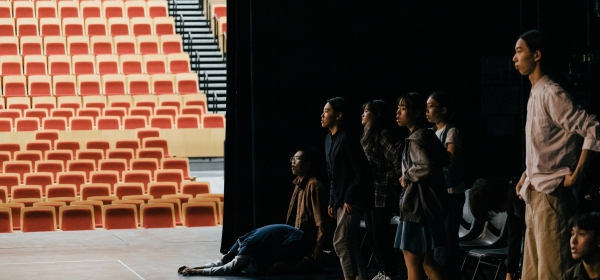
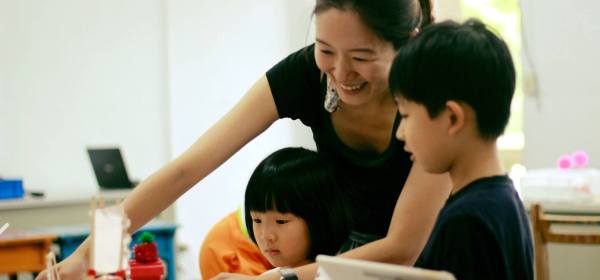
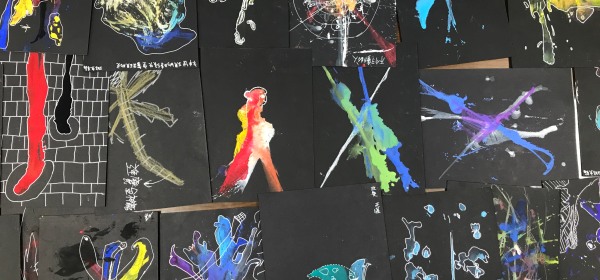
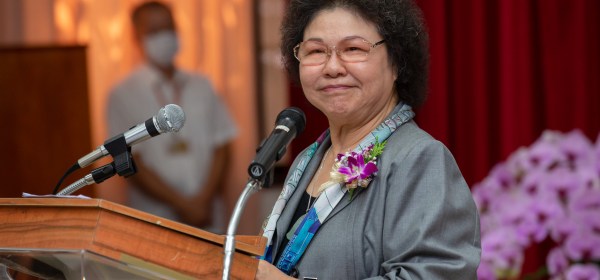
Written by Yi-Cheng Sun; translated by Yi-Yu Lai. Pin-Hsuan Tseng taught art at Gongliao Junior High School in New Taipei City from 2012 to 2022. Besides being an art teacher, she is well-known for her 2017 initiative called the “Ordering Dishes to End Discrimination” movement. This gentle movement embedded in everyday life aimed to restore the proper name of “Fushan lettuce,” which is commonly referred to as “mainland girl”, with underlying discrimination against females from China. Regarding nationality and gender, Taiwanese media once used “mainland girl” to refer to Chinese prostitutes who arrived illegally in Taiwan, while the smooth appearance of Fushan lettuce was thought to correspond with this image.

The Development of Taiwan Studies at Roma Tre University

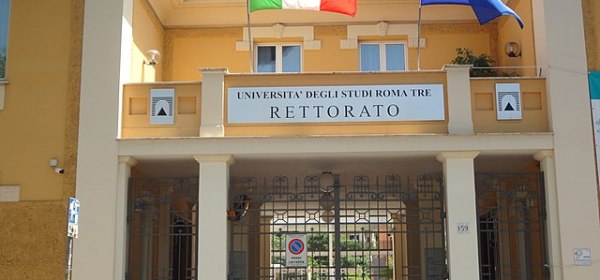
Written by Rosa Lombardi and Silvia Schiavi. Since 2012, Roma Tre University carried out a series of activities to promote the knowledge and dissemination of Taiwanese culture and literature, contributing to the development of Taiwan studies in Italy. Before that, there was very little or no space devoted to Taiwanese literature in Italian universities, and courses in modern and contemporary Chinese literature mainly still deal with Chinese mainland literary production. Given this scarcity of studies on Taiwan in Italy, Prof. Rosa Lombardi and Dr Silvia Schiavi have promoted and implemented a series of events to raise awareness about the island and foster a better understanding of the Sinophone world through the introduction of Taiwan’s rich culture, history and literature to the students and the general public.

Indigenous Storytelling in and Beyond the Classroom

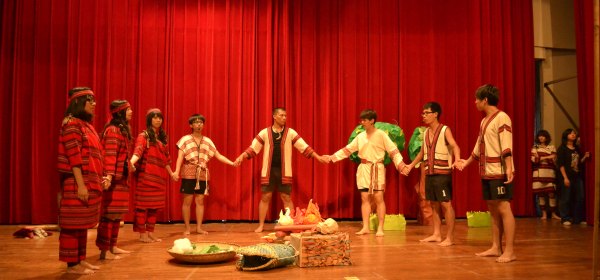
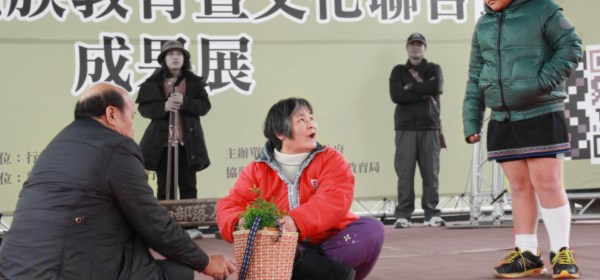
Written by Yi-Yu Lai. One afternoon in 2011, Hong-sui Lim visited a Kaxabu village due to his participation in an anthropological camp. This marked his first encounter with the Kaxabu people, one of the Plain Indigenous groups inhabiting the Puli Basins in central Taiwan. Lim was astonished by the small number of Kaxabu elders who still speak their mother tongue, as it is commonly believed that Plain Indigenous peoples have been assimilated by Han Chinese culture and have lost their own languages and traditions. As a result, Lim returned to the Kaxabu communities as an undergraduate student to learn more about their endangered cultural heritage and began collaborating with the Kaxabu people. 

Excavating Ancient Knowledge: Climate Action and the Practice of Sustainability

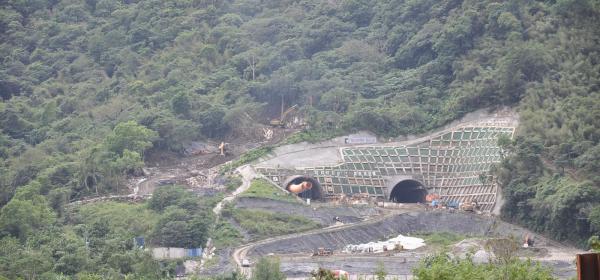
Written by Chung-chun Wang. Since museums are highly and closely related to society and the public with their transformation, the new definition demonstrates that accessibility, inclusiveness, diversity and sustainability are the key aspects that echo the contemporary trends. Therefore, museums usually aim to include these notions in their plans, research, and exhibitions. For example, the emphasis on “environmental education” is widely seen in museums, as it is directly linked with sustainability associated with the current energy and food crises. In this regard, how does archaeology, a discipline considered an old, ancient, and mysterious field with studying prehistories and peoples, respond to the vision of sustainability?

Transformation of Women’s Status in Taiwan, 1920-2020

Written by Doris T. Chang. Among all the gains made by Taiwanese women in the past century, achieving leadership roles in the political arena is perhaps Taiwanese women’s greatest achievement. During the Japanese colonial era, women had no right to vote. However, after lifting martial law in 1987, Taiwan emerged as a vibrant democracy. Due to political parties’ commitment to nominating more qualified women candidates for elections in the late 1990s and after that, the percentage of women elected to Taiwan’s Legislative Yuan reached 42 per cent in 2020 — the highest in Asia. This is equivalent to the percentage of women legislators in most Scandinavian countries. But Taiwanese women’s achievement in the political arena would not have been possible without making significant progress in their educational attainment throughout the twentieth century.

For the UK, Taiwan Could Provide an Alternative to Confucius Institutes

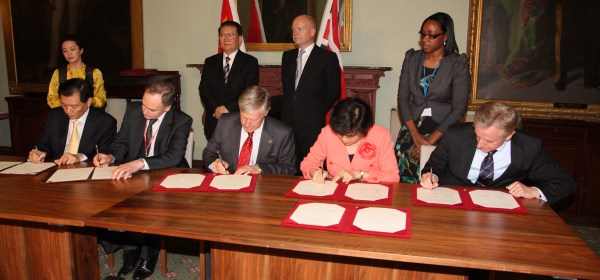
Written by Adrienne Wu and Marshall Reid. For the United Kingdom, 2022 was a year of significant change, particularly in its approach to the People’s Republic of China (PRC). Following years of relatively cordial UK-PRC relations, London followed the example of many other European states by shifting to a far more sceptical, confrontational policy toward Beijing. While this transformation was the product of various factors—from growing concerns regarding China’s human rights abuses to rising awareness of the PRC’s coercive economic policies—it was heavily influenced by domestic political manoeuvring. Nowhere was this more evident than in the competition between Liz Truss and Rishi Sunak to succeed Boris Johnson as prime minister, in which both candidates sought to frame themselves as the most tough-on-China. In a move emblematic of this game of China-sceptic one-upmanship, Sunak made the bold claim that he would close all of the UK’s remaining Confucius Institutes, the PRC’s international Mandarin language learning centres.

Roots and Routes in the Malay World and Beyond: Dialogues Between Singapore and Taiwan

Written by Doris Yang. In 2021, five artists/researchers from Singapore, Malaysia, and Taiwan gathered to present their project, The Malay World Project: Roots & Routes, in an online event held by Taipei Performing Arts Center. This event was inspired by a research project asking, ‘Where do the Malays originate?’ Not only did the project study the diaspora of Malay peoples around the Asia-Pacific, but it also created a space for dialogue between Taiwan’s Indigenous people and Malay in Singapore and Malaysia on the issues of identity and belonging. This article compares the advocacy experiences of Malay people in Singapore and Indigenous people in Taiwan. I argue that there is space to foster additional connections and collaborations between the civil societies among these two groups.

‘Dissertation Gate’, Candidates’ Background and the 2022 Local Elections in Taiwan

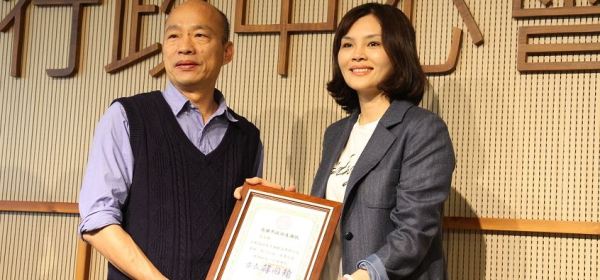
Written by Mei-Chuan Wei. The term ‘Dissertation Gate’ has been used by the media and general public to highlight an issue which marked the 2022 local election campaign in Taiwan. It refers to the phenomenon unseen before the mayoral by-election of Kaohsiung City in 2020, when the candidate of the Kuomintang (the KMT) Mei-jhen Li (李眉蓁) was fiercely criticised for plagiarism in her Master’s dissertation. Li publicly apologised for her plagiarism after the university from which she obtained her Master’s decided to revoke her degree. Whether or not plagiarism was the major factor contributing to Li’s failure in the election remains to be proved. Yet negative campaign strategies focusing on candidates’ dissertations, specifically plagiarism, have become increasingly popular among almost all parties since then.

Why Does Education Affect Local Elections in Taiwan?

Written by Yu-tzung Chang. What is more worrisome is that the majority of candidates in this local election have adopted a negative campaign strategy and have not put forward specific policy proposals, which may lead to more confrontation in society in the future. Political polarization has produced a crisis of democracy in Western countries. Traditional political polarization is being replaced by affective polarization, in which partisans are hostile to supporters of other parties and regard them as the main enemy. Taiwan is no exception to these developments. This will have a potentially negative effect on the development of Taiwan’s democracy.

Taiwan Government Scholarship Award: An Awarded Archaeologist’s Observation

Written by Jiun-Yu Liu. Taiwanese scholarship of government sponsorship for overseas study is considered the most prestigious scholarship issued by the government because of its long history, low award rate, and the amount of financial support. In addition, the applicant needs to pass the examinations to receive the award. The Qing government started the predecessor of this scholarship in imperial China, then sponsored by the Boxer Indemnity Scholarship Program, and finally became the current award that administrates the Ministry of Education (MOE) of Taiwan. Over the years, this Taiwanese scholarship has sponsored many talented researchers who contribute significantly to Taiwanese society. Still, we also see opinions on cancelling this award and adjusting the scholarship rules. As a former awardee and archaeologist, I share a few personal observations and thoughts.

Incubating Overseas Talents for the Future Policy? Uncertain Investment in the Taiwanese Scholarship

Written by Yu-Kai Liao. A doctoral scholarship is crucial for many PhD students to start their academic careers without financial worries. This article illustrates how the Taiwanese scholarship incubates overseas Taiwanese doctoral students for future policy. However, it is an uncertain investment for the Taiwanese government since there is a foreseeable gap between governmental visions and individual interests. In addition, even though doctoral students receiving the Taiwanese scholarship must return to serve in Taiwan, it is very flexible in practice to complete this obligation and contribute to Taiwanese society.

1 2 3 4 5 7