The Long history of Taiwan’s Medical Emigration “problem”: Part I.

Written by Hsu Hung Bin. The phrase “五大皆空” (all the key fields are lacking) has become common, referring to the lack of doctors in internal medicine, surgery, gynaecology, paediatrics and emergency care. There has also been discussion of the net outflow of doctors from Taiwan. All of this brought doubts to the once hopeful students as they began their medical education. I often hear students asking questions like “is the medical system here really going to collapse?” “Do we have to leave Taiwan and start a new life abroad?” “Did I make the right choice for my career”?

Taiwan’s Experience and Global Efforts in Reponse to Covid-19: Towards a Digitalised and Sustainable World

Written by Chih-Wei Chen. In recent decades, the world is facing increasingly severe challenges caused by climate change, natural disasters, worldwide public health issues, and so on. To combat the challenges, the United Nations officially launched Sustainable Development Goals (SDGs) in 2015 and advocated that all countries around the world endeavour to cooperate to achieve the goals. On the other hand, the advent of the digital era and the rapid development of digital technologies, such as big data analytics and artificial intelligence (AI), have provided new opportunities for people to implement sustainable development measures.

Taiwan and the United Nations: Is the Tide Turning?

Written by Chieh-chi Hsieh. Recent international developments have prompted some to speculate that we are in the midst of a critical juncture for Taiwan’s bid for admission to the United Nations (UN). On the plus side, Taiwan has received considerable international recognition for its successful policy responses toward the COVID-19 pandemic. However, it is arguable that this in itself will increase the odds for its campaign to join the UN.

Pandemic, Labour, and Inequality

Written by Chin-fen Chang. As an export-driven economy, Taiwanese manufacturing has suffered a sharp drop in demands overseas during the first half of this year. Local businesses in Taiwan have also been affected by a lack of foreign tourists. Moreover, Taiwanese have been self-restrained in their consumption, suffering from income loss or concerning worse financial conditions to come in the near future. Labour markets also show significant job losses along with cutting regular earnings for those fortunately still on the payroll.

How Taiwan Wins the Hearts of Southeast Asian States

Written by Ratih Kabinawa and Jie Chen. President Lee Teng-hui transformed ROC Taiwan’s foreign policy from a rigid “man and bandits don’t co-exist” mindset, a dictum which defined the Chiangs’ era, to one focusing on pragmatic diplomacy. This stance emphasised flexible ways to promote Taiwan’s international standing as its own legitimate sovereign state. President Lee used Taiwan’s achievement as a new democracy with impressive economic and technological prowess to win fresh international sympathy and support.

Clash of Mask Diplomacies? The COVID-19 and Changing Perceptions of China and Taiwan in Central and Eastern Europe

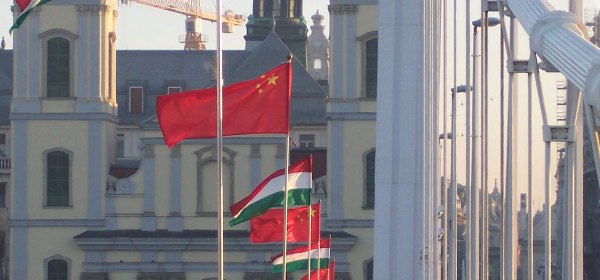
Written by Tamás Peragovics and Ágnes Szunomár. It has become a truism that China’s mask diplomacy seeks to enhance the country’s global standing in the wake of the Covid-19 pandemic. By exporting medical aid and equipment, the Beijing Government rushes to the rescue of countries still struggling to contain the virus. Positioning itself as saviour rather than villain, China’s motivation is to cultivate a global aura of blissful ignorance with regards to the outbreak’s early mismanagement, including the silencing of Chinese whistle-blowers who emphasized contagion risks and tried to warn of the severity of the new pathogen.

Beyond Economics: The Value and Meaning of the New Southbound Policy

Written by Dr. Alan H. Yang and Tung Cheng-Chia. Great power competition between the United States and China has intensified under the backdrop of the Covid-19 pandemic. Whether in the World Health Organization or the United Nations, this intensification is compelling states to reorient their political alignment. Taiwan needs to reflect on and strategically reposition itself in this geopolitical tug-of-war. A top priority for the island-nation is to strengthen its links and influence in Asia.

Tsai’s Triple Stimulus Voucher Programme and a Missed Opportunity

Written by Chieh-chi Hsieh. After the Democratic Progressive Party (DPP) Government’s astonishing policy responses in containing the outbreak of COVID-19, the new battleground that would determine the trajectory of President Tsai Ing-wen and her Government’s approval rate lies in their ability to revitalise Taiwan’s economy. With the official launching of the “triple stimulus voucher” (三倍券) programme in July, it provides a good opportunity to evaluate the underlying rationale for this economic stimulus package and why it was a missed opportunity for Tsai to further her green agenda.

Taiwan and the EU ‘safe list’

Written by Ian Inkster. It will now be well-known to our readers that the European Union has excluded Taiwan from ‘a safe list,’ which allows citizens unhindered travel to-and-fro the Eurozone. It is important to note that there is no obligation for the EU to give full, or even sensible reasons, for this decision. Still, we can nevertheless examine the evidence for ourselves.

Taiwan can help!

Written by Chun-yi Lee and Yu-ching Kuo. The world changed this year. Covid-19 appeared in the Chinese city of Wuhan, and gradually spread to Europe and the United States. At the time of writing (June 14), there are nearly 8 million confirmed cases of the virus worldwide. The global death toll is 431,225, with the United States suffering the most deaths (115,578). Yet Taiwan, a small, self-ruled island that is geographically close to mainland China, had seen only 443 confirmed cases and 7 deaths by June.

Taiwan’s Mask Diplomacy and the International Responses

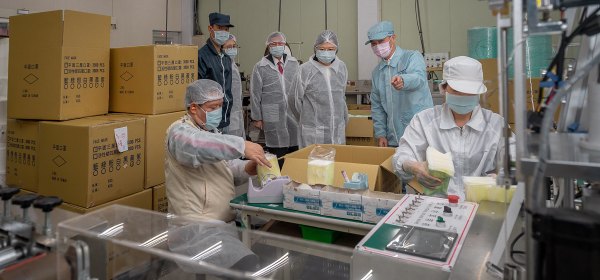
Written by Najee Woods. In early April, President Tsai Ing-wen announced that the nation would donate 10 million masks to nations in need, particularly to the United States and European countries. These countries being the two hardest hit by COV-19. The news was welcomed by both the governments of the United States and the Europe Union. The U.S. Department of State lauded Taiwan for being a true friend in a time of need, while the European Commission President Ursula von der Leyen personally thanked Taiwan via her official Twitter account.

The KMT’s Shifting Attitudes on Tsai’s Mask Diplomacy

Written by Najee Woods (葉正忠). While Taiwan’s current mask diplomacy has been perceived as successful, the question arises: why doesn’t the KMT want the central government aiding those nations in dire need for masks? The party flip-flopping sends a mixed message to the international community that Taiwanese are not willing to lend a helping hand to combat COVID-19, which hurts the interest of all Taiwanese people, not just the ruling party. While the PRC health diplomacy is faltering, the international community has now begun to seek out Taiwan, allowing the island nation to lead the world in combating COVID-19.

1 7 8 9 10 11 13