From A Black Pot to Kuroshio Odyssey 

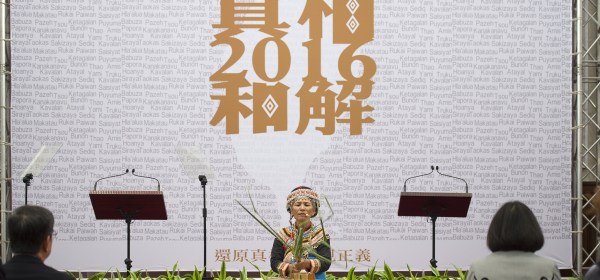
Written by Jiun-Yu Liu. Kuroshio Odyssey: Maritime Memories, Culture, and Landscapes (follows as KO) is a mini exhibition held at the Burke Museum in Washington State, USA (Oct 14 – Nov 28). KO focuses on two key themes: the diverse Indigenous cultures and the stunning natural landscapes in eastern Taiwan. As a multi-media exhibition, KO showcases material collections from multiple Indigenous communities in eastern Taiwan and includes an immersive element as visitors can access QR codes that provide images and detailed information about the selected pieces. In addition to the onsite exhibition, two Indigenous Taiwanese guest curators working in Taiwan and New Zealand have chosen wonderful artefacts from the Indigenous Peoples Cultural Development Center collection and converted them into an online exhibition to echo and enrich the KO exhibition content.

Wandering Back and Forth in The Sea of Books and Cultural Holdings – In Searching of Indigeneity, Positionality, and Self-identity 

Written by Nikal Kabala’an (Margaret Yun-Pu Tu). This article presents a reflective account from my perspective as one of the curators. It primarily focuses on the “behind the scenes” aspects, adopting an “inside out” approach to share my personal life experiences and the journey of research and curation as a mixed-background Taiwan Indigenous person from the Pangcah/’Amis community and a Ph.D. Candidate studying abroad in the fields of Indigenous Studies, Taiwan Studies, and Law. Supported by the main organisers—the Taiwan Academy in Los Angeles, the Burke Museum, and the Tateuchi East Asia Library (TEAL)—along with the co-organizers and their collaborative and generous sponsorships, I hope to unfold the narratives and open the dialogues driven by a passion for interdisciplinary pursuits. 

Kuroshio Odyssey: Bridging Cultures and Hearts Across Continents 

Written by Ellen Y. Chang. The Taiwan Studies Arts & Culture Program at the University of Washington (UW) proudly presents Kuroshio Odyssey: Maritime Memories, Culture, and Landscapes. This initiative celebrates the rich Indigenous cultures of Taiwan and underscores their profound ties to the Pacific Northwest. It features a multi-sited exhibition at the Burke Museum and the UW Tateuchi East Asia Library, an online display hosted by Taiwan’s Indigenous Peoples Cultural Development Centre, and a series of family-friendly events. With four curators—Zuzule Demalalade, Nikal Kabala’an (Margaret Yun-Pu Tu), Jiun-Yu Liu, and Tien-Li Schneider—representing diverse ethnic backgrounds and possessing unique socio-cultural and institutional expertise, the program embraces a multitude of perspectives. Their partnership extends beyond borders, connecting Taiwan to the Pacific Northwest.

For Molecular Archipelagic Thinking

It is a privilege to present this insightful piece ‘For Molecular Archipelagic Thinking’ from Professor Chun-Mei Chuang, a respected figure in the field of Sociology from Soochow University, Taipei. Professor Chuang’s work is marked by her interests in feminist theories, postcolonial discourse, ecology, and animal studies. In this contribution, she graciously shares her experiences and reflections on teaching sociology in Taiwan, providing a rare glimpse into her unique approach and the broader sociological landscape in Taiwan.Chun-Mei Chuang is a Professor in the Department of Sociology at Soochow University in Taipei, Taiwan. Her research interests include feminist theories, postcolonial discourse, ecology and animal studies.

Colonial Nostalgia and the Delegitimisation of Pro-democracy Forces in Hong Kong and Taiwan

Written by Zeng Ee Liew. The term ‘colonial nostalgia’, or 戀殖 (lian zhi), has appeared more and more since the 2000s in the discourse used by Mainland China to describe the politicians or activists who advocate for democracy or even independence in both Taiwan and Hong Kong. Very often, those democracy or independence activists will be described as ‘traitors’ who still harbour lingering love or affection and pander to the former Western or Japanese colonial power and fail to show full patriotic love to the motherland. The use of such discourse can be seen from the lens of a broader effort by the Chinese government to delegitimise those pro-democracy activists, which will be explored further in this article.

Han-Heterosexual-Male Supremacy across the Pacific? A Critique of The Taiwanese Reminiscence Acrobatic Show

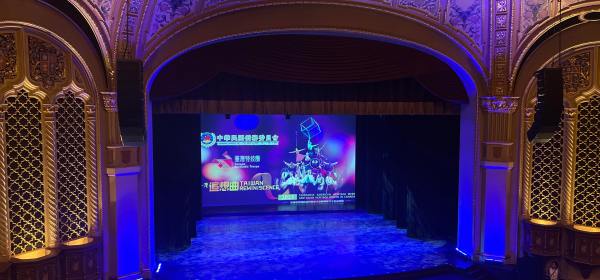
Written by Mark Hsiang-Yu Feng. Busy as usual was Highway number eighty, but Mother’s Day made downtown San Jose unexpectedly quiet. However, in front of the California Theatre, lively chat sounded out of the silence, marking this celebratory moment for the twentieth anniversary of the Taiwanese American Center of Northern California during Asian and Pacific Islander heritage month. Families came to fill most of the seats, and three languages—Hoklo Taiwanese, Taiwanese Mandarin, and English—were spoken to express the identity of these participants. To honour the culture of Taiwanese and Taiwanese Americans, the overall narrative of Taiwanese Reminiscence contextualises a mixture of stunts, acrobatic movements, and dance into a condensed representation of the twentieth history of Taiwan.

Triangulating the Taiwanese Spirit in Southern California: Colonial Hauntings at the 228 Commemorative Concert

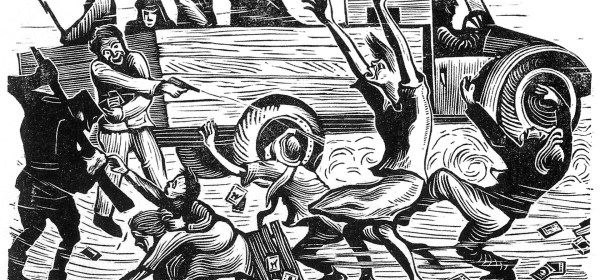
Written by Chun Chia Tai. In February, I saw a text message in a Taiwanese group chat promoting a concert commemorating the 228 massacre caused by the Kuomintang dictatorship in Taiwan on February 28th, 1947. The concert was called The Spiritual Day of Taiwan: 2-28 76th Commemorative Concert and was hosted by two Taiwanese American organisations: the Taiwanese United Foundation and the Taiwan Elite Alliance, since 2007. The performers were mainly Taiwanese. Many of them were not professionals but members of local Taiwanese church choirs. Most of the audience was familiar with the songs being performed; therefore, they sang along with the performers.

Reflecting on the Laguna Woods Shooting Tragedy: One Year Later

Written by Wayne Huang. On May 15, 2022, a fatal shooting occurred at the Irvine Taiwanese Presbyterian Church in Laguna Woods, California. During a lunch reception, the gunman locked the doors and opened fire with approximately a hundred people present. The church has been recognised for its significant role in Taiwan’s democratisation and independence movements since the 1970s. It has led to the suspicion that this historical connection motivated the assailant to travel over a hundred miles from Las Vegas to target the church. The shooting resulted in six individuals being shot, including Dr John Cheng, who lost his life while attempting to disarm the gunman. 

Is Going Green Hurting Indigenous Communities? Reflection from Participating in the United Nations Permanent Forum on Indigenous Issues 

Written by Wasiq Silan. Is going green hurting Indigenous communities? Not necessarily. However, exclusionary conservation measures create a lose-lose outcome for non-Indigenous and Indigenous communities. Indeed, Indigenous peoples’ full and substantial participation is a prerequisite to achieving a sustainable future and halting the rapid loss of global biodiversity. This is true for the Indigenous communities in Taiwan, such as in the case of the solar panel controversy on the Katratripulr Pinuyumayan (Beinan in Mandarin Chinese) people’s traditional territory. Drawing from the experience of the Sámi, my recent participation in the United Nations Permanent Forum on Indigenous Issues (UNPFII) may shed light on this issue.

Taiwan and the Netherlands: What the East Asian Island Nation Can Learn from its Former Colonizer

Written by Charlie Smith. The King’s Field is a famous Japanese video game series created in the 1990s. But nearly 400 years ago, there was another King’s Field—the entire island nation of Taiwan. For 38 years in the 17th century, Taiwan was a colony of the Dutch Republic under the administration of the Dutch East India Company. And the Dutch king was the largest shareholder. 

“The Han people pioneers cleared the land, but the land they cleared was stolen from them, and they were forced to turn their labors toward tilling the so-called ‘king’s fields’,” wrote historian Su Beng in Taiwan’s 400 Year History. “Moreover, most of what they achieved was given over, in the form of rent or taxes, called ‘king’s field rent contributions,’ for the use and enjoyment of the Dutch.”

What is the significance of the dialogue with the Dutch community in Vancouver for 2023 TAIWANfest in Canada? 

Written by Charlie Smith. The Dutch Cultural Association of B.C. is trying to tell a more nuanced and complete story of the Netherlands, including the experiences of those who lived under Dutch colonial rule. Moreover, the association’s goal is to provide a richer understanding of how Dutch descendants should act as visitors on the unceded lands of Indigenous nations in Canada’s westernmost province. Oostindie believes that this has set his organization up well for a collaboration with this year’s TAIWANfest in Vancouver and Toronto. Oostinde discusses how Taiwan, the Netherlands and Canada can “have heartfelt discussions that bring these hidden histories forward. And we can learn about what it means for contemporary politics, how we work together, and how we consider democracies.” 

Indigenous Storytelling in and Beyond the Classroom

Written by Yi-Yu Lai. One afternoon in 2011, Hong-sui Lim visited a Kaxabu village due to his participation in an anthropological camp. This marked his first encounter with the Kaxabu people, one of the Plain Indigenous groups inhabiting the Puli Basins in central Taiwan. Lim was astonished by the small number of Kaxabu elders who still speak their mother tongue, as it is commonly believed that Plain Indigenous peoples have been assimilated by Han Chinese culture and have lost their own languages and traditions. As a result, Lim returned to the Kaxabu communities as an undergraduate student to learn more about their endangered cultural heritage and began collaborating with the Kaxabu people. 

1 2 3 4 5 6 15