As Japan’s Relations With China Grow More Distant, Relations With Taiwan Improve

Written by Aleksandrs Gross. This article analyses recent Taiwan-Japan solidarity amid tensions between Japan and China. It captures how widespread and deep mutual support is at the grassroots, people-to-people level in both countries. The current tense political climate has only deepened the friendship between the two peoples. This benefits Taiwan and puts China in a tricky position.

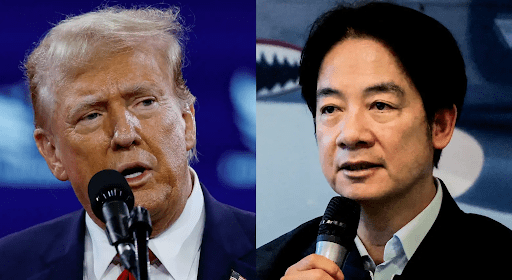
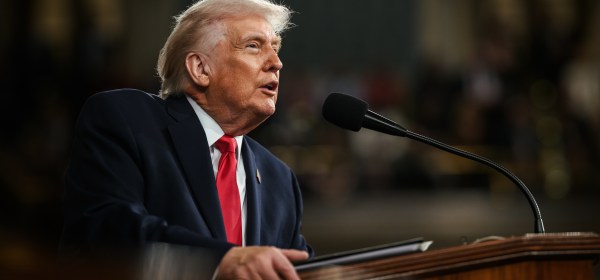
Facing the Uncertainty of Trump’s Taiwan Policy: Taiwan’s diplomatic, economic, and military approaches to address the significant challenge

Written by Baosheng Guo. This article analyses Taiwan’s options in the face of Trump’s uncertain and unpredictable Taiwan policy. It suggests that Taiwan should urge the US to provide strategic clarity and strengthen its relationship with Europe. Taiwan should also weaponise the interdependence of its semiconductor industry with the US and prepare to restart its research and development of nuclear weapons.

Who Is Taiwanese: Rejection or Redefinition?

Written by Meng Kit Tang. This article explores the evolving debate over Taiwanese identity, contrasting two models: the rejectionist approach and the redefinition model. It examines the implications of each model for domestic cohesion, diplomacy, and national resilience, arguing that a redefinition approach provides Taiwan with a stronger foundation to navigate internal polarisation and external pressures.

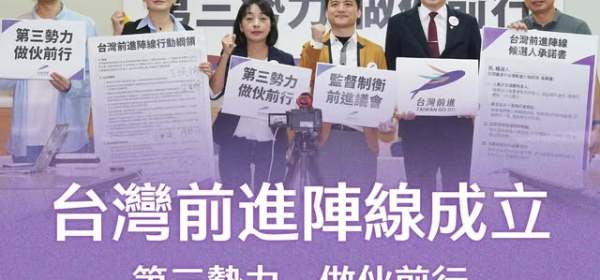
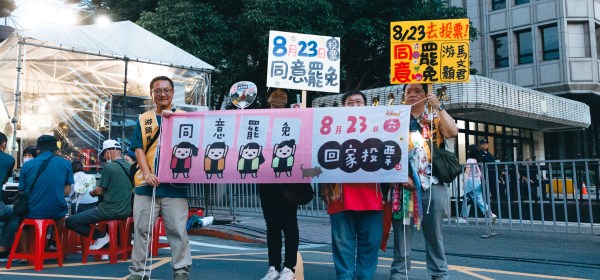
A Third Front: The Pivot of Businesses Towards Activism

Written by Aleksandrs Gross. This article explores a unique phenomenon that occurred during the recalls – small businesses explicitly voiced their stance on the recalls. This mirrors similar patterns of Hong Kong during the pro-democracy movement in 2019. The author interviewed three pro-recall businesses to understand their stance and how they encourage constructive discussion without alienating opponents.

Time to Reposition Taiwan within Europe’s Indo-Pacific Vision

Written by Laura Bonsaver. This article proposes that Europe should move beyond threat-centric framings of Taiwan and recognise it as an innovative, democratic, and technologically advanced partner. It recommends de-hyphenating Taiwan from militaristic narratives, normalising its role in Indo-Pacific strategies, and reframing Europe-Taiwan relations as mutually beneficial collaborations rather than dependency or crisis management.

Co-Listening as Defiance: The Facebook Soundscape of Taiwan’s Sino-Myanmar Gen Z and the 2021 Myanmar Spring Revolution

Written by Tasaw Hsin-Chun Lu. After Myanmar’s 2021 coup, Taiwan’s Sino-Myanmar Gen Z created a nightly revolutionary soundscape through Facebook Live. By co-listening to the clang of pots and pans, revived protest anthems, and newly sharpened hip-hop, they transformed distant violence into shared urgency. These circulating sounds stitched together a fragile yet insistent counterpublic, allowing young listeners in Taipei to grieve, rage, and imagine with those in Myanmar. Through this quiet, collective listening, they claimed a sense of belonging that crossed borders and defied the junta’s enforced silence.

Taiwan’s Arctic Imperative: Navigating a New Global Frontier

Written by Aileen A. Espiritu, Marc Lanteigne, and Tse-Kang Leng. This article argues that Taiwan should construct a clear, multifaceted Arctic policy to safeguard its future prosperity and strengthen the country’s international standing. It outlines multiple areas where Taiwan can contribute and benefit, including trade, climate, science, diplomacy, Indigenous communities and geopolitics. An inclusive Arctic policy is not distant curiosity but a strategic aspiration.

Hopeful Reset or Regression? Cheng Li-wun through the eyes of younger Taiwanese

Written by Aleksandrs Gross. This article examines Cheng Li-wun’s leadership through the eyes of the younger generation. Not only did her statements on identity and Taiwan’s future fail to resonate with younger people, but she also failed to address livelihood issues such as high housing prices, inflation and employment pressure, which are seen as the most critical issues for younger Taiwanese.

Cheng Li-wun’s Victory: A New Chair for an Old Party

Written By Paula Perez. This article analyses the promises and positions of Cheng Li-wun. It argues that Cheng offers nothing new in terms of its identity claims and the 1992 Consensus and questions who is the audience Cheng is speaking to. However, she brings something other leadership candidates did not, personifying the redemption of a generation who she claims is misled by de-Sinicised education.

Cheng Li-wun: The Second Coming of Hung Hsiu-chu?

Written by Brian Hioe. This article compares the new KMT party chair Cheng Li-wun to Hung Hsiu-chu. Both made waves on the basis of their deep blue political leanings and hardline stance on advocating for unification. She already faces some internal pushback against her leadership, though it remains to be seen whether Cheng will follow Hung’s trajectory of falling from grace.

1 2 3 93