Does the DPP Victory in Kaohsiung Mark a Return To Normal?

Written by Hiro Fu. Few observers were surprised to see Chen Chi-mai of the Democratic Progressive Party (DPP) win Kaohsiung’s mayoral by-election. In his victory speech, Chen called his win “Democracy’s victory, Kaohsiung’s victory.” This is an image that the DPP hopes to cast upon its return to power after Chen’s defeat in the 2018 mayoral elections. However, the DPP’s victory should not be confused with a victory for democracy, or necessarily as a victory for Kaohsiung.

Today Hong Kong, Tomorrow Taiwan”: Taiwan’s Strategic Conundrum

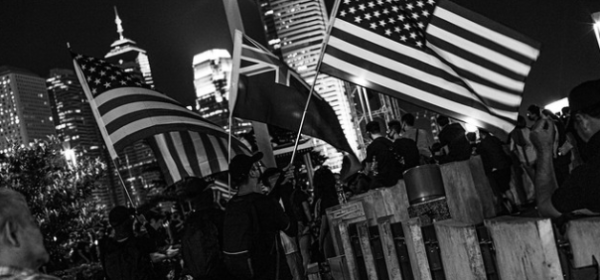
Written by Ferran Perez Mena. During the past year, the Hong Kong protests, along with the newly approved National Security Law, have generated much anxiety in Taiwan. They have been perceived by both the DPP’s political elite and the Taiwanese public as a premonition of what lies ahead for Taiwan. One of the popular slogans of the protests, “Today Hong Kong, Tomorrow Taiwan” (今天的香港,明天的台灣), perfectly epitomises the widespread unease that such political events are producing and the apparent inevitability of Taiwan’s downfall.

Crossing Paths: How Should Taiwan Approach India?

Written by Wei Azim Hung. The series of border skirmishes between India and China that began in early May this year have prompted a wave of anti-China sentiment across the subcontinent. India’s Prime Minister Narendra Modi has struck a particularly aggressive tone by saying “the age of expansionism is over” and “peace is not won by weakness” , while being mindful of the need to save his Chinese counterpart face by not indulging in overly bellicose or provocative rhetoric. Interestingly, this is not the first time India and China have engaged in border hostilities, nor is it the most bloody conflict.

Lee Teng-hui— a Leader of Shifting Principles, Wonderful Vision, Skill and Legacy

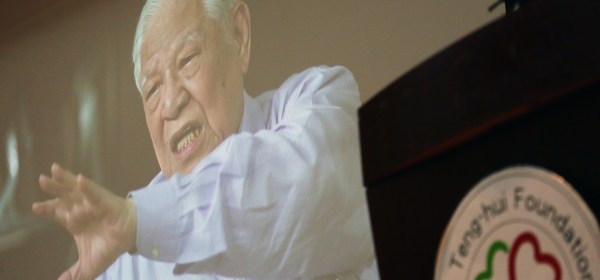
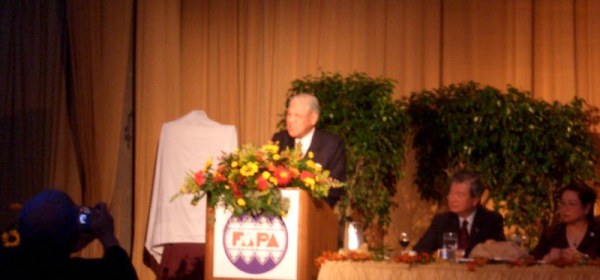
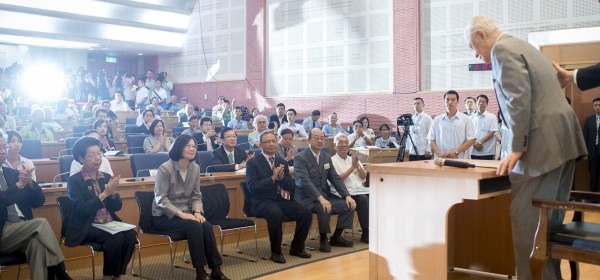
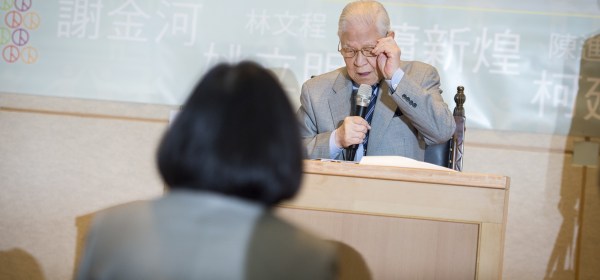
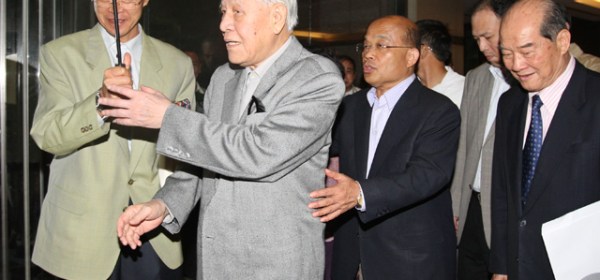
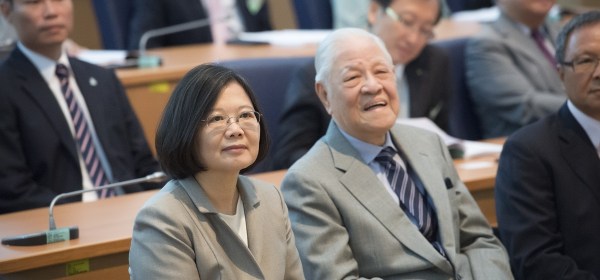
Written by Mark Wenyi Lai. Former President of Taiwan, Lee Teng-hui passed away this summer. The Beijing/Unification faction hated Lee, and the Independent faction/Mike Pompeo praised him as the Father of Taiwan Democracy, if not the Father of Taiwan. How do we evaluate Lee? What is Lee’s vision of where and how Taiwan is heading in the next century? How do our perspectives of him reflect our Taiwanese identity?

Remembering President Lee Teng-hui

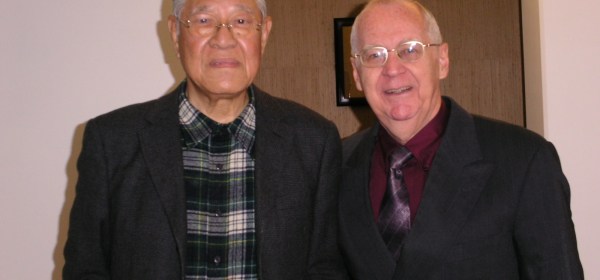
Written by John F. Copper. In 1963 I journeyed to Taiwan to further my study of Chinese, sponsored by the East West Center at the University of Hawaii. I heard of Lee Teng-hui at this time. He was one of the experts that designed and operationalized Taiwan’s well-known and eminently successful land reform program. Little did I know that Lee would become one of modern Taiwan’s foremost leaders and someone I would meet and learn much more about in coming years. 

The legacy of Taiwan’s “Mr. Democracy”

Written by Frédéric Krumbein. President Lee Teng-hui’s most enduring legacy is his crucial role in the process of Taiwan’s democratisation. His predecessor, Chiang Ching-kuo, had already started the process of liberalisation. Yet despite his having lifted martial law in July 1987, Chiang died a few months later with the KMT dictatorship still intact. Lee Teng-hui then gradually implemented democratic reforms during his presidency (1988-2000).

In Memoriam, Lee Teng-hui

Written by Jerome F. Keating. Lee Teng-hui, the first president of Taiwan to be elected by the people, passed away on July 30, 2020. He was a statesman among statesmen and perhaps the greatest statesman Taiwan, aka the Republic of China (ROC), has ever known. Presidents and leaders are often judged not by the totality of their lives but by how, at a critical and crucial time, they did the right thing.

“Always in my Heart”: Lee Teng-hui’s Life in 10 Quotes

Written by Denis Li, translated by Corey Lee Bell. Lee Teng-hui, Taiwan’s first democratically elected president, played a key role in the country’s journey from authoritarianism to democracy. In 12 years as president, he made six amendments to the constitution, earning him an indelible place in the history of Taiwan. The News Lens has compiled 10 of Lee’s quotes from lectures and interviews, which reflect his perspective on Taiwanese politics and cross-strait relations, as well as the expectations he harbored for himself as a political figure.

In Memoriam: Lee Teng-hui and the Democracy that he built

Written by J. Michael Cole. On July 30, former president Lee Teng-hui, whom many regard as the father of Taiwan’s democracy, passed away at the age of 97. Lee leaves behind a nation that is markedly different from what it was when he entered politics decades ago. No figure—none—has had as major an impact on Taiwan than Lee, whose decisions in the crucial period between the late 1980s and early 1990s determined the future course of the nation and propelled into the “third wave” of democratisation.

In Memoriam Lee Teng-hui, 1923 – 2020

Written by Gerrit van der Wees. On July 30 2020, Taiwan’s “Father of Democracy,” former President Lee Teng-hui passed away in Taipei at the ripe old age of 97. He served as the country’s President from 1988 until 2000 and guided its transformation from a repressive authoritarian dictatorship that had been imposed on the island by the Chinese Nationalists of Chiang Kai-shek after World War II, to the vibrant democracy that is Taiwan today.

Can Tsai Ing-wen Avoid the Second Term Curse?

Written by Kharis Templeman. If Tsai Ing-wen is superstitious, she should be worried: second term presidents in Taiwan appear to be cursed. Much like President Tsai, her predecessor Ma Ying-jeou started his second term on a confident and triumphant note. But over the next four years, he faced a relentless series of political crises, including an intraparty power struggle with Legislative Yuan Speaker Wang Jin-pyng, massive protests against the death of a military conscript and construction of a nuclear power plant, and of course the Sunflower Movement occupation of the legislature, which effectively halted cross-Strait rapprochement with Beijing.

How Taiwan can help create a more resilient global society

Written by Cheng-Chia Tung. COVID-19 has cost thousands of lives outside of its place of origin and has put 20% of the global population under lockdown. It is hard to envision it not having a long-lasting impact. Many influential commentators have focused on how it has exacerbated the decline of globalization and intensified political tension and strategic competition among great powers. While many may crave a “return to normalcy,” if we are to address the challenges created by the pandemic more holistically we need to do more than simply ask “whether we’re going back to where we were.”

1 8 9 10 11