The Long and Unfinished Fight: The Constitutional Court’s Decision on Pingpu Recognition in Taiwan

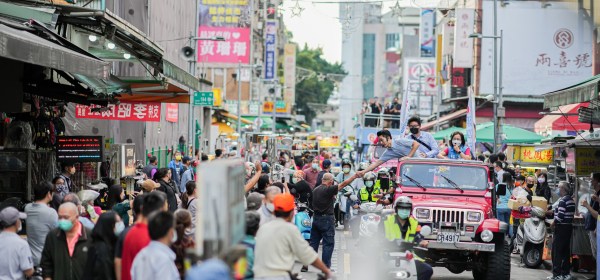
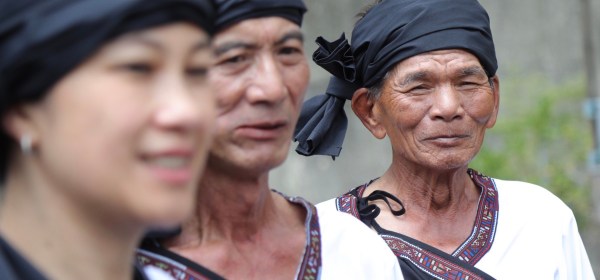
Written by Wei-Che Tsai; Translated by Yi-Yu Lai. The case of Indigenous status for Siraya people has challenged Indigenous peoples’ composition and boundaries. Currently, around 580,000 Indigenous peoples are legally recognised in Taiwan. It is estimated that the population of the Pingpu peoples will increase the total number of Indigenous peoples to as high as 980,000 if the Act is declared unconstitutional, although this number may be inflated for political purposes by Taiwan’s Indigenous authorities. As a result, the authorities are worried about this judgement.
Reflections on the 2022 Taiwan Local Elections: Demise of Taiwan Identity Politics?

Written by Chia-hung Tsai. From the perspective of identity politics, the 2022 local election results are puzzling. Tsai Ing-wen remains popular, partly because the DPP government successfully contains the Covid-19 pandemic in general while maintaining economic growth. China’s military exercises as revenge for the visit of the US speaker of the House, Nancy Pelosi, seem to drag down Chinese’ image to a lower level. These achievements and events should boost Taiwanese identity and hence favour the DPP candidates. However, the DPP was not credited for the Covid-19 measures, economic growth, and closer relations with the US. Instead, the DPP was criticized for delayed nomination, mismanagement of quarantine policies, and long-standing income inequality. In other words, identity did not play a big part in this election.

‘Ditching the DPP’, ‘Resisting China and Preserving Taiwan’, and Democracy: Interpreting the Results of Local Elections in 2022

Written by Mei-chuan Wei. The election results led many to conclude that Taiwan voters are more concerned about the ruling DPP’s inability to deliver on its promise to create a more just society and less worried about situations in the Taiwan Straits. However, this is misleading if we consider the results of local councils. The seats of local councillors of DPP have increased, while the KMTs have decreased. How, then to interpret the signals sent by the voters as embodied in the election results from the perspective of democracy in Taiwan?

Local elections 2022: The squeezed space for Taiwan’s alternative parties

Written by Dafydd Fell. The general picture in 2022 is one of the challenger parties being further squeezed out of the party system. After the two main parties, the third largest party in the 2022 elections was the TPP, winning Hsinchu City mayor and 14 council seats. However, its impact should not be exaggerated. Despite its greater financial resources compared to other small parties, only 14 out of the TPP’s 86 candidates were elected. Given these results, the party may struggle to be competitive in the next round of national elections in 2024.

How did the DPP perform in the local elections?

Written by Jonathan Leung. Less than a week after the 2022 local elections, the mid-terms showed a completely different result than the national election two years ago. With a landslide victory of 8.17 million votes in the 2020 presidential election, the Democratic Progressive Party (DPP) has only received 4.74 million ballots for the mayoral and magistracy elections. Under Tsai Ing-wen’s leadership, the party has received the highest and lowest votes in history in national and local elections.

Taiwan’s mid-term elections: Most politics is local, the KMT remains a force to be reckoned with, and the DPP needs to regroup

Written by Gerrit van der Wees. The main indicator of how well the parties did, was the number of city mayor and county magistrate positions they gained or lost: the ruling DPP went down from their current number of seven positions to five, while the opposition KMT went down from their current number of 14 to 13, with two of the remaining seats going to independents, and one, Hsinchu City, to the Taiwan People’s Party of Taipei mayor Ko Wen-je. In one location, Chiayi City, the election had to be postponed until December 18 because of the death of a mayoral candidate.

Taipei Mayoral Race: For the City or for the Party?

Written by Jonathan Leung. Less than three weeks before the 2022 Taiwanese Local Elections, the limelight is on Taipei City, Taoyuan City, Hsinchu City and Miaoli County. Multiple candidates from different parties running in these constituencies are unprecedented and will surely add uncertainties to the polling results. The first pass-the-post system renders the mayoral campaign a competition between the Chinese Nationalists Party (KMT) and the Democratic Progressive Party (DPP). Yet, the young established New Power Party (NPP) and Taiwan People’s Party (TPP) have both nominated candidates to run for mayoral and magistrate posts and city councillors. Rather than being also-rans, they now stand a decent chance to win. This article examines the case of the Taipei City Mayoral Election, evaluating the differences between the two traditionally dominant parties and the newly established ones.

South Korea’s Application to CPTPP, What Caused the Delay?

Written by Sohyun Zoe Lee. In 2010, the United States (US) extended an invitation to South Korea to join the Trans-Pacific Partnership (TPP) after the successful conclusion of the Korea-US free trade agreement (FTA). At the time, South Korea was rapidly growing as a hub of FTAs, negotiating multiple cross-regional FTAs, including those with big and advanced economies such as the US and the European Union. Surprisingly, however, it had refrained from joining the TPP. Meanwhile, South Korea joined another mega-regional FTA, the Regional Comprehensive Economic Partnership (RCEP), launched in 2012. With the emergence of RCEP, 2010 became recognised as the start of an era of the competitive rise of mega-regional FTAs. Moreover, South Korea reached an inter-ministry consensus in April 2022 under the Moon Jae-in administration. This is when it officially announced the government’s decision to apply for the Comprehensive and Progressive Agreement for TPP (CPTPP), the successor of TPP, after the withdrawal of the US. Against this backdrop, why is South Korea yet to join CPTPP? 

Resilience, State Capacity and Public Trust in Combating Pandemics, Case of Taiwan (Part I)

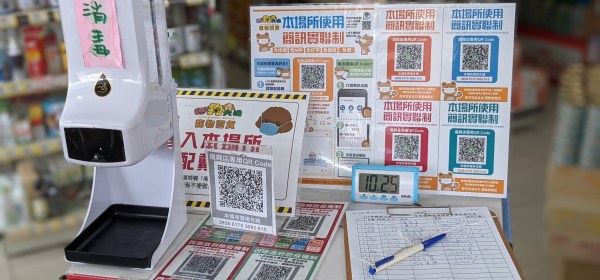
Written by Chun-Yi Lee. When it comes to combating pandemics, the public’s trust is crucial to the government’s response. The experience of COVID-19 demonstrates how well a government led its citizens through the pandemic depends on how citizens trust and comply with government regulations. As a result, COVID-19 has challenged not only health management but also governance issues more generally. As Fukuyama indicated, the Covid-19 pandemic was like ‘a bright light shone on existing institutions everywhere’ – the way a government and society reacted to the pandemic exposed the strengths and/or inadequacies within the existing institutions. 

What the December 18th Referendum Means for U.S.-Taiwan Relations

Written by Milo Hsieh. On December 18th, Taiwanese voters headed to the polls to vote on four key referendum topics. They rejected all four referendum proposals in a close but decisive vote. The votes were held on four topics, each of which were put forth by an opponent to a policy change pushed by the Tsai administration. Voters were asked explicitly whether they support: 1) Restarting Taiwan’s defunct fourth nuclear power plant, 2) Rejecting imports of U.S. pork containing Ractopamine, 3) Tying referendums to future national elections or leaving them as separate votes, 4) Rejecting the ongoing construction of a light natural gas ship dock in Taoyuan.

Affective Polarized Elites and Rational Voters in Taiwan

Written by Yu-tzung Chang. Adam Enders, an Assistant Professor from University of Louisville, published a research paper in the Journal of Politics this year (2021). Comparing the degree of affective polarization between the political elite and the masses in the U.S., he found out that the political elites’ affective polarization is higher than the general public, and meanwhile the affective polarization is more diverge than ideology. The affective polarization of the Americans is becoming more and more revealing in current political environment.

1 2 3 4 10