Taiwan’s COVID-19 Vaccination Against Biological and Political Viruses

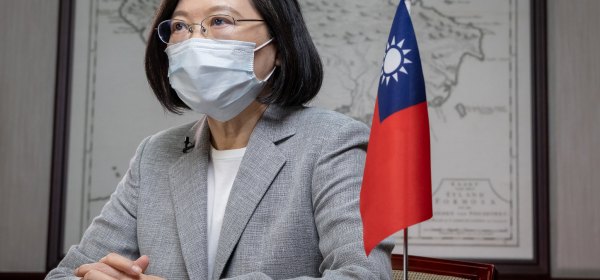
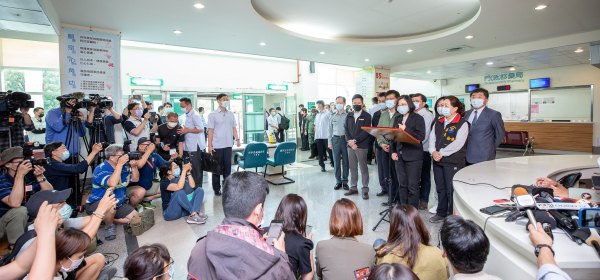
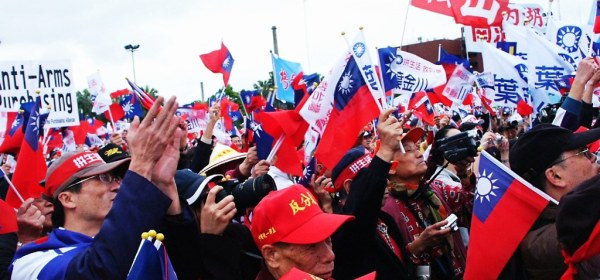
Written by Chunhuei Chi. For Taiwan to move toward the post-pandemic era, it must be understood that its main challenge is political rather than biological. Besides fighting disinformation and external and internal attempts to divide Taiwan and undermine its control effectiveness, it needs to consider the vaccines’ critical role in ending this pandemic. Further, the criticism of its government’s vaccine under-preparedness has shifted Taiwanese to inward-looking and toward vaccine nationalism.
Political Contention About Vaccines in Taiwan

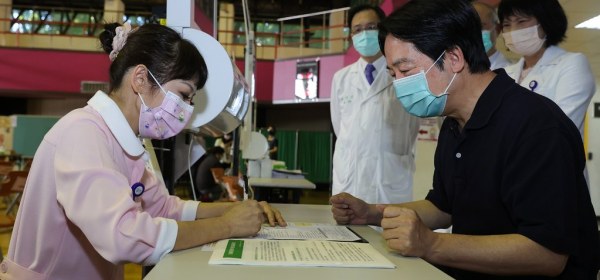
Written by Brian Hioe. Vaccines have proved a contentious issue in Taiwan from the beginning. As the first vaccines that arrived in Taiwan were AstraZeneca vaccines, the Taiwanese public was initially unwilling to get vaccinated. The public was discouraged from being vaccinated by reports of blood clots and other adverse reactions after using AstraZeneca. As Taiwan had gone for more than a year mostly COVID-free, it is probable that members of the public did not see the need to get vaccinated.

‘The New Normal’ and New Governance Models in Taiwan

Written by Chih-chien Lin. Mark Twain once said ‘History doesn’t repeat itself, but it often rhymes.’ On December 31st, 2019, the WHO office in Beijing reported unknown pneumonia cases in Wuhan, China. On February 23rd, 2020, right before Chinese New Year, governments enforced large-scale traffic control (aka lockdown) in Wuhan. On February 27th, the Central Epidemic Command Centre in Taiwan gave its highest alert. It was a serious warning about the subsequent COVID-19 pandemic.

Taiwan’s Pandemic Control Policy in 2021 — Lockdown, Vaccine Purchase and Distribution, and Testing

Written by Mark Wenyi Lai. Because of Taiwan’s COVID-19 pandemic control policies, the ruling and opposition parties agree on a national partial lockdown and vaccine distribution. However, they disagree on vaccine purchase and testing policy. This essay argued that there is more consensus than discord and the reason rested on Taiwan’s unique political-economic status. Here are their debates.

A Wake-Up Call to Improve Factory Working Procedures in a Time of Crisis

Written by Chan-Yuan Wong, Ker-Hsuan Chien, and Mei-Chih Hu. As the world enters the second year of the Covid-19 pandemic crisis, Taiwan – previously acknowledged as a Covid-free nation – encountered a new outbreak in mid-May 2021. This wave of infection has been deemed critical, as the number of infection cases has surpassed 700, and the infectivity rate is as contagious as measles. To date, Taiwan encountered 635 death cases related to Covid-19 – of which 98% are attributed to the recent outbreak since 15 May 2021.

Harnessing national digital power to prevent COVID-19: the case of Taiwan

Written by Chih-Wei Chen. Over the past 18 months, the whole world has been severely challenged by the COVID-19 pandemic, which caused enormous numbers of infections and deaths, as well as economic recessions worldwide. Many countries took a series of actions to contain the spread of coronavirus, such as large-scale lockdowns and the provision of economic stimulate. Taiwan has often been positioned as a success story in terms of pandemic management. It did this largely by harnessing the national digital power, the core of which lies in the flexible and meaningful employment of technologies in governance, and supporting this with comprehensive policy planning for the whole society.

The Fear Factor: [Chinese] Censorship on Taiwanese Popular Music

Written by Chen-Yu Lin, Yun-Siou Chen and Yan-Shouh Chen. Music is a powerful symbolic good, and it is not uncommon that this symbolic good can be shipped into opposing – or different – ideological systems, influencing other societies. However, sometimes musicians fear the consequences of singing or expressing what they want. As South African musician John Clegg once said, “censorship is based on fear”. Regardless of forms, music censorship requires an agent capable of negatively affecting a musician, whether that means imprisonment, loss of income or receiving negative comments online.

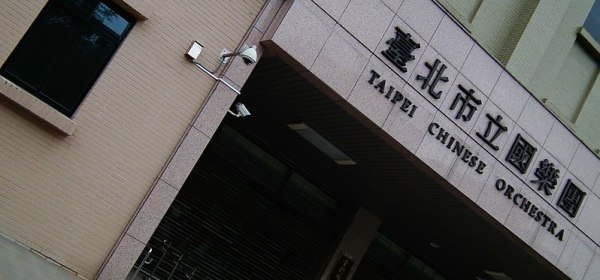
Which Nation’s National Music? – A Critical Introduction of Contemporary Chinese Orchestra in Taiwan

Written by Min-erh Wang. From the late nineteenth century onwards, Chinese musical culture has been significantly impacted by the importation of Western music. Chinese musicians and intellectuals, therefore, began to organise an orchestra with Chinese instruments as a way for pursuing musical modernisation. The establishment of the music section at the Central Broadcast Station in Chongqing in 1935 was the most prominent example of this trend. By presenting this new ensemble at international occasions, the modern Chinese orchestra was further promoted as ‘Gou Yue (國樂),’ meaning ‘national music,’ in the first half of the twentieth century.

Taiwan Is ‘a’ Dangerous Location on Earth

Written by Chieh-chi Hsieh. Yes, I get it. Not many can resist a bold and eye-catching title. However, if you supplement this with an articulated argument underpinned with a fair amount of empirical evidence, one can expect the article to reach a broader readership. Yet, the underlying issue of placing a bold statement at the forefront is that it is frequently misleading. This is precisely why I am sceptical about the recent article published by The Economist, which states Taiwan as ‘the most dangerous place on Earth.’

POLITICAL CONTENTION TAKES PLACE IN AFTERMATH OF RAIL ACCIDENT

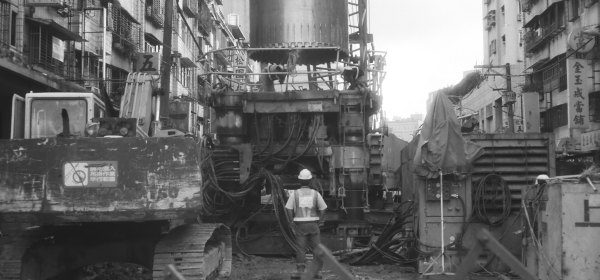
Written by Brian Hioe. After a rail accident on Friday that left fifty dead and injured over 200, there has been much political contention between both the DPP and opposition parties such as the KMT. The railway accident was the deadliest accident in Taiwan in decades and took place after a truck from a construction site on a slope overlooking train tracks slid down a slope and crashed into a train exiting a tunnel near Hualien.

Chao Shao-kang’s Return to Taiwan politics: Will He Replay the Han Kuo-yu Drama?

Written by Dongtao Qi. After a 25-year absence from the political arena, political commentator and media guru Chao Shao-kang returned to the Kuomintang (KMT), immediately declaring his intention to run for the KMT chairmanship this July and for Taiwan’s presidency in the 2024 election. This seems to have reinvigorated a deflated KMT since its defeat in the 2020 presidential election. Much speculation among the public has also ensued about whether Chao would be a flash in the pan and do even worse than former presidential candidate Han Kuo-yu who had stirred up a “Han craze” back then.

1 2 3 4 5 6 10