From WTO to CPTPP: What Makes the Consideration of China and Taiwan’s Accessions Different?

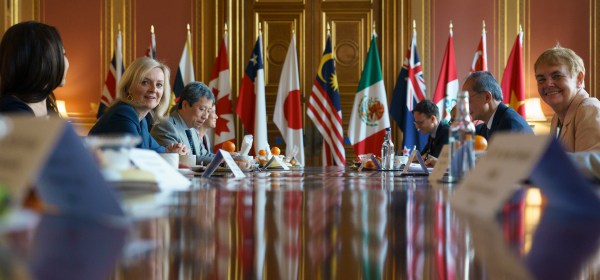
Written by Jacques deLise. In 2000-2001, China and Taiwan entered the World Trade Organization (WTO). Their admittance to the central institution of the international economic order was, in effect, a package deal that became possible with the assent of the United States, which had been a last principal obstacle to Beijing’s long-sought membership. Two decades later, China and Taiwan have applied to join the Comprehensive and Progressive Agreement for a Trans-Pacific Partnership (CPTPP). This arrangement emerged from the larger Trans-Pacific Partnership after the US opted out. The two bids face major challenges, including those born of changes in the international stature and posture of each of Taiwan, China, and the United States.

How Vital is the CPTPP Membership to Taiwan?

Written by Yun-Chieh Wang. On September 22, 2021, six days after the Chinese government submitted its application to the Comprehensive and Progressive Agreement for Trans-Pacific Partnership (CPTPP), the Taiwanese government handed in its application to the depository in New Zealand. According to World Trade Organisation (WTO) data, Taiwan ranks as the top 15 goods export and the top 18 goods import economy in 2020. However, Taiwan has only signed a few trade agreements with its trading partners and cannot join critical regional trade agreements such as Regional Comprehensive Economic Partnership (RCEP). Therefore, participating in CPTPP is expected to promote Taiwan’s trade ties with the trade partners effectively.

A Comprehensive and Progressive Agreement for Trans-Pacific Partnership (CPTPP): A Game of Go? Or Three-dimensional Chess?

Written by Chun-Yi Lee and Michael Reilly. The CPTPP is an ambitious, wide-ranging free trade agreement (FTA) signed between Australia, Brunei Darussalam, Canada, Chile, Japan, Malaysia, Mexico, Peru, New Zealand, Singapore, and Vietnam in March 2018. The CPTPP was originally named as the Trans-Pacific Partnership and comprised twelve members. However, after the Trump administration withdrew the USA from it in 2017, the remaining eleven countries reorganised and renamed it. After leaving the EU, the UK applied to join in February 2021, followed by China and Taiwan in September. South Korea has been considering joining but has yet to do so. Countries seeking to join the bloc must negotiate tariffs and other market access conditions with each of the eleven original members. 

Changes and Continuity in Support for Self-Defence Among Taiwanese Following the Russia-Ukraine War

Written by Kuan-chen Lee. Following Russia’s ongoing invasion of Ukraine, many observers have pointed out that Kyiv’s ability to mobilise the entire population to resist the invasion is one of the main reasons why it has been able to prolong the war. Moreover, they suggest that Taiwan learn from Ukraine’s model of all-out resistance against a more powerful enemy. However, do the Taiwanese have the same determination to resist aggression as the Ukrainians have shown? Furthermore, how has the Russia-Ukraine War affected the willingness of the Taiwanese people to fight against aggression?

Worldpride 2025 and Taiwan’s Place in Global Queer Politics 

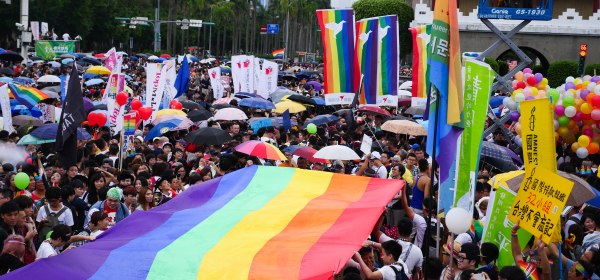
Written by Ting-Fai Yu. Unquestionably, the global visibilities of Taiwan’s recent human rights achievements, such as the legalisation of same-sex marriage in 2019, must have contributed to the voting members’ confidence in having WorldPride held there. However, while Taiwan’s LGBT development has served as an exemplar to which many non-Western countries, especially those in Asia, aspire, it is essential to note that progressive legal changes are not necessarily representative of how queerness is lived culturally.

USA, China, and Taiwan: Post-Endemic Strategies for a New Global Economy

Written by Ian Inkster. Joe Biden’s recent scooping up of the fog of ‘strategic ambiguity,’ the seldom re-specified policy of the USA towards China in the case of an overt attack on Taiwan, was made in haste but has set the tail of the cat alight and its very colour in doubt. In Japan, Biden warned that China was ‘flirting with danger’ and then admitted that the US would defend Taiwan against invasion by China as contra to the Ukraine case. He was then asked directly if the US would defend Taiwan militarily if China invaded, when it has not done so in the invasion of Russia against Ukraine.

Three Times is a Charm: President Biden’s Taiwan Remarks in Tokyo

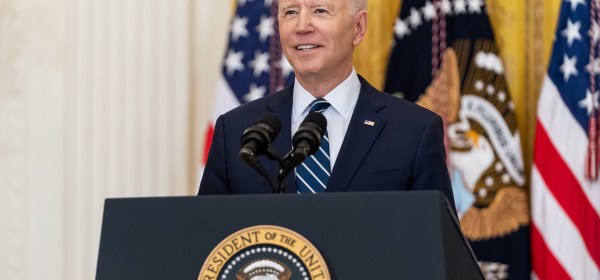
Written by Gerrit van der Wees. At a press conference on 23 May 2022, President Biden – who was in Tokyo to attend a meeting of the Quadrilateral Security Dialogue and the launch of the Indo-Pacific Economic Forum (IPEF) – was asked by CBS reporter Nancy Cordes: “You didn’t want to get involved in the Ukraine conflict militarily for obvious reasons. Are you willing to get involved militarily to defend Taiwan if it comes to that?” “Yes,” Mr Biden answered flatly. “You are?” the reporter followed up. “That’s the commitment we made,” he said.

Taiwan’s Enduring Controversy on Absentee Voting and the Role of Media

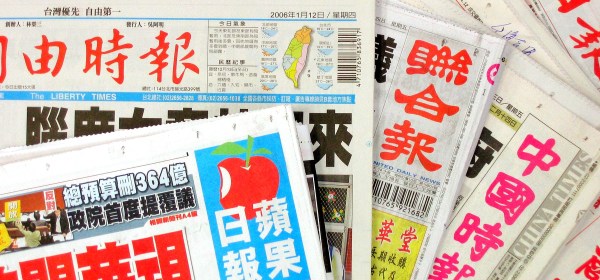
Written by Julia Marinaccio and Jens Damm. However, Taiwanese journalism also did its share. Like the political party system, Taiwan’s existing media landscape is ideologically divided over the question of how to fashion cross-Strait relations. Through their ideological orientation paired with a lack of investigative journalism, they act as mouthpieces of political parties. In doing so, they reinforce existing political cleavages rather than exercising their role as informants and watchdogs.

OTT in Taiwan: How Global Platforms Meet Local Productions and Politics

Written by Yu-peng Lin and Chang-de Liu. The development of over-the-top (OTT) media services is currently the main concern of Taiwan’s audiovisual industries. An OTT media service is an audiovisual streaming service provided directly to the audience by the Internet. The Taiwanese government wishes to strengthen this industry while also seeking balanced growth for international and local operators. For the latter, how to accelerate the production of their content in the face of global competition is the biggest concern. Furthermore, given the recent success of the Asian market, international operators are interested in co-producing content with Taiwanese companies.

A plant out of water: Taiwanese greens in Thailand

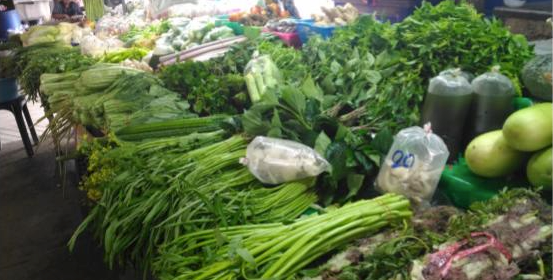
Written by Angel Chao (趙于萱), translated by Sam Robbins. In supermarkets in Thailand, you can find Thai hydroponic vegetables labelled as ‘Taiwanese greens.’ Why? Because these plants are grown in Thailand by Taiwanese businesspeople who brought Taiwanese hydroponic technology to Thailand, using Taiwanese equipment to grow crops in Thailand.

The Sunflower, the Umbrella, and the Square: How Three Protest Movements in 2014 Foreshadowed Russia and China’s Foreign Policy Approaches in 2022

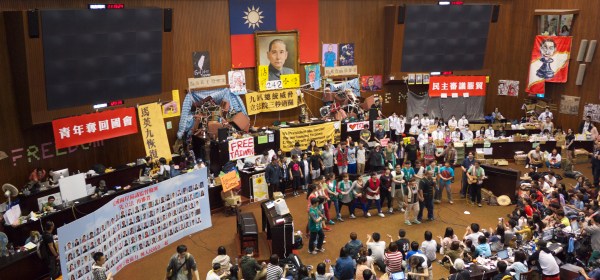
Written by Max Dixon. Therefore, the grievances, tactics and repression of the protest movements outlined here enable a clear foreshadowing of the approaches of Russia and China that would follow. Yet where Ukraine and HK saw their political systems collapse in their post-movement societies, the strength of Taiwan’s democratic institutions and values prevailed. This resulted in negotiating with the Sunflower Movement’s strains and the calls to repress it, which have seen a stronger Taiwan emerge.

Falling Through the Cracks of Care: Southeast Asian Migrant Workers Navigating Through Healthcare in Taiwan

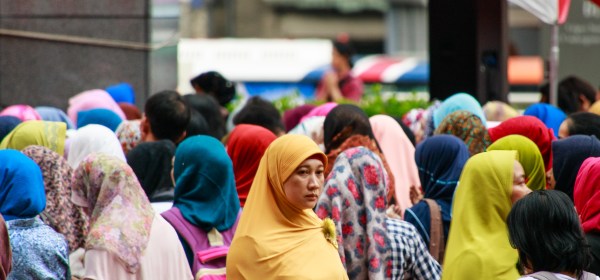
Written by Shao-Yun Chang (張韶韻) and Hang-Tang Chen (陳翰堂). Since their labour was first viewed as a supplement to the domestic labour market, Southeast Asian migrants have become indispensable to the manufacturing, agricultural, fishing, and care industries over the last three decades. While the initial foreign population was primarily Thai and Filipino workers, Vietnamese and Indonesian workers are now taking over factory jobs, farm work, and caring for seniors and the disabled. 

1 22 23 24 25 26 61