Is a Major War Over Taiwan Inevitable?

Written by Alessio Patalano. On 04 August, Chinese military authorities launched an impressive set of military manoeuvres across the Strait of Taiwan. Compared to prior exercises with a similar operational design in mind held during cross-strait tensions in 1995-96, this iteration lasted longer, pushed the operational envelope in a more aggressive direction, and was significantly larger in scale and commitment of capabilities. Crucially, when the People’s Liberation Army’s Eastern Theatre Command announced the end of the second phase of manoeuvres two weeks later, the Chinese military had shown how two decades of unmatched military build-up allowed Beijing to use steel to project statecraft.

The Economic Impact of COVID-19 Outbreaks in Migrant Workers’ (MW) Dormitories in Singapore and Taiwan 

Written by Jackson Teh. In crux, we should note the link between the general public’s health, both physically and mentally, with that of the migrant workers: only when local community cases are stable, and their sentiments positive, are migrant workerss allowed to move around and go to work; only when migrant workerss move around and go to work, can they feel better and hopeful about themselves and the future. Therefore, the mental well-being of both groups in a country must not be seen as isolated variables. 

The Changing role of Laotian Coffee in Taiwan 

Written by Chen Szu-An, Translated by Sam Robbins. According to data from the Lao Coffee Association, Taiwan was one of the earliest to enter the Laotian market and invest in coffee production after the government allowed foreign investment in the year 2000. There was even a period where some in Taiwan dreamed of becoming a major player in the development of Laotian coffee. In contrast with the Laotian beans that were first imported to Taiwan as cheap goods, as Taiwanese consumers became more accepting of the idea of “specialty coffee”, Taiwanese business people started to repackage Laotian beans.

TAKING A LEAF OUT OF TAIWAN (AND VIETNAM): HOW “TAIWANESE” IS TAIWANESE BUBBLE TEA? 

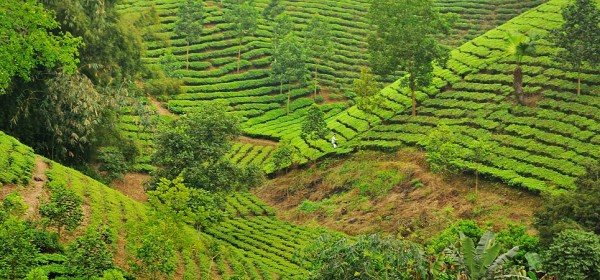
Written by Kuan-Ren Yun (雲冠仁), translated by Sam Robbins. As Bubble tea has taken over the world and increasingly become a symbol of Taiwan, this unique Taiwanese flavour has only been possible by importing large qualities of tea leaves, including the Vietnamese tea leaves that so many Taiwanese have grown sceptical of. Taiwanese people have felt pride in the success of bubble tea sales, but they also continue to reject foreign tea leaves and see them as only authentic when only Taiwanese tea leaves are used.

Taking a leaf out of Taiwan (and Vietnam): How “Taiwanese” is Taiwanese bubble tea? 

Written by Kuan-Ren Yun (雲冠仁), translated by Sam Robbins. When I was in Vietnam from 2016 to 2018, there was a time of immense market transformation underway that raised a very interesting question: The now-famous “Taiwanese bubble tea” had become reliant on Vietnamese tea leaves in Taiwan, and it was only after the transition to Vietnamese tea leaves was made could Taiwanese bubble tea be produced at such a scale to become a global phenomenon.

Tension Across the Taiwan Strait: Perspectives, Concerns & Dynamics from South Asia

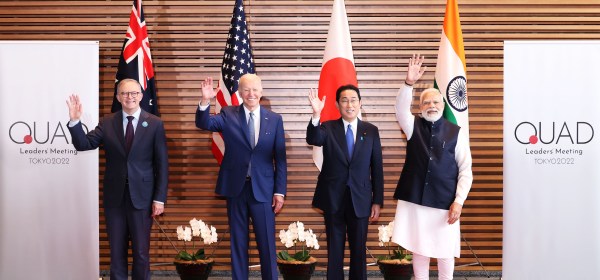
Written by Raian Hossain. This article looks into the reactions and concerns from Asian countries due to the complex triangular relationship of the US-China-Taiwan in the Taiwan Strait. While analysing the dynamics, it also unpacks whether this ongoing crisis would further shrink Taiwan’s space for engagements in the international space like trade, commerce, and people-to-people connectivity (not focused on diplomatic recognition). Therefore, this article takes the South Asian region as a case study to answer these two queries.

The Aversion of the Fourth Taiwan Strait Crisis: Nancy Pelosi’s Daring Visit to Taiwan

Written by Lt Col JS Sodhi (Retd). Abhijit Naskar’s quote, “Peace is a state of mind, but in a world where the state controls the mind, peace remains an inconvenience”, is apt for China’s aggression in its quest to take over Taiwan. As the Speaker of the House of Representatives of the USA, Nancy Pelosi, in an exemplary show of guts and grit, visited Taiwan despite the Dragon spewing fire, thereby sending a stern and strong message to China that the USA stands in total solidarity and support to Taiwan and any misadventure and misdemeanour by China on Taiwan will be dealt with swiftly and surely.

Discourse and Disinformation in the Pelosi Visit and Its Aftermath

Written by Brian Hioe. More generally, while several organisations in Taiwan are devoted to fact-checking and combating disinformation, these primarily focus on targeting disinformation that circulates within Taiwan, which aims to affect domestic politics. There is less focus by such organisations on disinformation that spreads about Taiwan in the English-language sphere. Taiwanese generally read news and international discourse about their country in Chinese rather than English, so they may not be aware of disinformation circulating globally about Taiwan. At the same time, the English language world may not be able to verify information circulating in Chinese due to lacking language ability. Perhaps more translingual fact-checking practices must be developed to cope with this issue. This may be the corollary to increased discussion to the fact that the voices of Taiwanese have been left out of international media reporting on the Pelosi visit and military drills that followed.

Pelosi’s Taiwan Visit: More Symptom than Cause of the Trouble in US-China Relations

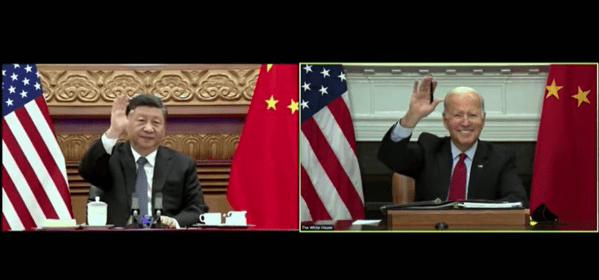
Written by Jacques deLisle. The August 2022 visit to Taiwan by United States House Speaker Nancy Pelosi has been characterized as “reckless” and even risking war or, at least, a dangerous military incident between the US and China. On the other hand, Pelosi’s trip has been celebrated for standing up to Chinese bullying or even a political victory born of an unforced error by Xi Jinping’s overreaching. Such dire or triumphalist views risk overlooking the broader and deeper meanings of Pelosi’s brief sojourn in Taipei: It is more a symptom than a cause of a deeply troubled and increasingly troubling US-China relationship; its most significant consequences are likely more complex and indirect.

Taiwan Studies: An experience from India

Written by Manoj Kumar Panigrahi. The government and academicians must work upon a little academic knowledge of Taiwan in India. To begin with, Taiwan Studies can make space for itself within existing programmes or research centres in Northeast Asia or East Asia. Once it gains a stronghold, it can take off as a separate entity. I am optimistic about collaborating with other Taiwan Studies programmes worldwide to enhance India’s new front of research. The primary and most important goal now thus is to initiate and cultivate interest in Taiwan in India. Whether the interest in Taiwan is coming independently or clubbing it with other studies should not matter at the current stage. The debate of whether it shall be clubbed with “China studies” or be called “Sinitic” study can be taken up later.

Taiwan Studies and Sinology: A Curriculum Perspective

Written by Henning Klöter. The contributions by Perkuhn and Chien, Wang and Achen and again Chien mention some successful examples of Taiwan studies centres and associations in the US, the UK and mainland Europe. The core of Wang’s and Achen’s argument is that all of them can and should do without sinology. So far, so good. But if we look at the sustainability of Taiwan studies, we need to look beyond centres and associations and ask how the field can attract new cohorts of students and what they expect to learn. In other words, we need to discuss how the study of Taiwan should be integrated into existing curricula or whether Taiwan needs a curriculum in its own right.

Pondering the Pacific: One of the Moons Version II

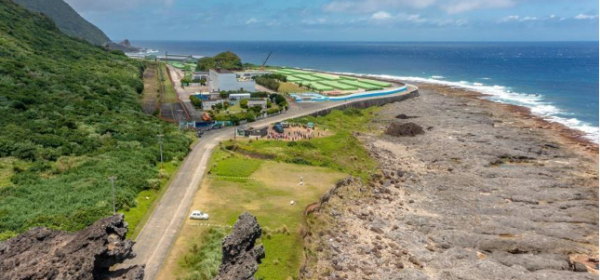
Written by Ysanne Chen, Ilin Tsai, and Shih-Hao Huang. In “Pondering the Pacific,” we conceptualise the Pacific as an oceanic highway or a contact zone. The vast ocean connects Pacific Islands. We travel from the island of Taiwan (we are reluctant to call it main(is)land) to Pongso no Tao to recover and explore this connection. When on the island, we further learn about Tao people’s connectedness to other Pacific Islanders. Upon our return, we wrote these poems to celebrate the Pacific. Along with other Pacific Islanders writers and poets, we praise the Pacific for its abundance and ability to connect people. We also join Pacific Islanders in voicing out against nuclear contamination and all forms of environmental injustice.

1 9 10 11 12 13 40