Pleasing the Mainland or Island: The Politicisation of Taiwanese Stars During On-Going Cross-Strait Turbulence

Written by Jian Xu. On January 25, 2017, National Defense News, a military newspaper under the management of the Military Committee of the Communist Party of China, published a commentary titled, ‘Never allow artists to eat Chinese food and smash Chinese bowls.’ The article criticised pro-independence Hong Kong singer Hins Cheung and applauded his ban from appearing on one of China’s most popular reality shows, I Am a Singer, run by Hunan Satellite TV. It argues that ‘in front of the overall interests of the country and nation, every artist needs to stay rational within the bottom line. Overstepping the bottom line means no future. Any ‘idol’ will be discarded if they hurt the national emotion and dignity of the Chinese people.’

President Tsai’s Celebrity Marketing

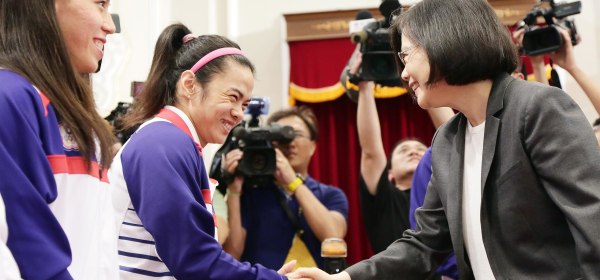
Written by Hsin-I Sydney Yueh. On November 13, 2021, NBA player Enes Kanter posted a Twitter message, stating that Taiwan is “not a part of China”; this particular video elicited a warm-hearted response from Taiwan’s President Tsai Ing-wen. She said, “Thank you, Enes, for standing with Taiwan and standing up for democracy.” Kanter quoted Tsai’s reply and said he wanted to “meet the brave people of Taiwan.”

President Biden’s Emerging Clarity on Taiwan: “Strategic ambiguity” is not a policy, but more like a bicycle gearshift

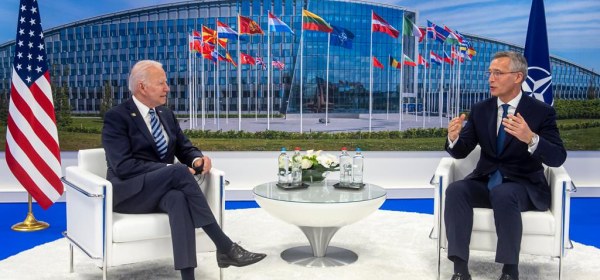
Written by Gerrit van der Wees. Over the past few months, President Biden has made some statements that show increasing clarity on where he stands on Taiwan. he first episode took place in mid-August 2021, when – in the aftermath of the Fall of Kabul and the US withdrawal from Afghanistan – Biden was asked in an ABC interview by George Stephanopoulos whether other allies such as Taiwan could count on the Americans. In his answer, Biden stated: We have made — kept every commitment.

No Island Left Behind: Cross-Strait Relations in China’s National Museums

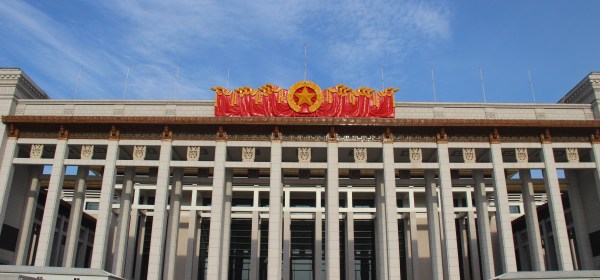
Written by Shih Chang. On October 25th, 2020, an exhibition commemorating the 75th anniversary of the recovery of Taiwan from Japanese colonial rule was held at the National Museum of China. The exhibition is divided into six sections that aim to show the “complete history” of the island of Taiwan from ancient to modern times. The first four sections: “Treasure Island, Taiwan,” “Nine States of Common Sorrow,” “Protecting Sovereignty against Japanese” Sovereign,” “Long Song as a Sword,” “Taiwan fending off the Japanese,” and “Cross-Strait Dreams,” objectively recreates the history of Taiwan’s “return to the motherland” and the development of cross-strait relations.

From Meteor Garden to BL? 20 Years of Taiwanese Pop Culture in The Philippines

Written by Yi-Yu Lai. “Have you ever watched Meteor Garden (流星花園) before? I was so crazy about Dao Ming Si and his gang before!” Many Taiwanese might be familiar with the similar conversation when they first met their Filipino friends. Since my friends know I am from Taiwan, they sometimes asked me to sing its theme song Qing Fei De Yi (情非得已) for them. They also love to hum the tune to me, though they cannot speak Mandarin at all.

Remembering Chiang Kai-shek in Japanese Media

Written by Robert Hoppens. Just before midnight on April 5, 1975, Chiang Kai-shek (b. 1887), long-time leader of the Chinese Nationalist Party (KMT) and president of the Republic of China (ROC), died at his home in Taipei at the age of 87. Around the world, Chiang’s death occasioned media retrospectives on his long career and speculation about the future of Taiwan, where his government had spent the last quarter-century in exile.

Embracing Taiwan in Vietnamese Media

Written by Huynh Tam Sang and Tran Hoang Nhung. Taiwan’s popular culture—actors, idols, music, and dramas, usually known as the “Taiwanese Waves,” has gained popularity on Vietnamese media sites. The 2004—2008 period saw a boom of Taiwanese idol dramas, e.g. “It Started with a Kiss, 2005” (惡作劇之吻), “The Prince Who Turns into a Frog, 2005” (王子變青蛙), “The Tricks of Boys and Girls, 2006” (花樣少年少女), “My Lucky Star, 2007” (放羊的星星), screened on Vietnam’s TV channels. Taiwan’s singers and bands, e.g., F4, 183 Club, 7 Flowers, S.H.E, Jay Chou, were once familiar among Vietnamese youths.

It’s Not All About China and the U.S at COP26: Taiwan’s Greening Strategy as a Model for the Developed Democracies

Written by Sung-Young Kim. Only days out from COP26 – the 26th United Nations Climate Change conference – many commentators are now preoccupied with how the rising tensions in the geopolitical environment, especially between China and the U.S, will impact global climate action. Cooperation between countries could indeed help establish a consensus on the key clean energy technologies, green investments, and carbon reduction targets to accelerate global decarbonisation efforts.

What’s behind the spike in Chinese incursions into Taiwan’s air defence zone?

Written by Corey Bell. A problem in recent public commentary on tensions between China and Taiwan has been a conflation of what we know and what we fear. Nowhere is this more evident than on the topic of incursions by Chinese military aircraft into Taiwan’s air defence identification zone, or ADIZ. is month saw a shift from a pattern of incremental increases in the number of People’s Liberation Army Air Force aircraft participating in coordinated incursions into Taiwanese airspace to an exponential explosion. The campaign peaked at 56 aircraft on 4 October, with 159 over the four-day period of 1–4 October.

Colonial Racial Science and Taiwan: How Indigenous Peoples Became Anatomy Data Points. Part I

Written by Ko-yu Chiang, Under the beating sun in Taiwan’s most southern tip, Mudan Township, an indigenous Paiwanese district with a current population of 5,000, opened a public committee in May 2020. Despite being in a small township in Taiwan’s far south, this committee was an international affair. In attendance was the council of Indigenous Affairs, Bureau of Cultural Heritage of the Ministry of Culture, the Pintung County government. The committee also extended to the other side of the world: Edinburgh University in the United Kingdom and the spirits of sixteen Paiwanese Mudan soldiers who have only recently returned home after 146 years abroad.

Chang Ya-chung’s Rise and Eric Chu’s Cross-Strait Vision

Written by Mingke Ma. Surprisingly, competition became fierce after the first Television policy debate on 4th September for the 2021 KMT Party Chairperson Election. The difference in support ratings on the opinion poll for the two leading candidates—former New Taipei City mayor Eric Chu and former KMT chairperson Hung Hsiu-chu’s policy advisor, Professor Chang Ya-chung—had been zigzagging within the error range of 3 per cent.

Does Eric Chu’s New Leadership Role Depend on the ‘China factor’?

Written by Chia-hung Tsai. On 25 September 2021, the Kuomintang (KMT), the main opposition party, voted on the chairperson. As a result, Eric Chu (朱立倫), the former KMT chairman and ex-vice premier, was elected with 85,160, or 45.8 per cent of the votes. This election draws domestic and international media attention because the result will influence the upcoming referendums, local elections, cross-Strait relations, and even US-Taiwan relations.

1 13 14 15 16 17 40