Retaining Vietnamese Talents in Taiwan

Written by Huynh Tam Sang and Tran Hoang Nhung. In her 2020 inaugural speech, President Tsai Ing-wen (蔡英文) raised the issue of talent retention, underlined the need for “a diverse talent pool” with her commitment to attract “technical, R&D, and management talents to help globalize Taiwan’s workforce.” Furthermore, when attending the release of the Talent Circulation Alliance white paper in June, she said the government would be committed to “[developing] more innovative talent” to meet the shifting of supply change to Taiwan and navigate challenges caused by the COVID-19 pandemic.

The WHO Approval and Support for China’s COVID-19 Vaccines in Taiwan

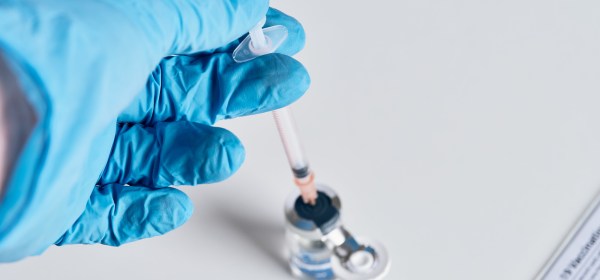
Written by Wen-Chin Wu, Greg Sheen, Hans H. Tung, Chien-Hui Wu. As COVID-19 began to spread from China to the world in early 2020, experts predicted that Taiwan would have “the world’s second-worst outbreak after China” ). Nevertheless, Taiwan was almost COVID-19-free until mid-May 2021 due to a set of successful policies, such as strict border control, population-based contact tracing of confirmed cases, and encouragement to wear facial masks. The “normal” pre-COVID-19 life lasted for almost one year until May 19, 2021, when Taiwan declared a nationwide COVID-19 Level 3 alert. The total number of confirmed COVID-19 cases in Taiwan since early 2020 had soared from 1,132 on May 1 to 8,511 on May 31, 2021.

TI Viral Politics: Taiwan, China, and Covid vaccination

Written by Ian Inkster. On 28 May, just after the Taiwanese authorities had apparently rejected outright Beijing’s offer to supply Covid 19 vaccines to Taiwan, Hsiao Bi-khim was urgently requesting from the USA ‘access to safe and effective vaccines.’ By 3 June, we knew that Sinovac and Sinopharm vaccines had been approved by both WHO and Covax Facility for distribution to other nations, that many millions of vaccines have been sent out from China to Africa and Asia, and that whatever the political interpretation, these vaccines were offered early to Taiwan free of charge.

Taiwan’s Economy: GDP Growth is a Bright Spot for Now

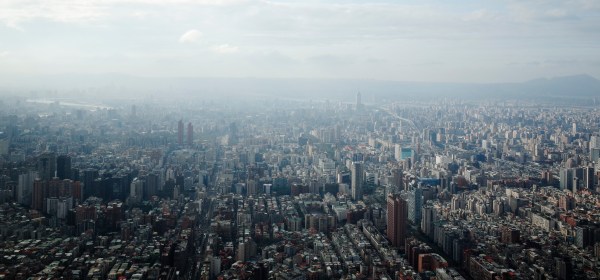
Written by John F. Copper. The recent economic news emanating from Taiwan is the impressive growth in its gross domestic product (GDP)—one of the basic indicators of economic vitality. This is certainly good to hear. After experiencing negative growth throughout most of 2020, conditions changed in the last quarter of the year. As a result, Taiwan even bested China’s GDP growth. Furthermore, the upward trend accelerated this year, with GDP expansion the highest in two decades. If this growth is sustained, 2021 will end with a welcomed 5 per cent or better rise.

Which Nation’s National Music? – A Critical Introduction of Contemporary Chinese Orchestra in Taiwan

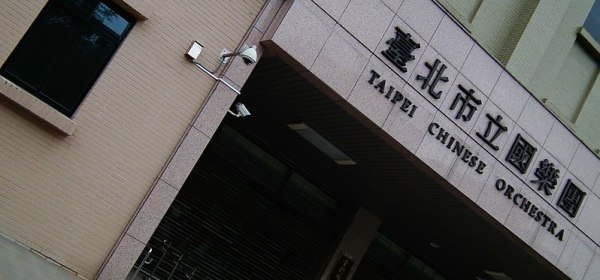
Written by Min-erh Wang. From the late nineteenth century onwards, Chinese musical culture has been significantly impacted by the importation of Western music. Chinese musicians and intellectuals, therefore, began to organise an orchestra with Chinese instruments as a way for pursuing musical modernisation. The establishment of the music section at the Central Broadcast Station in Chongqing in 1935 was the most prominent example of this trend. By presenting this new ensemble at international occasions, the modern Chinese orchestra was further promoted as ‘Gou Yue (國樂),’ meaning ‘national music,’ in the first half of the twentieth century.

Taiwan’s Real Estate Development from the Cross-Strait Perspective

Written by Wei-Che Fu and Yu-Chih Tseng. global economic and political geolocation, the challenges of its local industry development and social inequality were still ahead during the Sino-American conflicts. The mass capital escape from China is generally regarded as another chance for attracting investment. Taiwan experienced a new wave of housing inflation since the global financial crisis in 2008.

Becoming an Anti-Communist Stronghold: The KMT’s ‘Strategic Transition’ and Emergence of the ROC in Taiwan with Imperial Japanese Assistance, 1945-1952

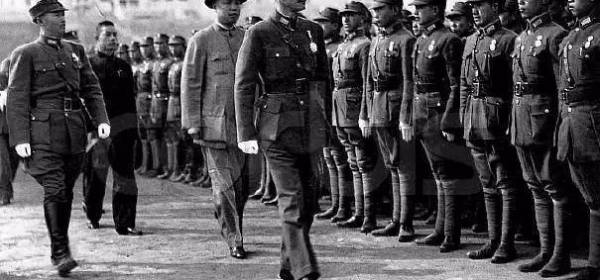
Written by Ko-Hang Liao. The joint statement between US President Joe Biden and Japanese Prime Minister Yoshihide Suga on April 16, 2021, once again caught everybody’s attention on serious concerns of the peace and stability across the Taiwan Strait upon the continuing escalation of challenges from China on possibly changing the status quo by force or coercion. This was the first time that Taiwan was mentioned in a US-Japan leaders statement since 1969. Although the situation seems to be frequently changing, it is essential to understand the current tension historically. Indeed, studying the early Cold War period can reveal much about what is happening and how Taiwan has come to the recent position.

Is Taiwanese society ready to face a belligerent China?

Written by Gunter Schubert. Over the last decade, the world has seen a geopolitical shift whereby China has gained power and influence in the international arena, showing an increasing willingness to safeguard “national interests” and fulfil the “historic mission of rejuvenating the Great Chinese Nation”. Within this, unification with Taiwan has long been defined as a major objective, the pursuit of which has become increasingly urgent.

China and Taiwan: The ‘One-China’ Policy and the Controversy of ‘Vaccine Diplomacy’

Written by Daouda Cissé. Since the beginning of the Covid-19 pandemic, China has exerted its influence at home and abroad through providing personal protective equipment (PPE), masks, medical equipment and so on. Due to its capacity to manufacture such equipment based on its past experience to survive other pandemics, it seems that China was a bit more prepared than other countries to face the Covid-19 pandemic.

Avoiding a Military Conflict over Taiwan

Written by Scott L. Kastner. relationship has become dramatically more antagonistic since 2016. Since taking office in that year, Taiwan President Tsai Ing-wen has been less willing to accommodate the PRC on core sovereignty issues than was her predecessor, Ma Ying-jeou. Beijing, in turn, has steadily increased coercive pressure on the island. Most notably, PRC military activities near Taiwan have increased sharply over the past few years.

Is it Time to Relinquish Taiwan?

Written by Elizabeth Freund Larus. In his April 2021 Foreign Affairs article “Washington Is Avoiding the Tough Questions on Taiwan and China,” international relations scholar Charles Glaser asks whether it is time for the United States to relinquish maritime hegemony in the Asia-Pacific. He concludes that Washington should retrench those areas that would be unacceptably costly in terms of lives and treasure to defend. One of those places is Taiwan. This determination method is reminiscent of Dean Acheson’s 1950 “perimeter speech.” He excluded South Korea and Taiwan from the US defensive perimeter in East Asia in the early years of the Cold War. Stalin and Mao were watching, and we know how the story on the Korean peninsula ended.

The US’ Role in the Most Dangerous Place on Earth: Not Handling the Taiwan Issue Alone

Written by Christine Penninga-Lin. For years Taiwan and its people live in a bizarre universe; the situation of the Taiwan strait and the Chinese escalation of military threat on Taiwan have made it a regular on the potential conflict outbreak point chart. But anyone who’s visited Taiwan in the recent two decades would hardly conclude their stay in Taiwan as unsafe or that the country is socially unstable.

1 15 16 17 18 19 40