The 1992 Consensus and the Future of the Cross-Strait Relationship: Examining the Stakes for Taiwan’s Application for UN Membership

Written by Joshua Bernard B. Espeña and Chelsea Anne A. Uy Bomping. The 1992 Consensus has framed the status quo of the Cross-Strait relationship for decades. However, more recently, rising nationalisms and geopolitical developments have expedited the erosion of the consensus. Moreover, the United States’ (US) commitment to Taiwan is ambiguous, despite the Trump administration adopting a more hardline stance against China. These factors complicate Taiwan’s quest for membership in the United Nations (UN), and add to doubts as to whether the consensus is still a source of stability in the Cross-Strait relationship.

A 2020 Vision for Strategic Clarity on Taiwan

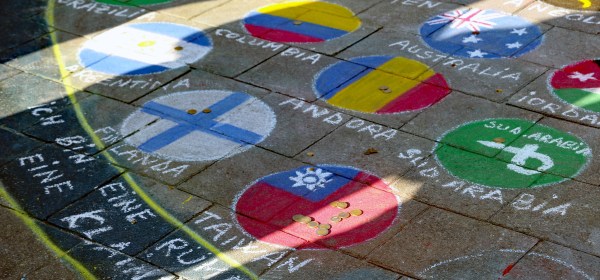
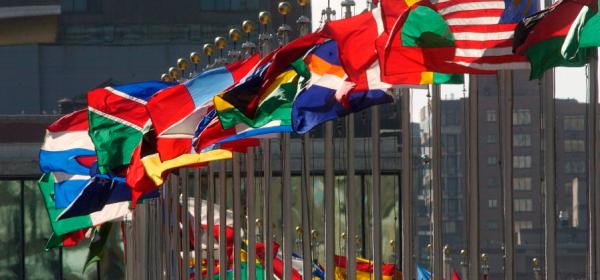
Written by Gerrit van der Wees. As the United Nations General Assembly is preparing to meet in New York for its annual gathering, the international community is facing multiple issues in all parts of the world that need to be resolved. Among all of those issues, there is one burning question: why is a free and democratic Taiwan not part of the gathering? Why is a vibrant democracy being excluded from the international family of nations?

Today Hong Kong, Tomorrow Taiwan”: Taiwan’s Strategic Conundrum

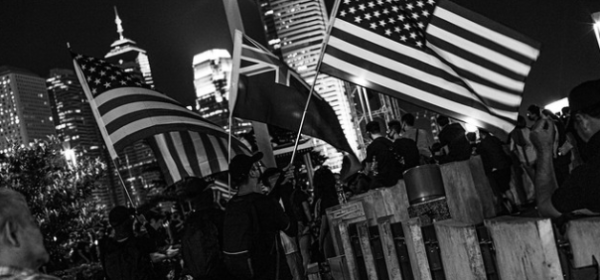
Written by Ferran Perez Mena. During the past year, the Hong Kong protests, along with the newly approved National Security Law, have generated much anxiety in Taiwan. They have been perceived by both the DPP’s political elite and the Taiwanese public as a premonition of what lies ahead for Taiwan. One of the popular slogans of the protests, “Today Hong Kong, Tomorrow Taiwan” (今天的香港,明天的台灣), perfectly epitomises the widespread unease that such political events are producing and the apparent inevitability of Taiwan’s downfall.

China Impact, Income Inequality and Its Discontents in Taiwan

Written by Thung-Hong Lin. In March 2014, the Sunflower Movement, a student-led protest to oppose the Cross-Strait Service Trade Agreement (CSSTA), shocked the Taiwanese public. For 24 days (March 18–April 10, 2014), Taiwan’s legislature was paralysed by protesters occupying the chamber, nearby roads and surrounding alleys, which prevented their eviction by police. The protesters claimed that the CSSTA would favour large companies investing in China, damage local small and medium-scale enterprises’ (SMEs) business and have a devaluing effect on local labour’s wages.

“Always in my Heart”: Lee Teng-hui’s Life in 10 Quotes

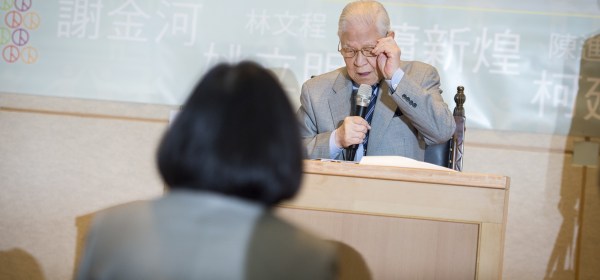
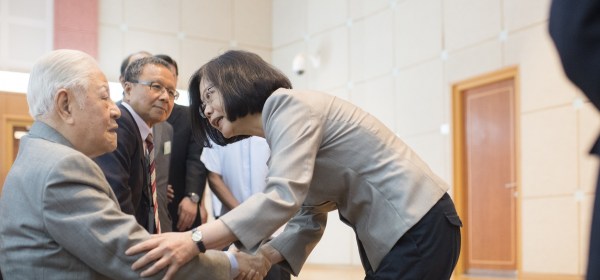
Written by Denis Li, translated by Corey Lee Bell. Lee Teng-hui, Taiwan’s first democratically elected president, played a key role in the country’s journey from authoritarianism to democracy. In 12 years as president, he made six amendments to the constitution, earning him an indelible place in the history of Taiwan. The News Lens has compiled 10 of Lee’s quotes from lectures and interviews, which reflect his perspective on Taiwanese politics and cross-strait relations, as well as the expectations he harbored for himself as a political figure.

How Taiwan Wins the Hearts of Southeast Asian States

Written by Ratih Kabinawa and Jie Chen. President Lee Teng-hui transformed ROC Taiwan’s foreign policy from a rigid “man and bandits don’t co-exist” mindset, a dictum which defined the Chiangs’ era, to one focusing on pragmatic diplomacy. This stance emphasised flexible ways to promote Taiwan’s international standing as its own legitimate sovereign state. President Lee used Taiwan’s achievement as a new democracy with impressive economic and technological prowess to win fresh international sympathy and support.

Prospect of Malaysia as the Gateway for Taiwan’s New Southbound Policy (NSP) Push

Written by Karl Chee Leong Lee. Despite lingering pessimism surrounding the impact of COVID-19 on Southeast Asia’s economy, Malaysia has unexpectedly enjoyed a new wave of Taiwanese investment. According to official figures released by the Malaysian Investment Development Authority (MIDA) last April, the value of inbound manufacturing-based investment from Taiwan has increased seven-fold. In 2019 Taiwan became the fourth largest FDI source for Malaysia’s manufacturing sector after China, the US and Singapore.

Taiwan and 21st Century Chinese Realpolitik

Written by Aidan Hall. The existence of China’s impressive military and economic strength is nothing new. It seems long ago that Beijing abandoned Deng Xiao Ping’s “hide your strength and bide your time” principle. To be sure, China is now more comfortable than ever being placed alongside the US and Russia as one of the world’s major powers. Awareness of China’s geopolitical significance is also nothing new (…) What is new, however, is China’s use of its military and economic muscle to improve its geopolitical position in profoundly aggressive ways.

The KMT’s Shifting Attitudes on Tsai’s Mask Diplomacy

Written by Najee Woods (葉正忠). While Taiwan’s current mask diplomacy has been perceived as successful, the question arises: why doesn’t the KMT want the central government aiding those nations in dire need for masks? The party flip-flopping sends a mixed message to the international community that Taiwanese are not willing to lend a helping hand to combat COVID-19, which hurts the interest of all Taiwanese people, not just the ruling party. While the PRC health diplomacy is faltering, the international community has now begun to seek out Taiwan, allowing the island nation to lead the world in combating COVID-19.

1 21 22 23 24 25 40