
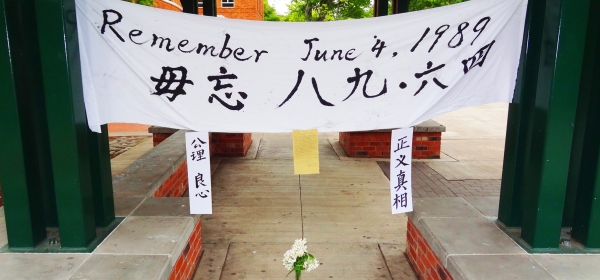
Written by Margaret K. Lewis. The thirtieth anniversary of the massacre in Beijing highlights Taiwan’s importance as a site of protest and its precarious situation as a refugee host.

Written by Margaret K. Lewis. The thirtieth anniversary of the massacre in Beijing highlights Taiwan’s importance as a site of protest and its precarious situation as a refugee host.
Written by Mab Huang. The struggle for human dignity, basic rights and a better life, to be sure, will be long and hard, but there is no alternative to commitment by, and engagement from, every individual, civil society organization, government and the United Nations, or what is left of it.

Written by Joanna Zylinska. Chen Shui-bian’s presidency has been said to be a period of polarization, typified by aggressive nation-building policies and worsening cross-Strait relations. He became president in May 2000 and at first enjoyed widespread support.
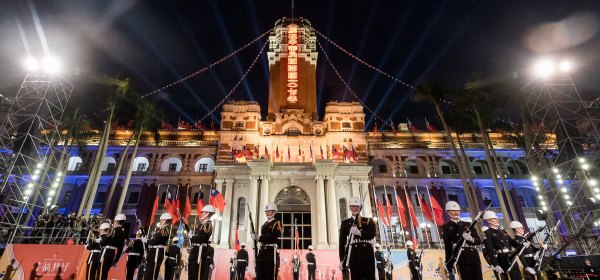
Written by J. Michael Cole. In recent months, no subject has been brought up more often by Taiwan watchers than the party infighting that has been developing within the blue and green camps in the lead-up to Taiwan’s general elections next January. Much of that interest stems from the impact that the candidate selection, and of course the election itself, will have on Taiwan’s future external policy at a time of unprecedented engagement opportunities for the island-nation.
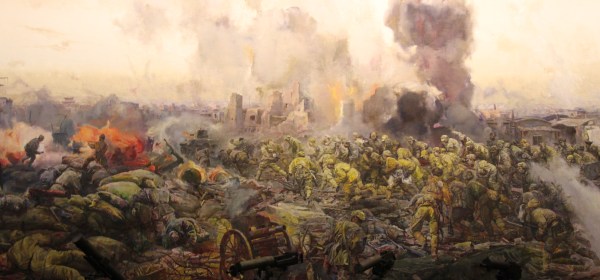
Written by Weiting Guo. While some may think that we have garnered enough fragments of Huang Bamei’s life, one should bear in mind that the richness of her literary representations, together with the scarcity of her appearance in official documents, may have made her disappear inside the conventions of her own stories—a dilemma that often appears in the memories of mythologized figures.
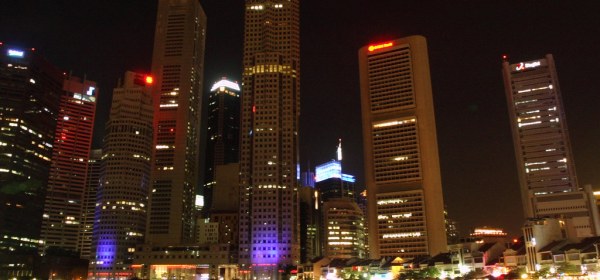
Written by Chia-Yuan Huang. Unlike the so-called Taiwanese ‘elites’ or ‘talents’ who were headhunted by Singaporean companies with the highest-level employment pass, a number of recently-migrated young Taiwanese workers in Singapore are engaged in the service industry. Most work on a contractual basis, dispatched by an agency and hold the lowest-level work pass (hereafter WP), which has many restrictions.

Written by Beatrice Zani and Lara Momesso. Marriage migration is a glocal phenomenon that refers to the interlink between marriage and mobility within a globalised world. During the last decades, Taiwan has become an illustrative site for global marriages: countries such as China, Vietnam, the Philippines and Indonesia are the main sending societies of females who decide to marry abroad.
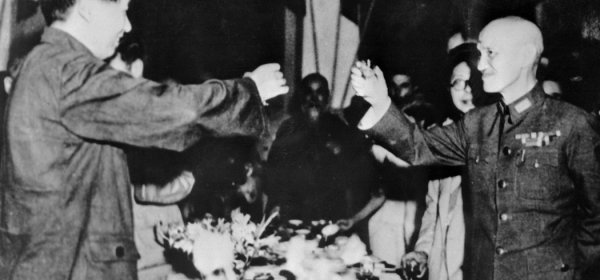
Written by Ko-Hang Liao. Mao could be considered the final winner in the diplomatic arena as the PRC eventually won the competition to be recognised as the legitimate China. However, one thing that was outside of his expectation was that the current status quo across the Taiwan Strait was established after the crisis – after more than 60 years it remains the last large-scale military confrontation between both sides.
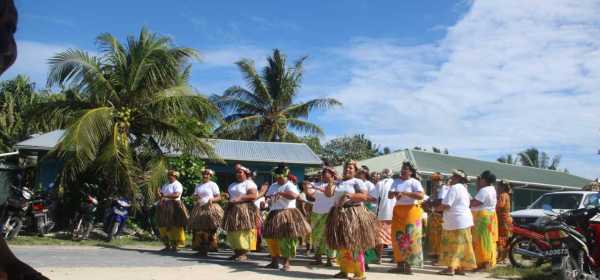
Conceptions of diplomacy held in Taiwan and Pacific nations like Tuvalu, Kiribati, the Marshall Islands, and Palau have often come into conflict. One example is how Taiwan’s presidential visits to the Pacific have been conducted and received. Since the Chen Shui-bian administration came to power in 2000, Taiwanese presidents have attempted to visit most if not all of Taiwan’s allies. However, in the Pacific, these visits are often quite abbreviated.
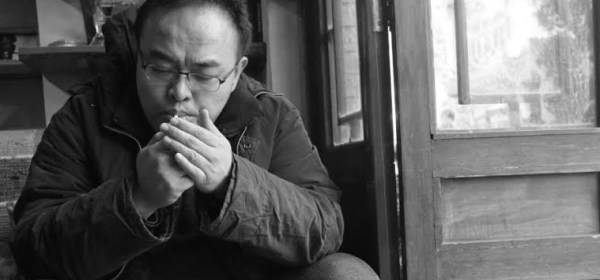
Written by Fangmei Lin. What is emphasized by Luo as “becoming non-human” is, in fact, becoming non-Taiwanese. The entire loop of becoming eventually demonstrates the paradox of the Taiwanese: unending deferral and the situation of absence constitute the meaning of being and becoming (non)-Taiwanese.
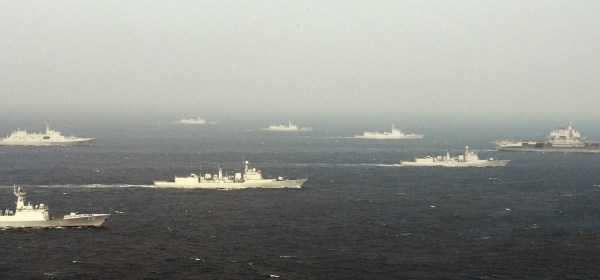
Written by Euan Graham. Taiwan is central to the security and strategic geography of the Indo-Pacific, perhaps even to the future development of democracy in the region. It remains an economy of significant weight. Yet, as a “stateless” entity, it suffers from a double identity, confined to margins of the region’s international affairs.
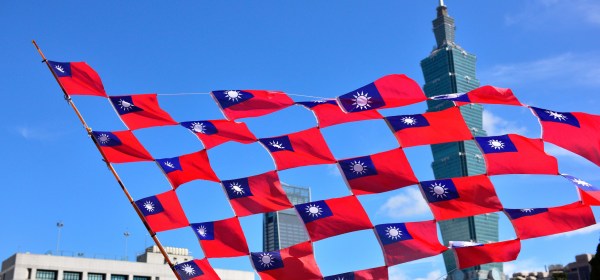
Taking into account the fact that the Taiwan of 2019 is not the same as the ROC of 1979, we need to look at Taiwan in its own light and its own right. We need to bring Taiwan in from the cold of political isolation and start working towards a normalization of bilateral relations.
 Taiwan Insight