Japanese Colonial/Occupational Histories in the National Museums: A Comparison Between Taiwan and Singapore

Written by Pin-Yi Li. In the postcolonial Asian context, national museums reflect the countries’ colonial histories and their transformation, offering the country’s incumbent political elites the opportunity to reinvent or adjust the initial museum discourses framed by the colonisers. For example, respectively built by the Japanese and British colonial governments, both the National Taiwan Museum and the National Museum of Singapore are the oldest public museums in each country.

Who are the Allies of the Chinese Communist Party (CCP)? Neologisms, Netizens, and Nationalisms 

Written by Hsin-I Sydney Yueh. Recently, Taiwan’s Ministry of National Defense rejected a Japanese news report suggesting a widespread tendency among retired Taiwanese military officials to “sell out” their country. Wu Sz-Huai, a retired lieutenant general and incumbent opposition KMT party legislator, was among those who denounced this allegation.  

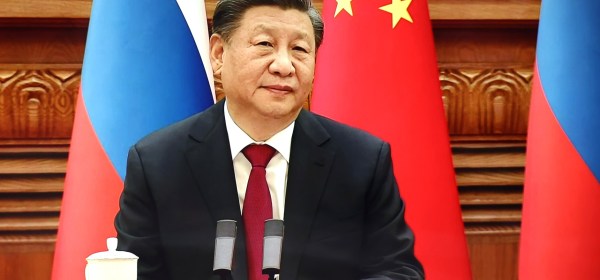
“Are we Chinese spies (共諜)?” Wu angrily asked this rhetorical question during a session of the National Defense Committee at Taiwan’s Legislative Yuan on March 2, 2023. While Wu denied being a Chinese spy, Taiwanese netizens teased him by sharing a photo of Wu and other retired Taiwanese military officials attending a CCP-hosted event, where they had sat attentively and listened respectfully to China’s leader Xi Jinping in 2016. Wu’s use of the term “Chinese spies” reminds us of another similar expression in Mandarin Chinese: “allies of the CCP” (中共同路人). This expression has recently gone viral in Taiwan’s online communities, used for self-mockery and as an attacking label.

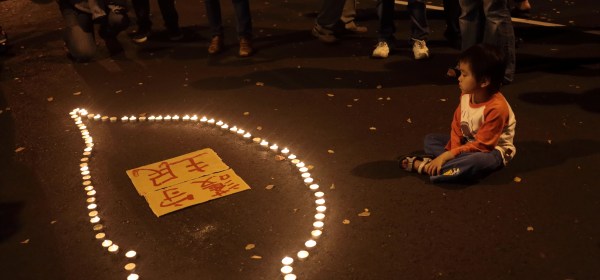
Freedom Fighting: Taiwan’s Resistance against China’s Ethnonationalism   

Written by Hsin-I Cheng. In the past decade, the world has heard the resisting voices of dissidents across Asia. From the 2014 Sunflower Movement to the Occupied Central Movement in Hong Kong later in the same year, citizens peacefully held their governments accountable. Since then, we have witnessed mass protests for freedom and transparency in nations. These challenges against authoritarianism generated transnational synergy, as demonstrated in the “#Milk Tea Alliance.” This movement started in 2020 when young Thai netizens fought cyberattacks against two Thai celebrities who expressed support for Taiwan and Hong Kong’s autonomy. Shockingly, two years later, the world witnessed Russia’s further invasion of Ukraine—it is a less militarily powerful neighbouring nation. Against these backdrops, we launched the book: Resistance in the Era of Nationalisms: Performing Identities in Taiwan and Hong Kong.

History was Reconfigured at the Time of Discovery: The Life and Afterlife of Chiang Wei-Shui

Written by Fang-Long Shih. The life and afterlife of Chiang Wei-Shui (蔣渭水 1891–1931) have echoed what the film Rashomon has denoted: “History was not found at the time of its occurrence, but was reconfigured at the time of discovery” (dir. Akira Kurosawa 1950). In 1921, Chiang Wei-Shui founded Taiwan Cultural Association (TCA, 台灣文化協會), the first culture-based organisation in Taiwan’s history. The TCA was established “to promote Taiwan to a position of freedom, equality and civilisation”. The TCA also had a political aim to “adopt a stance of national self-determination, enacting the enlightenment of the Islanders, and seeking legal extension of civil rights”.

In Memoriam: Missing Yun-Han

Written by Yu-Shan Wu. Gone is Yun-han, a true friend. We were colleagues at National Taiwan University and Academia Sinica for over half a century. He is a world-class political scientist, a gentle junzi in the finest Confucian sense of the term, a deep thinker who cares about the fate of the country and the world, and a master of delicate tastes in life. These are the four integral aspects of Yun-han’s personality that I am sure Yun-han would like us to keep in mind when thinking of him.

Cross-Strait Relations: De-coding What’s “New” for the New Year?

Written by Raian Hossain. Despite such heightened tension in cross-strait relations across 2022, President Xi Jinping and Tsai Ing-wen have delivered their English and Lunar new year speeches, showing signs of certain tolerance and a softer tone toward each other. The message from both sides of the Taiwan Strait is not random but rather driven by political objectives and motives likely to determine the cross-Strait relations in the upcoming years. Although speeches by President Xi Jinping and Tsai Ing-wen cover numerous angles, this article uses some specific lenses of the Politics of Security, the local and presidential election of Taiwan, and pandemic politics while de-coding the Cross-strait relations for the near future.

Xi’s 2022-2023 Remarks Deepen Internal Division in Taiwan

Written by Wei-Hsiu Huang. To sum up, based on the address to the 20th National Congress of CPC and the 2023 Lunar New Year Greetings by Xi Jinping, it is explicit that the Chinese mainland will exercise even more robust sharp power and attempt to break up Taiwan from within. Moreover, the Chinese Mainland, which is always wary of foreign powers interfering in Taiwan’s affairs, could use the same sharp power against democratic states such as the US and Japan. This is because many countries, not just Japan, already have developed strong economic interdependencies with the Chinese mainland, creating routes for China’s sharp power. It is an important issue for democracies: how to prevent dictatorships from using sharp power to exploit freedom of speech and collapse democracies from within.

How might China’s new Taiwan policy pan out?

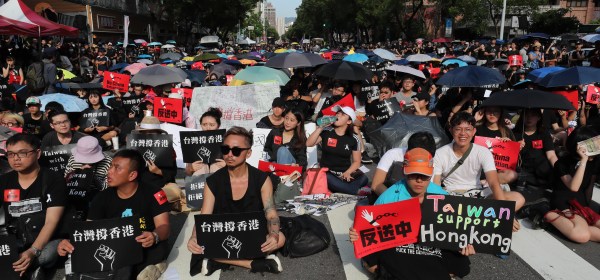
Written by Huynh Tam Sang. One year after the 2019 eruption of large-scale pro-democracy protests in Hong Kong, China enacted the “national security law” for the special administrative region, cracking down on freedom and democracy there. Under such a situation, Taiwan’s populace disapproved of China’s strategy of occupying and turning the self-governed island into a new colony in the vein of Hong Kong. In light of the widespread criticism of “one country, two systems,” the political framework that Chinese authorities have embraced to pursue peaceful reunification with Taiwan, the Chinese Communist Party’s leader Xi Jinping (習近平) has tasked Wang Huning (王滬寧), the party’s chief of ideology and his mastermind, with finding a replacement arrangement.

Taiwan-China relation: 2023 and beyond (Part II)

Written by Daniel Jia. The Taiwanese government, as the administrative body of a democratic state, is currently facing a formidable challenge from both external and internal sources. While China’s aggression towards Taiwan is widely acknowledged, many Taiwanese citizens are beginning to realise that the significant differences between Taiwan’s and China’s social structures outweigh any cultural similarities between the two nations. However, it is important to note that only a few people recognise that these differences could be easily erased if China imposed its rule upon Taiwan, as it did with Hong Kong.

Taiwan-China relation: 2023 and beyond (Part I)

Written by Daniel Jia. The year 2022 has been particularly bumpy for Taiwan and China in their relationship. The tension reflected the growing identity gap between the two sides of the Taiwan Strait. While China’s strength of pulling Taiwan closer through its economic attraction and political influence was waning, Taiwan’s growing confidence transformed into a centrifugal force that would one day liberate Taiwan completely from China’s repressive sphere. Taiwan’s desire to part tyrannical China bears an analogy with Ukraine’s struggle to free the re-born nation from the centuries-old Russian oppressor. The turbulent year of 2022 is now in the past, but does its impact affect our future? What would the Cross-Strait relation be like in 2023 and beyond? This paper includes two perspectives, the first is a reflection from China, and the second is a reflection from Taiwan.

Sitting on The Fence? The Ambiguous Position of the TPP and Its Potential Causes

Written by Jonathan Leung and Chengyu Yang. For the TPP, there are two issues that have been most widely criticised by the Taiwanese public and politicians. The first is that the TPP’s political stance is too vague and often lacks clear views on cross-strait issues. The second is that the TPP itself relies too heavily on the popularity of former Taipei City Mayor Ko Wen-je, while relatively ignoring the views of other TPP politicians. Some politicians have recently argued that Ko and his TPP are likely to repeat the 2014 PFP and Song’s failure in 2024. Why is the TPP’s cross-strait stance receiving attention in the Taiwanese political arena and is the TPP’s political stance really ambiguous? What are the potential reasons for public and politicians’ perceptions about the ambiguity of the TPP’s position?

1 6 7 8 9 10 40