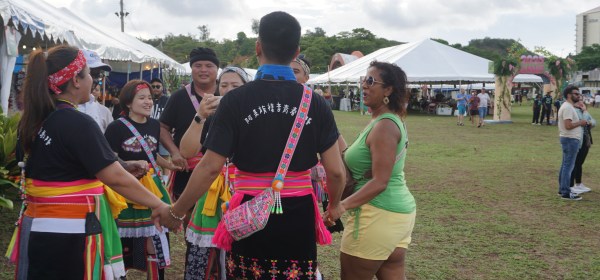
The Island Is Our Canoe: Taiwan–Guam Exchange Finds Connection Beyond the Stage

Written by Eloise Phillips. This article examines the 2025 Taiwan–Guam cultural exchange, led by Taiwan’s National Museum of Prehistory, which wove song, canoe building, and shared practices into island diplomacy. Through workshops, performances, and informal encounters, the program connected Austronesian communities across the Pacific, highlighting resilience, mutual reclamation, and living traditions of cultural practice, language, and art.
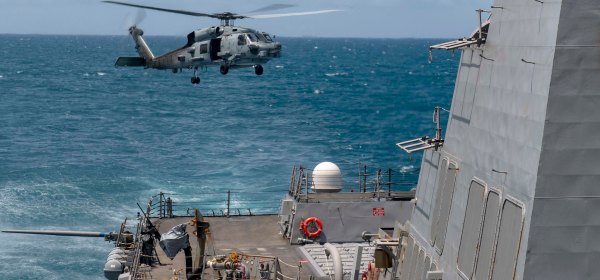
The Promise of a Return to Taiwan in Recent Election Campaigns: Federated States of Micronesia, Solomon Islands, and Honduras 

Written by Jess Marinaccio. This article highlights the cases of the Federal States of Micronesia, Solomon Islands, and Honduras, where restoring diplomatic relations with Taiwan has become a talking point in election campaigns. While many analysts are concerned about Taiwan’s “diplomatic zero” situation, this article argues that the possibility of restoring broken diplomatic ties remains open for Taiwan’s recently departed allies.

Is it the End for Taiwan and Pacific Regionalism? Controversy at the 53rd Pacific Islands Forum (PIF) Leaders Meeting in Tonga

Written by Jess Marinaccio. This article examines the 53rd Leaders Meeting of the Pacific Islands Forum, taking place from 26 to 30 August 2024. It highlights the several controversies that Taiwan was embroiled in during the Meeting, particularly in regard to Taiwan’s position as a PIF “development partner” despite objections from China.

Pondering the Pacific: One of the Moons Version II

Written by Ysanne Chen, Ilin Tsai, and Shih-Hao Huang. In “Pondering the Pacific,” we conceptualise the Pacific as an oceanic highway or a contact zone. The vast ocean connects Pacific Islands. We travel from the island of Taiwan (we are reluctant to call it main(is)land) to Pongso no Tao to recover and explore this connection. When on the island, we further learn about Tao people’s connectedness to other Pacific Islanders. Upon our return, we wrote these poems to celebrate the Pacific. Along with other Pacific Islanders writers and poets, we praise the Pacific for its abundance and ability to connect people. We also join Pacific Islanders in voicing out against nuclear contamination and all forms of environmental injustice.

Pondering the Pacific: One of the Moons Version I

Written by Shih-hao Huang, Chiahua Lin, and Robinson Pinghao Liu. Employing “the Pacific” as a contact zone, this poetry collection explores the dynamic and shifting relationship between land and sea, allowing Indigenous culture and history in the trans-Pacific context to engage in spatial and historical complexity. This journey triggers memories and connects the present with the ancestral past. When seeing the constellations in the sky, one is reminded of the stories about stars. However, we were reminded that we often forget Taiwan is also a part of the Pacific. Therefore, we authored poems to represent, substantiate and celebrate the connection: the LOST connection between the Pacific Ocean and us.

Placing Relationship over the Project: Filmmaking in Oceania

Written by Cheng-Cheng Li. My filmmaking story in Oceania started with the Re/presenting Oceania course at the University of Hawai‘i. My Kumu (professor) Tarcisius Kabutaulake, who comes from the Solomon Islands, has been teaching and researching across the region for decades. His course invites me to critically engage with and discuss how the Pacific Islands have been represented in scholarly and other mediums. He brings me onto the ‘voyage’ across the ‘storyscapes’ of scholars, artists, performers, poets, and filmmakers to understand the politics of representation. This article will first discuss my filmmaking experience in Hawai‘i with the Pacific Island community. In the second section, with an increasing number of Indigenous Taiwanese wishing to connect with Oceania, I will address the interconnection story between Taiwanese Indigenous filmmakers and the Oceanic community. The theme of ‘relationship’ as ‘Priority’ will be interwoven into the stories. 

A Possible Cultural-Political Alliance to Address Concurrent Struggles between Taiwan and Oceania: Music as a Means

Written by Chun Chia Tai. For many Indigenous peoples in Taiwan, music is a lively cultural medium that facilitates allying with other Austronesian peoples residing in Oceania. Such a musical way of fostering cultural diplomacy has currently been popular in Taiwan, especially after the release of the album Polynesia in 2014, emphasising the shared cultural genealogy of Austronesian under the collaboration of an Amis singer Chalaw Pasiwali and a Madagascar musician Kelima. In the same year, another project called the Small Island Big Song aimed to establish a network between Pacific Islands and Taiwan through music and film. Musicians in this project released their 2018 album Small Island Big Song and a sequential album named Our Island in 2021. Moreover, all these musical works focus on fusions of traditional folk music(s). Positive public perception reflects Taiwanese people’s rising demand for establishing a cross-Pacific Austronesian community between Taiwan and the Pacific Islands.

A Proposition of Indigenous Diplomacy for Taiwan-Australian Indigenous Peoples

Written by Suliljaw Lusausatj. Although Australia’s Indigenous Peoples are not Austronesian language speakers, with direct historical links to Taiwan’s Indigenous Peoples, they share a broadly similar experience of colonial histories, national governance, social and economic environments, and most importantly, reliance on traditional subsistence practices and the importance of ancestral territories. Both peoples have experienced a gradual process of formal recognition. For example, the Prime Minister of Australia and the President of Taiwan issued formal apologies for the injustice done to Indigenous communities in 2008 and 2016, respectively. Despite these similarities, the Indigenous Peoples of Australia and Taiwan have not yet opened a constructive dialogue due to geographic distance, national policies and approaches to academic studies. This also applies to educational disciplines and uneven historical memories of colonialism. Therefore, perhaps it is important to think about the possibility of using new forms of diplomacy to build these relationships drawing on the traditional practices of Australian and Taiwan Indigenous Peoples.

Indigenous/Islander Fanaticism Across the Pacific: A Perspective from Films

Written by Yawi Yukex; translated by Yi-Yu Lai. A type of Taiwanese is extremely fond of anything about the Indigenous peoples of Taiwan. They are captivated by all the totems and material cultures associated with Indigenous peoples, yet they frequently only believe what they already know about Indigenous cultures. Besides, they usually turn a deaf ear to Indigenous peoples’ enormous burdens and struggles. I call these individuals “Indigenous fanatics.” In the early 2000s, a series of Taiwanese films, such as “The Sage Hunter” (2005) and “Fishing Luck” (2005), portrayed Indigenous communities as shelters for those wishing to escape reality and contrasted cities with the communities. People believe that the expansion of civilisation causes problems, whereas mountains and forests represent the solution.

Representing Taiwan’s Pacific Connections

Written by Chuahua Lin. How are Trans-Pacific connections remembered and maintained in the literary works of the Tao people, one of the 16 officially recognised Indigenous tribes of Taiwan? In this article, I will read Syaman Rapongan and Yung-chuan Hsieh’s works, and I will discuss how they exemplified the ways in which Tao people endeavour to revitalise the navigation tradition of their people and maintain the connection to the ocean. As I argue in this article, Tao people, as well as other Pacific Islander writers, represent the centuries-old navigating traditions of their people and thus keep these Trans-Pacific connections alive. 

Is it Time to Relinquish Taiwan?

Written by Elizabeth Freund Larus. In his April 2021 Foreign Affairs article “Washington Is Avoiding the Tough Questions on Taiwan and China,” international relations scholar Charles Glaser asks whether it is time for the United States to relinquish maritime hegemony in the Asia-Pacific. He concludes that Washington should retrench those areas that would be unacceptably costly in terms of lives and treasure to defend. One of those places is Taiwan. This determination method is reminiscent of Dean Acheson’s 1950 “perimeter speech.” He excluded South Korea and Taiwan from the US defensive perimeter in East Asia in the early years of the Cold War. Stalin and Mao were watching, and we know how the story on the Korean peninsula ended.

1 2