Staging and Restaging Taiwan at the Centre Pompidou: Taiwanese Art on Display 2020 to Present

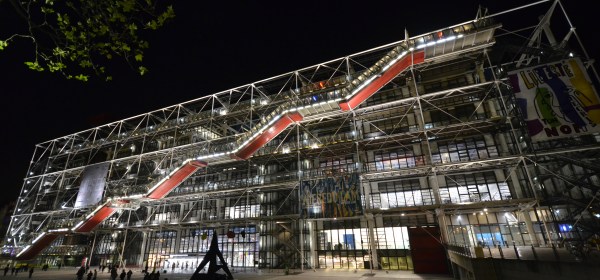
Written by Gabriela-Alexandra Banica. In the third decade of the 21st century, Taiwanese artists and exhibitions have appeared at the Centre Pompidou in Paris and Metz, and this could serve as a compelling case study of Taiwan’s pursuit of international recognition through arts. Through this exploration, this article aims to address the gaps in the current scholarship related to curatorial practices concerning art from contested territories while enriching the field of France-Taiwan curatorial practices. By analysing the current subject of interest, it is hoped that art from more disputed territories can be made accessible to audiences in France, Europe, and around the globe.

Han-Heterosexual-Male Supremacy across the Pacific? A Critique of The Taiwanese Reminiscence Acrobatic Show

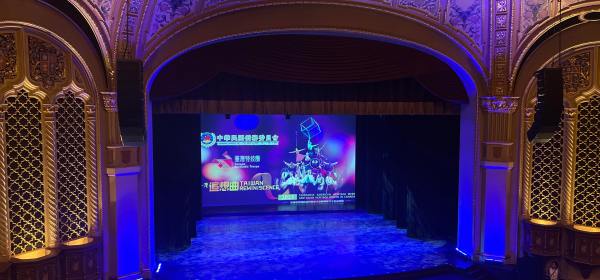
Written by Mark Hsiang-Yu Feng. Busy as usual was Highway number eighty, but Mother’s Day made downtown San Jose unexpectedly quiet. However, in front of the California Theatre, lively chat sounded out of the silence, marking this celebratory moment for the twentieth anniversary of the Taiwanese American Center of Northern California during Asian and Pacific Islander heritage month. Families came to fill most of the seats, and three languages—Hoklo Taiwanese, Taiwanese Mandarin, and English—were spoken to express the identity of these participants. To honour the culture of Taiwanese and Taiwanese Americans, the overall narrative of Taiwanese Reminiscence contextualises a mixture of stunts, acrobatic movements, and dance into a condensed representation of the twentieth history of Taiwan.

Triangulating the Taiwanese Spirit in Southern California: Colonial Hauntings at the 228 Commemorative Concert

Written by Chun Chia Tai. In February, I saw a text message in a Taiwanese group chat promoting a concert commemorating the 228 massacre caused by the Kuomintang dictatorship in Taiwan on February 28th, 1947. The concert was called The Spiritual Day of Taiwan: 2-28 76th Commemorative Concert and was hosted by two Taiwanese American organisations: the Taiwanese United Foundation and the Taiwan Elite Alliance, since 2007. The performers were mainly Taiwanese. Many of them were not professionals but members of local Taiwanese church choirs. Most of the audience was familiar with the songs being performed; therefore, they sang along with the performers.

Reflecting on the Laguna Woods Shooting Tragedy: One Year Later

Written by Wayne Huang. On May 15, 2022, a fatal shooting occurred at the Irvine Taiwanese Presbyterian Church in Laguna Woods, California. During a lunch reception, the gunman locked the doors and opened fire with approximately a hundred people present. The church has been recognised for its significant role in Taiwan’s democratisation and independence movements since the 1970s. It has led to the suspicion that this historical connection motivated the assailant to travel over a hundred miles from Las Vegas to target the church. The shooting resulted in six individuals being shot, including Dr John Cheng, who lost his life while attempting to disarm the gunman. 

Is Going Green Hurting Indigenous Communities? Reflection from Participating in the United Nations Permanent Forum on Indigenous Issues 

Written by Wasiq Silan. Is going green hurting Indigenous communities? Not necessarily. However, exclusionary conservation measures create a lose-lose outcome for non-Indigenous and Indigenous communities. Indeed, Indigenous peoples’ full and substantial participation is a prerequisite to achieving a sustainable future and halting the rapid loss of global biodiversity. This is true for the Indigenous communities in Taiwan, such as in the case of the solar panel controversy on the Katratripulr Pinuyumayan (Beinan in Mandarin Chinese) people’s traditional territory. Drawing from the experience of the Sámi, my recent participation in the United Nations Permanent Forum on Indigenous Issues (UNPFII) may shed light on this issue.

Taiwan and the Netherlands: What the East Asian Island Nation Can Learn from its Former Colonizer

Written by Charlie Smith. The King’s Field is a famous Japanese video game series created in the 1990s. But nearly 400 years ago, there was another King’s Field—the entire island nation of Taiwan. For 38 years in the 17th century, Taiwan was a colony of the Dutch Republic under the administration of the Dutch East India Company. And the Dutch king was the largest shareholder. 

“The Han people pioneers cleared the land, but the land they cleared was stolen from them, and they were forced to turn their labors toward tilling the so-called ‘king’s fields’,” wrote historian Su Beng in Taiwan’s 400 Year History. “Moreover, most of what they achieved was given over, in the form of rent or taxes, called ‘king’s field rent contributions,’ for the use and enjoyment of the Dutch.”

What is the significance of the dialogue with the Dutch community in Vancouver for 2023 TAIWANfest in Canada? 

Written by Charlie Smith. The Dutch Cultural Association of B.C. is trying to tell a more nuanced and complete story of the Netherlands, including the experiences of those who lived under Dutch colonial rule. Moreover, the association’s goal is to provide a richer understanding of how Dutch descendants should act as visitors on the unceded lands of Indigenous nations in Canada’s westernmost province. Oostindie believes that this has set his organization up well for a collaboration with this year’s TAIWANfest in Vancouver and Toronto. Oostinde discusses how Taiwan, the Netherlands and Canada can “have heartfelt discussions that bring these hidden histories forward. And we can learn about what it means for contemporary politics, how we work together, and how we consider democracies.” 

Beyond Chinese: The Evolution of Taiwanese-Canadian Identity in Canada

Written by Charlie Smith. At the height of the pandemic in 2020, a cultural producer generated considerable discussion within the Taiwanese diaspora in North America. It came when Charlie Wu wrote an article declaring: “I’m a Taiwanese Canadian, not a Chinese Canadian.” It was the managing director of the Asian-Canadian Special Events Association’s personal response to being constantly labelled as Chinese in his adopted country. In fact, Wu was even included in the list of the top 100 influential Chinese Canadians in British Columbia in a 2006 article in the Vancouver Sun. 

The difficulty of being Hou

Written by Jonathan Sullivan. The KMT’s stellar showing in local elections last November had many in the party dreaming of a return to power in the January 2024 national elections. As has happened in every previous election following a two-term president in Taiwan, a change of party in power (政黨輪替) looked a likely outcome as the DPP haemorrhaged city mayorships and town council seats. In hypothetical polling match-ups at the time, re-elected Xinbei Mayor Hou You-yi handily beat VP Lai Ching-te. Those two and former Taipei Mayor Ko Wen-je have now been formally nominated by their parties to compete for the ROC presidency.

The Fluidity of the Presidential Field

Written by Jonathan Sullivan. Although the main parties have nominated their Presidential candidates, the composition of the field remains fluid and unsettled. On the DPP side, current VP Lai Ching-te long ago locked down the nomination unopposed, and as a continuity candidate enjoying the benefits of incumbency, his campaigning thus far has been relatively smooth. However, Lai’s responsibility for answering any gripes with government policy over the last eight years and the stubborn ceiling to his poll numbers over the last few months suggest substantial challenges to come. But for now, the main uncertainties and drama are on the opposing side of the fence.

Taiwan’s 2024 presidential election candidates: What will Hou or Lai’s election mean for tensions across the Taiwan Strait?

Written by Corey Lee Bell. Taiwan’s main opposition party, the Beijing-friendly Kuomintang (KMT), recently selected its candidate for the 2024 presidential election. With the main competitors for Taiwan’s top job essentially locked in, each has been interrogated on their policies on cross-strait relations in recent weeks. With tensions high across the Taiwan Strait, and between Beijing and Washington, what each candidate stands for could have profound ramifications for, and perhaps even beyond, the Indo-Pacific region.

1 21 22 23 24 25 93