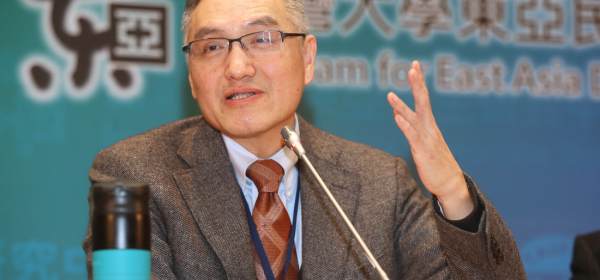
“Kind and Gentle Soul”(「謙謙君子,溫潤如玉」): Remembering My Dear Friend Yun-han Chu (1956-2023)

Written by Tse-min Lin. The news came as a total shock. I had arrived in Taiwan just five days earlier to visit the new Taipei School of Economics and Political Science that Yun-han had helped establish. I knew he was ill and had been hoping to visit him after being unable to do so for five years. That is never going to happen now. Yun-han was a dear friend for 40 years. His passing is a heart-breaking personal loss.
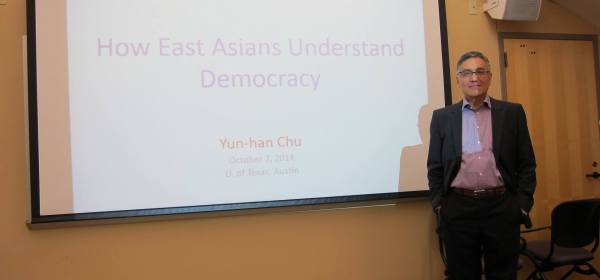
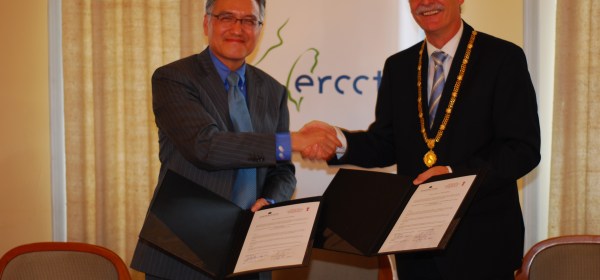
Chu Yun-han (67), An Eminent Scholar and President of Taiwan’s CCK Foundation, Died on February 5th, 2023

Written by Gunter Schubert. It was a spring day in 2007 when I entered the commercial building at Tun Hua North Road, where the headquarters of the Chiang Ching Kuo Foundation (CCKF) were located on one of the upper floors. I came to meet Chu Yun-han in his capacity as CCKF president and introduce to him my idea to establish a Taiwan research centre at the University of Tübingen. I had prepared a detailed presentation and pondered every detail that could jeopardise my proposal’s consistency.

In Memoriam: Missing Yun-Han

Written by Yu-Shan Wu. Gone is Yun-han, a true friend. We were colleagues at National Taiwan University and Academia Sinica for over half a century. He is a world-class political scientist, a gentle junzi in the finest Confucian sense of the term, a deep thinker who cares about the fate of the country and the world, and a master of delicate tastes in life. These are the four integral aspects of Yun-han’s personality that I am sure Yun-han would like us to keep in mind when thinking of him.

Cross-Strait Relations: De-coding What’s “New” for the New Year?

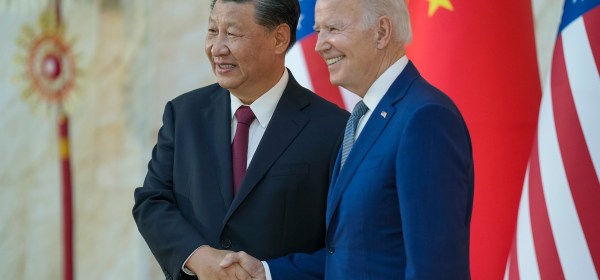
Written by Raian Hossain. Despite such heightened tension in cross-strait relations across 2022, President Xi Jinping and Tsai Ing-wen have delivered their English and Lunar new year speeches, showing signs of certain tolerance and a softer tone toward each other. The message from both sides of the Taiwan Strait is not random but rather driven by political objectives and motives likely to determine the cross-Strait relations in the upcoming years. Although speeches by President Xi Jinping and Tsai Ing-wen cover numerous angles, this article uses some specific lenses of the Politics of Security, the local and presidential election of Taiwan, and pandemic politics while de-coding the Cross-strait relations for the near future.

Xi’s 2022-2023 Remarks Deepen Internal Division in Taiwan

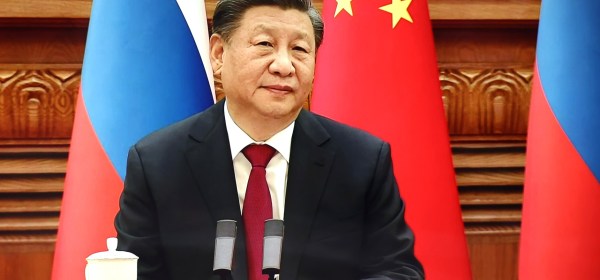
Written by Wei-Hsiu Huang. To sum up, based on the address to the 20th National Congress of CPC and the 2023 Lunar New Year Greetings by Xi Jinping, it is explicit that the Chinese mainland will exercise even more robust sharp power and attempt to break up Taiwan from within. Moreover, the Chinese Mainland, which is always wary of foreign powers interfering in Taiwan’s affairs, could use the same sharp power against democratic states such as the US and Japan. This is because many countries, not just Japan, already have developed strong economic interdependencies with the Chinese mainland, creating routes for China’s sharp power. It is an important issue for democracies: how to prevent dictatorships from using sharp power to exploit freedom of speech and collapse democracies from within.

How might China’s new Taiwan policy pan out?

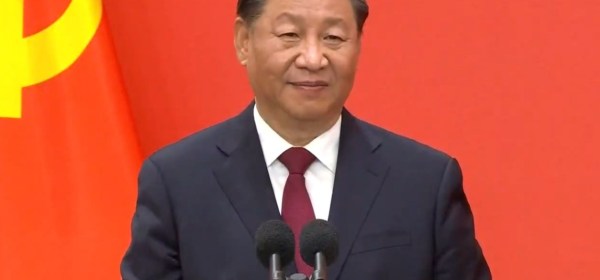
Written by Huynh Tam Sang. One year after the 2019 eruption of large-scale pro-democracy protests in Hong Kong, China enacted the “national security law” for the special administrative region, cracking down on freedom and democracy there. Under such a situation, Taiwan’s populace disapproved of China’s strategy of occupying and turning the self-governed island into a new colony in the vein of Hong Kong. In light of the widespread criticism of “one country, two systems,” the political framework that Chinese authorities have embraced to pursue peaceful reunification with Taiwan, the Chinese Communist Party’s leader Xi Jinping (習近平) has tasked Wang Huning (王滬寧), the party’s chief of ideology and his mastermind, with finding a replacement arrangement.

Taiwan-China relation: 2023 and beyond (Part II)

Written by Daniel Jia. The Taiwanese government, as the administrative body of a democratic state, is currently facing a formidable challenge from both external and internal sources. While China’s aggression towards Taiwan is widely acknowledged, many Taiwanese citizens are beginning to realise that the significant differences between Taiwan’s and China’s social structures outweigh any cultural similarities between the two nations. However, it is important to note that only a few people recognise that these differences could be easily erased if China imposed its rule upon Taiwan, as it did with Hong Kong.

Taiwan-China relation: 2023 and beyond (Part I)

Written by Daniel Jia. The year 2022 has been particularly bumpy for Taiwan and China in their relationship. The tension reflected the growing identity gap between the two sides of the Taiwan Strait. While China’s strength of pulling Taiwan closer through its economic attraction and political influence was waning, Taiwan’s growing confidence transformed into a centrifugal force that would one day liberate Taiwan completely from China’s repressive sphere. Taiwan’s desire to part tyrannical China bears an analogy with Ukraine’s struggle to free the re-born nation from the centuries-old Russian oppressor. The turbulent year of 2022 is now in the past, but does its impact affect our future? What would the Cross-Strait relation be like in 2023 and beyond? This paper includes two perspectives, the first is a reflection from China, and the second is a reflection from Taiwan.

Revitalising Indigenous Weaving Cultures Across Borders: Conversations and Collaborations between Taiwan and the Philippines

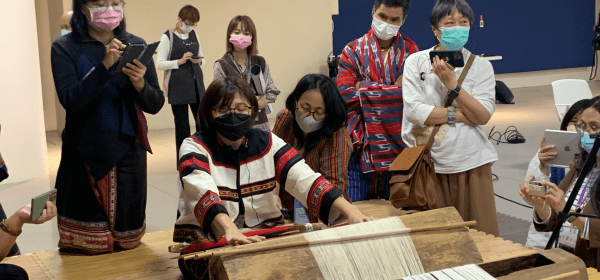
Written by Shau-lou Young. Weaving is a significant material culture in Indigenous Peoples’ society in Taiwan and the Philippines. In the past, hand-made textiles were necessities in their daily lives. However, with the introduction of fabrics into their society, only a few women continued to weave. Today, Atayal weavers in Taiwan and Ifugao weavers in the Philippines are working hard to revive their weaving culture. They brought back and conserved disappearing weaving techniques and knowledge and remade some long-lost textiles.

When You Weave, You Are Planting Seeds on the Land: An Indigenous Weaving Practitioner’s Experience

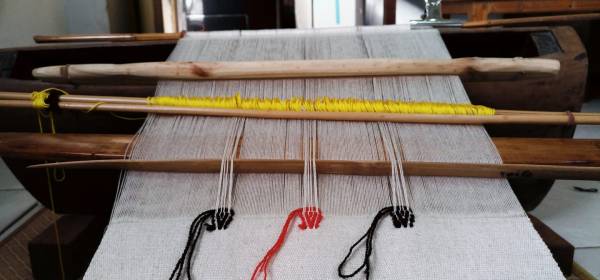
Written by Ipiq Matay. My name is Ipiq, which means “tiny” in Truku, and I am an Indigenous person from the Truku community of Taiwan. Despite my lack of height, I have a big heart. As a weaver in my community, I’d like to share ‘mhuma’, a Truku weaving skill which translates to “be planting”. This weaving technique can be seen in diamond-shaped patterns on women’s traditional clothing. Learning how to weave and create this pattern began my journey of connecting to my family history and the people of my community.

Tminun: Weaving from My Heart as an Indigenous Male

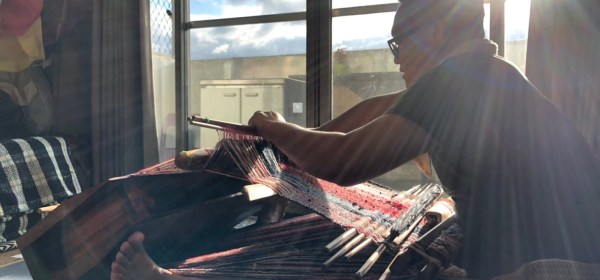
By Peydang Siyu (Chu, Hao-jie); translated by Huang, Hsing-hua. I am a member of the Truku people; the twelfth officially recognised Indigenous nation in Taiwan. We believe in our ancestors’ spirits (utux rudan) and adhere to their teachings (gaya) throughout our entire lives. Cloth weaving (tminun), similar to facial tattooing (ptasan), is a significant part of Truku culture, and many of our customs are related to it. For example, there is a strict gender division of labour in traditional Truku society, with men hunting and women weaving. Men were prohibited from learning how to weave or even touching the tools. As a male, it wasn’t until 2018 did I dare to learn it. But once I began, I never stopped. It was definitely a dream-come-true journey that I would forever remember.

1 26 27 28 29 30 94