Referendums and Their Relationship to Taiwan’s Politics

Referendums and Their Relationship to Taiwan’s Politics Written by Chia-hung Tsai. Perhaps the biggest challenge for the DPP is the import of the US pork referendum. However, the KMT argues that the referendum targets every pork product containing ractopamine, which is used to enable animals to grow larger and leaner. This drug is currently legal in the US but banned in Taiwan. Many polls show that most people agree to ban meat containing ractopamine, partly because food safety is a salient issue in Taiwan, especially after the gutter oil incidents in 2014. The DPP seems to frame this referendum as the plebiscite on whether Taiwan would ally with China or US.


The History and Significance of Referendums in Taiwan

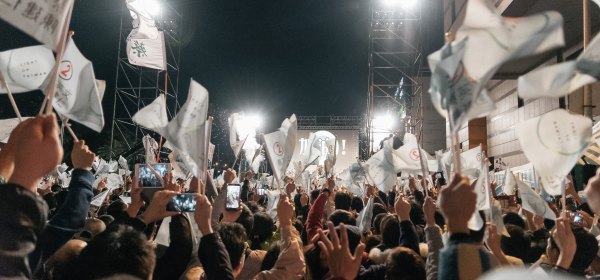
Written by John F. Copper. On December 18, 2021, a four-question referendum will be presented to voters in Taiwan. The first question deals with constructing a receiving terminal for natural gas on Taoyuan’s Datan Algae Reef. The second is about importing pork from the United States that may contain a possible dangerous additive. The third concerns the activation of the Lungman Nuclear Power Plant. Finally, the fourth allows, or rejects, referendums being held together with general elections.

Making Sense of Taiwan’s Invitation to the Summit for Democracy

Written by Charles K. S. Wu, Austin Horng-En Wang, Fan-Yu Chen, Yao-Yuan Yeh. Amidst the latest series of actions that draw China’s ire, the U.S. officially invited Taiwan to participate in an inaugural Summit for Democracy along with 109 states. Though the summit has several major themes for discussion on its agenda, including defending against authoritarianism, fighting corruption, and promoting human rights, many observers would agree that the convention is primarily symbolic and would not deliver substantial policy changes among the participants.

What Does the Summit for Democracy Tell Us About U.S.-Taiwan Relations?

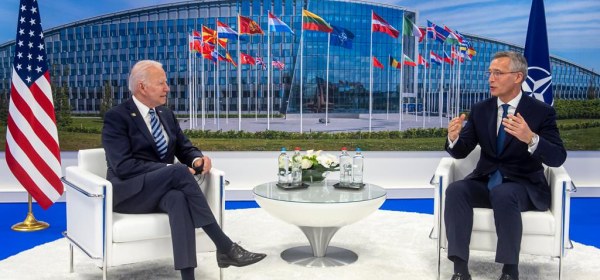
Written by John W. Tai. The Biden administration just concluded its first Summit for Democracy. Prior to the event, the world took notice that Taiwan was among the 111 countries invited, but much to China’s ire, the latter was not. This invitation is the latest in a series of moves that seems to demonstrate Washington’s determination to upgrade its ties with Taiwan. In this context, what should we make of Taiwan’s participation in President Biden’s signature event? What does it mean for U.S.-Taiwan relations?

Taiwan’s international space: expanding or contracting? Shining at the Summit for Democracy but losing Nicaragua

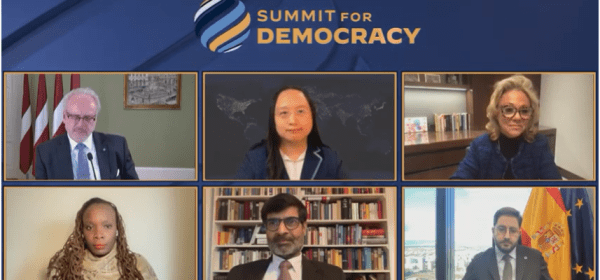
Written by Gerrit van der Wees. December 9 and 10, 2021 proved to be an interesting moment for Taiwan’s international space: on the one hand the country was invited to President Biden’s Summit for Democracy in Washington, where Digital Minister Audrey Tang gave a stellar performance in showcasing how Taiwan has enhanced its democracy in spite of the threats posed by China, and the hardships caused by the Covid-19 pandemic. On the other hand, on December 9, 2021 it was announced that Nicaragua was switching its diplomatic ties from Taipei to Beijing, reducing the total number of formal diplomatic ties down to fourteen.

A Bilingual Nation? What are the Efforts from Southern Taiwan Stakeholders?

Written by Brian Doce. In 2018, Taiwan President Tsai Ing-wen announced the government’s objective to transform Taiwanese society into a bilingual nation to elevate the English fluency of the Taiwanese people and upgrade the country’s national competitiveness. Looking at the current blueprint published by the National Development Council, the plan’s enumerated key performance indicators (KPI) show a government-centric outlook by emphasising the simultaneous use of Mandarin and English by government agencies for respective services.

The Dangers of a One-dimensional View of life and nation

Written by David Pendery. Nigerian Chimamanda Ngozi Adichie has spoken of “the danger of a single story” and how such one-dimensional narratives can preclude us from understanding other peoples and nations, leading to misunderstanding and misrepresentation. These stories can stereotype others, and, Adichie argues, single stories often stem from confusion and a lack of familiarity with other peoples. At worst, these stories often have a malicious intent to suppress other groups, but they are also simply misconceptions and misjudgments. She says that our lives and cultures are composed of many overlapping stories.

Pleasing the Mainland or Island: The Politicisation of Taiwanese Stars During On-Going Cross-Strait Turbulence

Written by Jian Xu. On January 25, 2017, National Defense News, a military newspaper under the management of the Military Committee of the Communist Party of China, published a commentary titled, ‘Never allow artists to eat Chinese food and smash Chinese bowls.’ The article criticised pro-independence Hong Kong singer Hins Cheung and applauded his ban from appearing on one of China’s most popular reality shows, I Am a Singer, run by Hunan Satellite TV. It argues that ‘in front of the overall interests of the country and nation, every artist needs to stay rational within the bottom line. Overstepping the bottom line means no future. Any ‘idol’ will be discarded if they hurt the national emotion and dignity of the Chinese people.’

President Tsai’s Celebrity Marketing

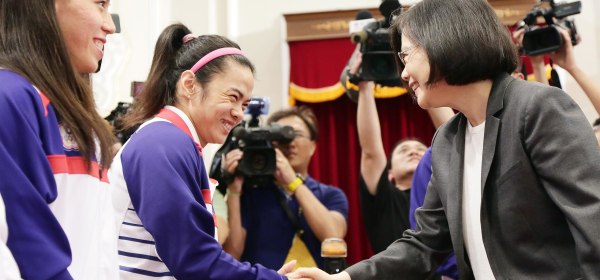
Written by Hsin-I Sydney Yueh. On November 13, 2021, NBA player Enes Kanter posted a Twitter message, stating that Taiwan is “not a part of China”; this particular video elicited a warm-hearted response from Taiwan’s President Tsai Ing-wen. She said, “Thank you, Enes, for standing with Taiwan and standing up for democracy.” Kanter quoted Tsai’s reply and said he wanted to “meet the brave people of Taiwan.”

President Biden’s Emerging Clarity on Taiwan: “Strategic ambiguity” is not a policy, but more like a bicycle gearshift

Written by Gerrit van der Wees. Over the past few months, President Biden has made some statements that show increasing clarity on where he stands on Taiwan. he first episode took place in mid-August 2021, when – in the aftermath of the Fall of Kabul and the US withdrawal from Afghanistan – Biden was asked in an ABC interview by George Stephanopoulos whether other allies such as Taiwan could count on the Americans. In his answer, Biden stated: We have made — kept every commitment.

Three ways to suppor Taiwan’s UN membership

Written by Thomas J. Shattuck. ago, with the passage of United Nations General Assembly Resolution 2758, the United Nations admitted the People’s Republic of China and expelled the Republic of China (Taiwan). Since then, Taiwan has been internationally isolated and largely prevented from fully participating on the international stage. As Beijing continues its coercive campaign against Taipei and as U.S.-China competition intensifies, Taiwan’s international participation—centered around the United Nations—has again become a major issue. President Richard Nixon may provide a pathway for how the Biden administration should approach this problem

1 42 43 44 45 46 94