The International Community Should Follow the U.S. by Referring to Taiwan’s Missions Abroad as the “Taiwan Representative Office”

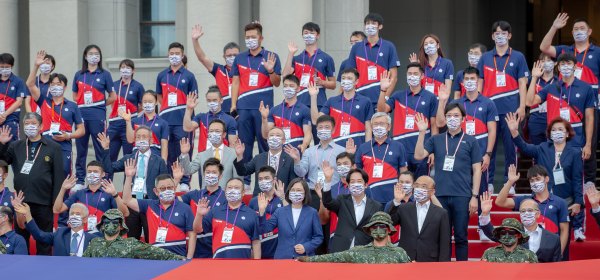
Written by Milo Hsieh. During the Olympics, Taiwan’s “Chinese Taipei” name was on display for two weeks, reminding the world that “Taiwan” remains not to be mentioned at the Olympics. That name, a less than preferred one for the people of Taiwan, was introduced in 1979 due to the Nagoya Resolution. That year, the People’s Republic of China representatives agreed to participate in the 1980 Olympics only if athletes representing Taiwan used the name “Chinese Taipei.” Though the name is today unrepresentative of the country Taiwan has become, it was nevertheless accepted by Taiwan’s Republic of China government at the time.

COVID-19 Ushered in a New Era of Urban Governance in Taiwan

Written by Roman Shemakov. As the metabolic flow of a city is commandeered by a virus, urban sensing is amplified. The proximity of animals, people, and capital in markets is one of the foundational functions of city life. Random evolutions of ingenuity, community, and viruses thus become a natural by-product of urban proximity. Since the invention of every technology (and a city is certainly a technological mechanism) is also an invention of a new accident, we must think of viruses as a feature of cities, not an anomaly.

To Ensure Vaccine Equity, Taiwan Should Adjust its Vaccination Program

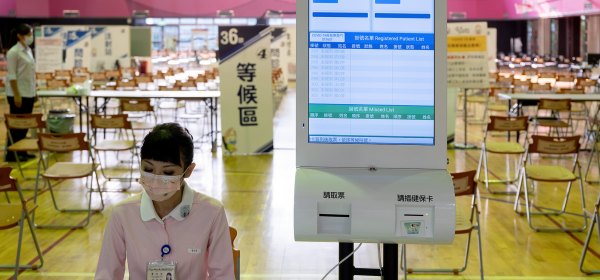
Written by Kai-Ping Huang. To fight against Covid-19, there is only one solution for every country striving for a return to normality: vaccination. Herd immunity is the goal as advanced countries aim to vaccinate at least 75 per cent of their citizens. The discovery of different variants worldwide makes booster shots increasingly necessary to prevent severe symptoms even for the fully vaccinated. Although speed is vital, it is also essential to determine the proper order of vaccinations.

Taiwan’s COVID-19 Vaccination Against Biological and Political Viruses

Written by Chunhuei Chi. For Taiwan to move toward the post-pandemic era, it must be understood that its main challenge is political rather than biological. Besides fighting disinformation and external and internal attempts to divide Taiwan and undermine its control effectiveness, it needs to consider the vaccines’ critical role in ending this pandemic. Further, the criticism of its government’s vaccine under-preparedness has shifted Taiwanese to inward-looking and toward vaccine nationalism.

Political Contention About Vaccines in Taiwan

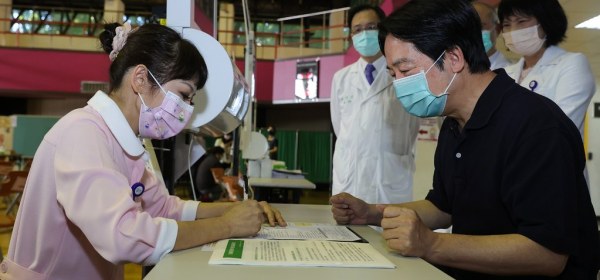
Written by Brian Hioe. Vaccines have proved a contentious issue in Taiwan from the beginning. As the first vaccines that arrived in Taiwan were AstraZeneca vaccines, the Taiwanese public was initially unwilling to get vaccinated. The public was discouraged from being vaccinated by reports of blood clots and other adverse reactions after using AstraZeneca. As Taiwan had gone for more than a year mostly COVID-free, it is probable that members of the public did not see the need to get vaccinated.

Tao People’s Fight for Environmental Justice and Subjectivity on Orchid Island

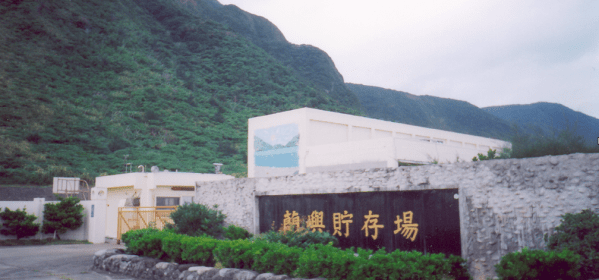
Written by Mei-Fang Fan. At the meeting of the Presidential Office Indigenous Historical Justice and Transitional Justice Committee in March 2018, the convener of the cabinet-level Fact-Seeking Committee and other committee members urged the government to formulate compensation regulations as soon as possible to compensate the Tao tribe. The Executive Yuan had approved guidelines for the compensation and that a fund management board that includes residents will be established. However, Tao elder anti-nuclear activists said that the Tao tribe rejects the compensation at a protest in front of the Executive Yuan on 29 November 2019.

Remembering Tragic Spirits: The Worship of Nationalist and Communist War Dead in Kinmen

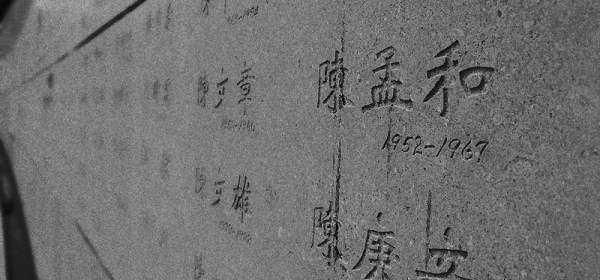
Written by Junbin Tan. would know, Kinmen was the Republic of China’s (ROC Taiwan) battlefront against the People’s Republic of China (PRC) from 1949 to the 1990s. Thus, the residents of Guningtou, a cluster of villages a short drive from Kinmen’s north-western shoreline where one could see Xiamen’s skyscrapers, were first-hand witnesses of battles, artillery bombardments, and decades of militarisation.

Making Narrative out of History: Green Island and the White Terror

Written by Shawna Yang Ryan. Green Island, part of the archipelago of Taiwan, lies roughly 33 kilometres off Taiwan’s east coast. During Taiwan’s martial law period, this was a notorious prison for political prisoners. In my novel, Green Island, the narrator’s father is imprisoned by the KMT for advocating democracy during the transition to KMT rule. Still, the title also functions as a metaphor for Taiwan itself during the martial law era. 

‘The New Normal’ and New Governance Models in Taiwan

Written by Chih-chien Lin. Mark Twain once said ‘History doesn’t repeat itself, but it often rhymes.’ On December 31st, 2019, the WHO office in Beijing reported unknown pneumonia cases in Wuhan, China. On February 23rd, 2020, right before Chinese New Year, governments enforced large-scale traffic control (aka lockdown) in Wuhan. On February 27th, the Central Epidemic Command Centre in Taiwan gave its highest alert. It was a serious warning about the subsequent COVID-19 pandemic.

A Fourth U.S. Communiqué on the Sovereignty of Taiwan?

Written by David Pendery. This work will examine the possibility of a new announcement by the United States, which on the surface may appear to be an agreement between the United States and China but which is not, in fact, that. In a word, it is not a formal treaty or concord. It would instead express a US view on the reality of international relations. I will call it a “Fourth Communiqué,” and like the well-known first three communiqués, it would in large measure deal with relations between the US, Taiwan, and China, with other essential considerations.

In the Wake of the Afghanistan Withdrawal, the US Must Send the Right Signals on Taiwan (Part II)

Written by Corey Lee Bell. In part one of this series, I discussed how important it is for the US to move quickly to convince China that its withdrawal from Afghanistan is not symptomatic of a retreat towards isolationism but rather part of a strategy of redirecting American resources to the Indo-Pacific and the defence of Taiwan in particular. However, with the Biden administration likely to stop short of formally declaring ‘strategic clarity’ (i.e., that it will definitely fight China if it invaded or embargoed Taiwan), and with China thus far having a low estimation of America’s resolve and capacity to defend the island, I suggested demonstrating this through actions that show that America is not only strengthening its regional presence, but also its preparedness and combat readiness.

1 45 46 47 48 49 93