In the Wake of the Afghanistan Withdrawal, the US Must Send the Right Signals on Taiwan (Part I)

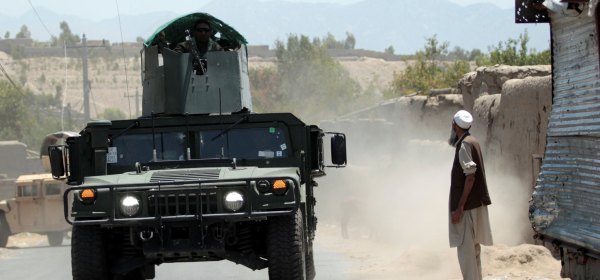
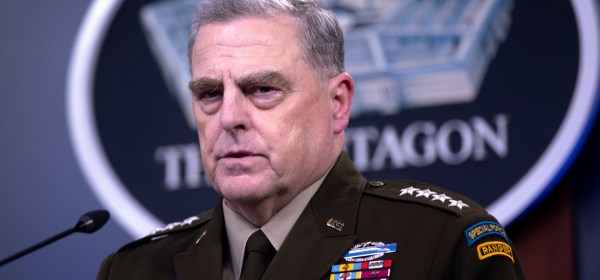
Written by Corey Lee Bell. There is little doubt that America’s chaotic withdrawal from Afghanistan has been a propaganda boon for Beijing. Nowhere has this been more apparent than in Chinese state media’s efforts to draw parallels between Afghanistan’s abandonment and the potential fate of Taiwan. Already, Chinese press, and pro-China media and political allies in Taiwan, are telling the Taiwanese people that America cannot be relied upon, with one article, from China’s state-mouthpiece Global Times, warning that if “total war” broke out in the Taiwan Strait, “America will not rush to the rescue.”

Taiwan and the Instrumentalization of the US Withdrawal from Afghanistan

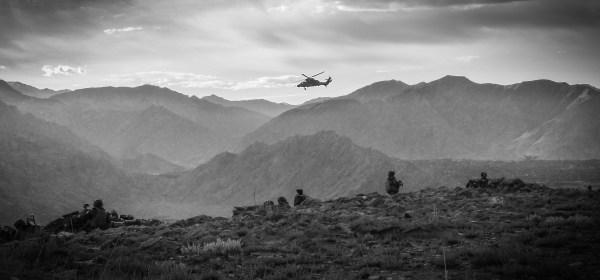
Written by J. Michael Cole. With all that renewed focus on Taiwan, however, also comes responsibilities. Taiwan’s elevated importance does not signify that it can take a backseat and let others ensure its security. As President Tsai remarked recently, “Taiwan’s only option is to make ourselves stronger, more united and more resolute in our determination to protect ourselves.” If there is one thing that the US experience in Afghanistan can teach us, it is that even the world’s top superpower cannot bend reality to its will, no matter how hard and long it tries.

The Fall of Afghanistan: Why Taiwan is Fundamentally Different?

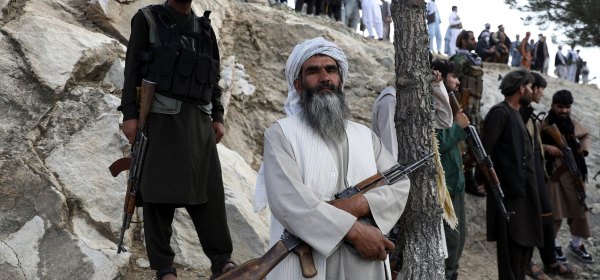
Written by Gerrit van der Wees. The scenes from the tragic events unfolding in Afghanistan are heart-wrenching. One would have hoped that the withdrawal by the United States and its Allies could have been planned such that it would be taking place in a more orderly fashion. Many an analysis will be written on this topic (…) A brief scan of the internet shows that Beijing’s propaganda machine is already hard at work to capitalize on the moment by publishing several articles implying that Taiwan could befall the same fate.

What is ‘Home’ and Who are the ‘Overseas Chinese’?

Written by Yun Seh Lee. This year marks the 100th anniversary of that first KMT-CCP coalition, and the competition across the Taiwan Strait is still going strong. Focusing on the Overseas Chinese communities across the globe – a term populated by the prominent scholar Wang Gungwu – both players have been enthusiastically trying to win the hearts and minds of this diaspora. The label ‘Overseas Chinese’ itself hints at an ongoing link to China, but the PRC and Taiwan dispute the nature of that link and its contemporary manifestation.

Gender Politics: Public Views of Women in Politics

Written by Timothy S. Rich, Madelynn Einhorn, and Isabel Eliassen. Taiwan’s efforts at gender parity for electoral offices have resulted in a legislature where women currently hold 41.6% of seats. This leaves Taiwan ranked 12th globally, with only one Asian country (Timor-Leste) with similar rates. However, despite the success of President Tsai Ing-wen, the vast majority of executive offices (mayors and magistrates) are still held by men. Gender equality and the rise of women in national politics are common narratives when discussing Taiwanese politics.

The Taiwan-Australia Partnership: An Observation

Written by Ek-hong Ljavakaw Sia. Few bilateral relationships between any other two countries in the world can be as balanced, reciprocal, and complementary as the Taiwan-Australia partnership. Located in the southernmost and westernmost parts of the Pacific, Australia and Taiwan have many features in common: nearly the exact size of the population, an equally prosperous economy, a vibrant civil society, and a healthy democratic polity.

Why Is the Revitalisation of Taiwan’s New Southbound Policy So Pressing?

Written by Huynh Tam Sang. Adopted by President Tsai Ing-wen in 2016, the New Southbound Policy (NSP) has helped fortify Taiwan’s international standing and promoted the spirit of “Taiwan helps Asia, and Asia helps Taiwan.” In recent years, the NSP has facilitated Taiwan’s participation in the Indo-Pacific society. At the same time, they ensure that Taiwan could get on board with other regional and middle powers, like China, Japan, South Korea, India, and Australia, which have been forging their ties with Southeast Asian countries. 

The Entangled Histories of Taiwan’s Women’s Movements: A look at Two Pioneering Groups

Written by Elizabeth Frost. Much of Taiwan’s impresive progress towards gender equality is thanks to the Taiwanese island’s women’s movement. Two groups that have been instrumental in the post-martial law era Taiwanese women’s movement are Awakening and the Homemakers United Foundation (HUF). The early stages of both groups were similar – Awakening began as a magazine in 1982, and HUF was initially established as the women’s auxiliary of the New Environment magazine in 1987. After the lifting of martial law, the groups were incorporated into independent foundations – Awakening in 1987 and HUF in 1989. Awakening is one of the most influential feminist groups in Taiwan, and HUF is now one of Taiwan’s largest environmental NGOs. 

Retaining Vietnamese Talents in Taiwan

Written by Huynh Tam Sang and Tran Hoang Nhung. In her 2020 inaugural speech, President Tsai Ing-wen (蔡英文) raised the issue of talent retention, underlined the need for “a diverse talent pool” with her commitment to attract “technical, R&D, and management talents to help globalize Taiwan’s workforce.” Furthermore, when attending the release of the Talent Circulation Alliance white paper in June, she said the government would be committed to “[developing] more innovative talent” to meet the shifting of supply change to Taiwan and navigate challenges caused by the COVID-19 pandemic.

Studying Aging Chinese Nationalists in Modern Taiwan: A Lesson for Young Voters

Written by Ashley Deng-Yu Chen. During my interview sessions and participant-observation activities in Southern Taiwan, many findings struck me, even as a “local anthropologist”. Firstly, most of my interlocutors who had lived through the authoritarian decades under the KMT almost unanimously claimed that the current form of “democracy” and “liberal society” was not any better than the “social order” that was safeguarded by the rigid martial law order. Moreover, with the KMT losing the last general election in 2016 to the Democratic Progressive Party (DPP), many supporters subsequently believed that Taiwan had since sunk into a dark ditch of “political correctness” with obsessions of LGBTQ+ rights and naive revolutionist values.

Do Young People Actually Matter in Taiwanese Politics?

Written by Brian Hioe. It is not out of the question that such young people will eventually take the reins of power. Indeed, they will once older politicians depart the political scene. But all appearances to the contrary, this may be a premature assessment. It may not be, in fact, that young people have come of age in Taiwanese politics, and instead of that, they remain subject to the larger established forces that have remained dominant for decades in politics. Whether this changes is to be seen.

1 46 47 48 49 50 93