The Public Nature of Civil Disobedience: Lessons from the Sunflower and Umbrella Movement

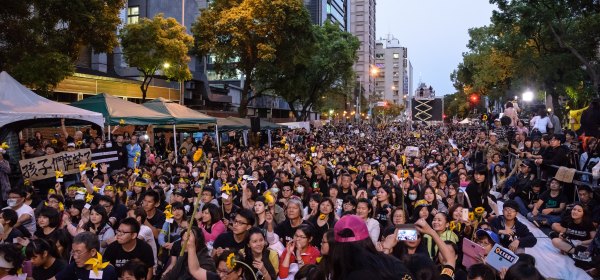
Written by Leon N. Kunz. In March 2014, participants in the Sunflower Movement peacefully occupied the main chamber of Taiwan’s parliament to block the ratification of a controversial trade agreement with the PRC that they viewed as a threat to Taiwanese democracy. In September of the same year, protesters involved in Hong Kong’s Umbrella Movement created street occupations to push for genuine democratic reform. In both cases, participants not merely occupied public space but claimed to engage in civil disobedience. According to the often-cited definition by liberal theorist John Rawls, civil disobedience is “a public, nonviolent, conscientious yet political act contrary to law usually done to bring about a change in the law or policies of the government.” To what extent did the occupations in Taiwan and Hong Kong conform to the dominant liberal civil disobedience script?

Not obedience but Dignity: A message from a former migrant worker

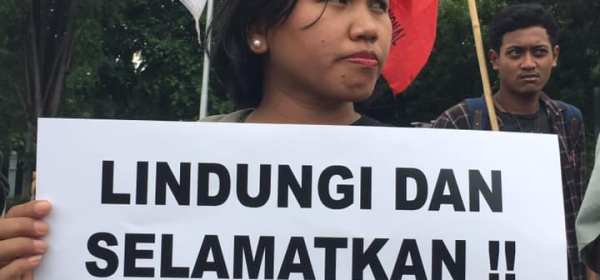
Written by Iweng Karsiwen and Ratih Kabinawa. Edited by Isabelle Cheng. A former domestic worker in Hong Kong for over ten years, Iweng Karsiwen is currently the Chair of Families of Indonesian Migrant Workers (Kabar Bumi). Initially she was recruited to work in Taiwan when the door opened for Indonesian women seeking domestic work there. However, instead of going to Taiwan, Iweng found herself arriving at a Hong Kong MTR station late one evening a year later. Knowing how the brokering industry functioned at home and abroad, after returning to Indonesia, Iweng was determined to help those who worked abroad and who faced similar challenges at various stage of their migration. She has particularly campaigned to outlaw salary reduction. This, as well as other practices mentioned by Iweng, are commonly adopted by brokers in Taiwan, Hong Kong, Malaysia and Singapore.

Fun Politics and the Politics of Fun in Taiwan’s g0v Community

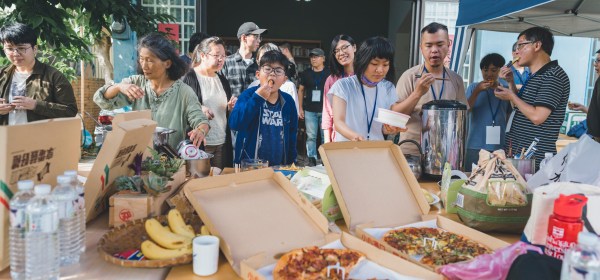
Written by Sam Robbins. The notion that emotions can inspire political action is not new. Research into social movements contains many examples of the motivating power of passion, anger, and disgust… What is seemingly much less common is the active cultivation of positive emotions, such as happiness or fun, in such social movements. If you’re feeling content about your situation, what need is there to engage in collective action or civil engagement?

Gastrodiplomacy in Contemporary International Relations of Asia and Its Relationship to Everyday Nationalism: A Reflection on the Gastronomic Campaigns of Taiwan, Thailand, and South Korea

Written by Fatimaah J Menefee. Culinary diplomacy, food diplomacy, gastronationalism, and gastrodiplomacy are applied liberally to describe food and diplomacy in contemporary international relations. Culinary Arts as a medium in diplomacy dates to the genesis of humankind. Consider Peaches of Immortality, protected by the Queen Mother in Ancient China, that served as a reward to all faithful mortals and immortals.

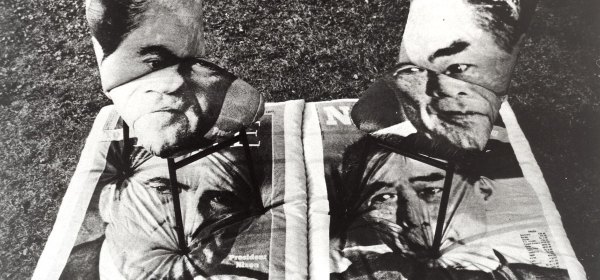
Back to the 80s: Taiwanese-American Intellectuals’ Views on Taiwan Relationship in Two Oversea Magazines

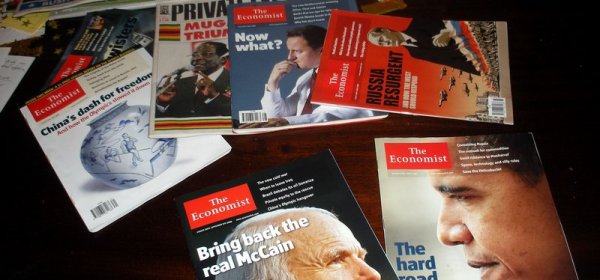
Written by Sui Lam Cheung. Taiwan’s international status and sovereignty have always been closely related to US international policies. As a result, the US-Taiwan relation has always attracted widespread attention and discussion. Thus, scholars have begun to pay attention to the American aid culture in economic and cultural fields. For instance, Wang Meihsiang and Chen Chienchung have analysed the US aid literature system from a sociology of literature perspective to explain how Taiwanese intellectuals received direct or indirect economic assistance from the United States. This assistance was used to introduce or develop related cultural production literary works and cultural phenomena. In addition to examining the development of Taiwan’s literary field, US aid culture can also be another perspective to examine non-official views other than the official discourse of the US and Taiwan.

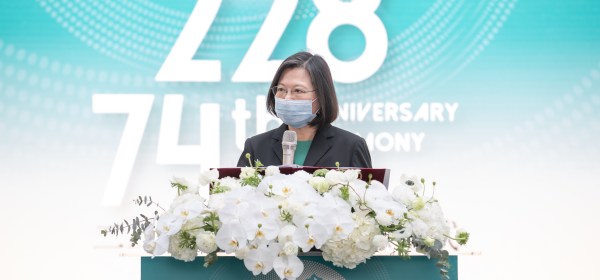
228 Seventy-Four Years On: The Fight for Transitional Justice

Written by Tabea Muehlbach. February 28, 2017, marked the 70th anniversary of the 228 Incident, a bloody crackdown on Taiwanese civilians by Nationalist troops in 1947. In 2017, Tsai Ing-wen’s spoke for the first time as a president at the central commemorations in the 228 Peace Park in Taipei. Such ceremonies had become a regular annual instalment not long after Lee Teng-hui apologises to the victims in 1995.

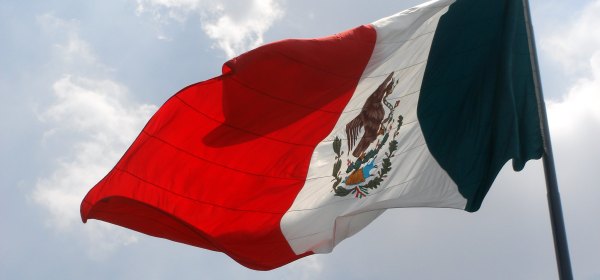
Taiwan’s Non-Traditional Diplomacy During the Pandemic: The Case of Mexico

Written by Fabricio A. Fonseca. In the spring of 2020, the social media accounts of the Taipei Economic and Cultural Representative Office (TECRO) in Mexico City began to share posts made by Mexican federal legislators. In these posts, they showed appreciation for the donations made by Taiwan’s representatives in the country under the difficult circumstances posed by the COVID-19 pandemic. Initially, those donations consisted of food baskets and eventually included thousands of face masks. The different images of people across Mexico receiving boxes with the slogan “Taiwan Can Help” (TCH) made me think about how authorities on the island were using different instruments associated with non-traditional diplomacy.

Continuities’ Strategy through Poetry’s Writing, Translation and Editing of the Translingual Poet Ch’en Ch’ien-wu 陳千武 (1922-2012)

Written by Sandrine Marchand. In Taiwan, 1945 marks the end of the Japanese colonisation. For many Taiwanese intellectuals and writers, it also means the abandonment of the Japanese language for Mandarin. But a language cannot be erased as quickly as architecture or other material goods. The language of childhood – the language of education – stubbornly persists. After this initial silent period, in the 1970’s – thanks to the Nativist movement – there has been a revaluation of pre-war Taiwanese writers gathered under the appellation of “a translingual generation” as they emerged from the shadows.

Victims without Perpetrators: Slovakia’s and Taiwan’s Lack of Retributive Justice

Written by Dominika Remžová. Despite the recent 228 Incident commemoration, along with the latest exonerations of White Terror political victims, the lack of retributive justice from criminal trials or other perpetrator-focused measures remains the case in Taiwan. In fact, the legality of the only perpetrator-focused act related to the KMT’s party assets has been continually contested by the party, despite the ruling of the Council of Grand Justices that upheld the constitutionality of the act’s provisions. A similar lack of retributive justice occurred in another country with a recent authoritarian past, Slovakia

Xi Jinping’s 2.0 version of the “Letter to Compatriots in Taiwan”

Written by Simona A. Grano & Helena Y.W. Wu. On January 2, 2019, Xi Jinping held a speech to commemorate the famous “Letter to Compatriots in Taiwan” of 1979. In this letter, he defined unification across the Taiwan Strait as “the great trend of history.” He also warned that attempts to facilitate Taiwan’s independence would be met by force. Not only this, but he also called for “unification under the ‘one country, two systems’ formula.”

Explaining Cross-Strait Relations with Theories of European Integration

Written by Frédéric Krumbein. The European Union has the densest integration region globally, whereas current trends in cross-strait relations point to a further divide between both sides. Despite noticeable significant differences between the European Union and cross-strait relations, theories of European integration provide a useful framework to analyse the past, present, and future of relations between Taiwan and the Chinese mainland. Four major theories of regional integration that were developed for or applied to the European integration process will be used to analyse cross-strait relations: neofunctionalism, historical institutionalism, liberal intergovernmentalism, and postfunctionalism.

‘Bringing Back Transnational Relations’: Non-State Actors in Taiwan’s New Southbound Policy

Written by Ratih Kabinawa. Drawing from Risse-Kappen’s seminal book and his framework of domestic and international structures, this article explains Taiwan’s long-standing engagement with non-state actors in promoting its foreign policy objectives in Southeast Asia via a case study of the New Southbound Policy (NSP). After enjoying some success in maintaining semi-official contacts with Southeast Asian countries during the cross-Strait relation détente, the election of Tsai Ing-wen compelled Taiwan to bring transnational relations back into its foreign policy. In 2016, Taiwan’s newly elected president, Tsai Ing-wen, introduced a foreign policy flagship that stressed the essential role of people-to-people diplomacy in promoting Taiwan’s foreign policy objectives in Southeast Asia.

1 50 51 52 53 54 93