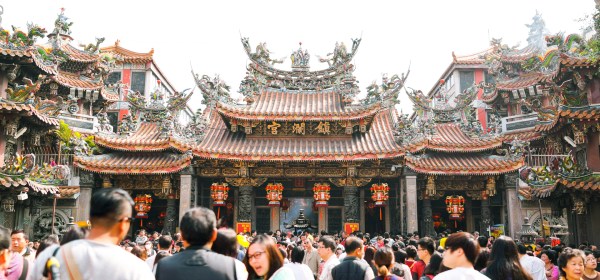
Creating Alternative Futures Through Indigeneities: Between Taiwan and the Philippines: Part I

Written by Yi-Yu Lai. n the late summer of 1986, a small group of Indigenous people from the PCT (The Presbyterian Church of Taiwan) led a delegation through the Philippines’ Cordillera region. As a delegation that attempted to study minority rights, those people not merely approached Negrito, Bontoc, and Ifugao communities to learn local issues, but also visited several grassroots organizations such as the CPA (Cordillera Peoples Alliance). Although it was not the first time the PCT arranged the Philippines’ tour, their visit’s timing was noteworthy. While martial law was still imposed in Taiwan, people in the Philippines just overthrew the Marcos dictatorship through the People Power Revolution at the beginning of that year

China’s abuses offer opportunity for Taiwan to play a greater role in UK foreign policy

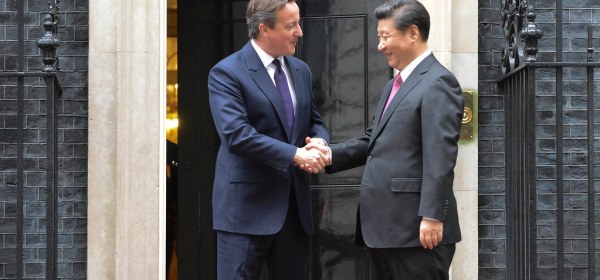
Written by David Green. The UK is in dire need of a coherent China policy, and that policy should provide for deeper ties with Taiwan. The last white paper on how Britain treats with the Chinese Communist Party (CCP) was drafted in 2009, just after the Beijing Olympics’ conclusion. Back then, a misguided belief that constructive engagement would soften China’s authoritarianism still held sway. Furthermore, Hu Jintao’s Scientific Outlook on Development was in full swing, and the Chinese stimulus was driving a global economic recovery in the wake of the financial crisis.

What Is the Public Perception of Taiwan’s COVID-19 Policies, Along With Its Impact on Evaluations of President Tsai Ing-Wen?

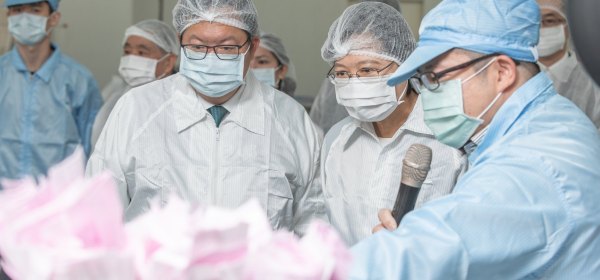
Written by Timothy S. Rich and Madelynn Einhorn. How does the Taiwanese public view COVID-19 policies and do these efforts boost evaluations of President Tsai Ing-wen? Taiwan received international acclaim for its aggressive response to the pandemic. Such policies included standard social distancing and mask mandates seen in most countries, with centrally coordinated quarantine and contract tracing policies, and fines of over $3000 US for violating quarantines. Due to these efforts, people in Taiwan are 3,400 times less likely to die from COVID-19 than people living in the U.S.

Military Diplomacy: Another Way to Support the Defense of Taiwan

Written by John W. Tai. The United States has long relied on weapons sales to demonstrate its support for the defense of Taiwan. This practice has incurred cost for both Taiwan and the United States due to its high visibility and significant financial resources for Taiwan. In addition, the growth of the Chinese military makes it increasingly unlikely for Taiwan to be successful in defending itself by relying simply on traditional military means.

The Risky Business of Importing Pigs: The Story Of Taiwan’s First Insurance Company

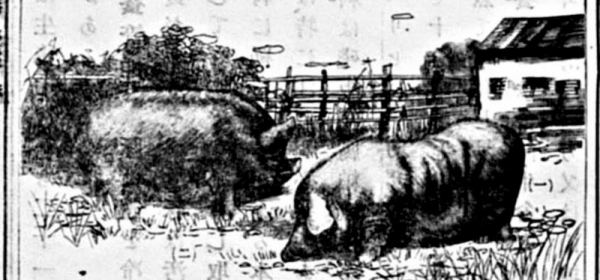
Written by Ko Lien. The demand for pig and pork products increased, but businessmen had begun to import pigs from across the strait since supplies have dwindled. As refrigeration technology was still in its infancy at this point, live pigs were imported. However, many overdue would die on the journey to disease or ship wreckage. In response to this, Taiwan’s first-ever insurance company was founded for protecting against pig loss.

Taiwan’s Opportunities and Risks under the Biden Administration

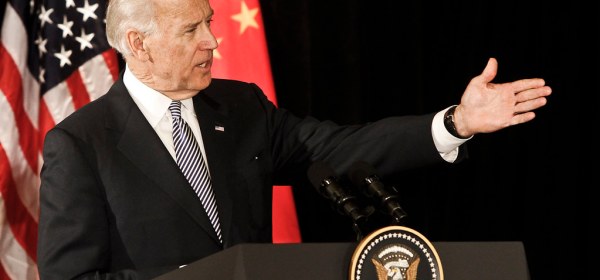
Written by Jacques deLisle. As the Biden administration takes office, expectations—and, in many quarters, hopes—are high that much will change in American foreign policy. U.S. policy on Taiwan-related issues, however, is not likely to shift fundamentally. That is an outcome that should be – and generally will be -welcome in Taiwan. The relationship’s foundations may be strengthened, and apparent post-Trump setbacks are likely illusory. For Taiwan, reasons for concern mostly lie elsewhere, in the fraught U.S.-China relationship, the mounting challenges posed by Beijing, and questions about how the U.S. will respond.

Gods of Democracy: Divination and Epidemic Prevention in Taiwan, 2020

Written by En-Chieh Chao. Scientific epidemic prevention measures are essential and critical, but sometimes not enough. As demonstrated in Taiwan’s experience of 2020, other than an alert government, it takes a civil society and divine deities. After all, to prevent an epidemic literally requires human bodies to work together. The question is: what makes us work together? It could be democracy for some, and divination for others. Sometimes, it is both.

Protecting the ‘Orphans’: Advocacy Networks and Labour Movements in Taiwan

Written by Ratih Kabinawa. In an attempt to raise awareness about the lives of marginalised groups in Taiwan, the Taiwan Studies Programme at the University of Nottingham, U.K., organised a movie screening and discussion – Migrant Lives Matter: ‘Nine Shots’ – that showcased the dark side of migrant labour recruitment and employment in Taiwan. The film reveals some perspectives from different stakeholders, including labour advocacy networks, in addressing problems related to Taiwan’s labour migration system. Using the movie as a prompt, this article explores various advocacy networks and migrant labour movements in Taiwan. Why and how do these networks emerge and organise themselves? What are their motivations and activities? And how do these networks advocate for policy change and work to build solidarity to empower migrant workers?

Does Press Freedom Come with Responsibility?

Written by Lihyun Lin and Chun-yi Lee. On November 18, 2020, the National Communications Commission (NCC) in Taiwan refused to renew the licence of CTiTV. This decision caused much protest from the opposition party, with the Kuomintang (KMT)’s high-pitch of ‘protecting press freedom.’ We found ironic how the KMT used Deng Nan-jung (鄭南榕) ‘s case as an example to indicate how the ruling party in Taiwan – the Democratic Progressive Party (DPP) – intervened in press freedom and sacrificed Taiwan’s democracy.

The Labor Market, Economic Insecurity, and Populism in Taiwan

Written by Wei-Ting Yen. In the past few years, two political outsiders in Taiwan have quickly accumulated popularity and became serious political contenders in elections. One is Ko Wen-Je, currently the mayor of Taipei. The other one is Han Kuo-Yu, the recently impeached mayor of Kaohsiung, the second-largest city in Taiwan. Their rise has prompted the island nation to widely debate whether populism has grown its roots in Taiwan because Ko and Han share similar populist traits.

The Politics of Hate and Fear

Written by Andreas Sierek. A migrant construction worker was enjoying himself at a river. We might have disapproved of him being drunk, drugged and naked. We even might have been incensed by his rampageous behaviour. But shooting him dead? Like a stray dog infected with rabies? Not with one bullet but with nine? Insisting that the man – while lying on the dirt, in a pool of blood, dying – must be handcuffed before medics can approach him?

1 54 55 56 57 58 93