“Always in my Heart”: Lee Teng-hui’s Life in 10 Quotes

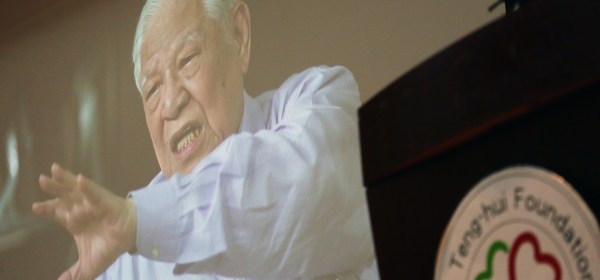
Written by Denis Li, translated by Corey Lee Bell. Lee Teng-hui, Taiwan’s first democratically elected president, played a key role in the country’s journey from authoritarianism to democracy. In 12 years as president, he made six amendments to the constitution, earning him an indelible place in the history of Taiwan. The News Lens has compiled 10 of Lee’s quotes from lectures and interviews, which reflect his perspective on Taiwanese politics and cross-strait relations, as well as the expectations he harbored for himself as a political figure.

How Taiwan Wins the Hearts of Southeast Asian States

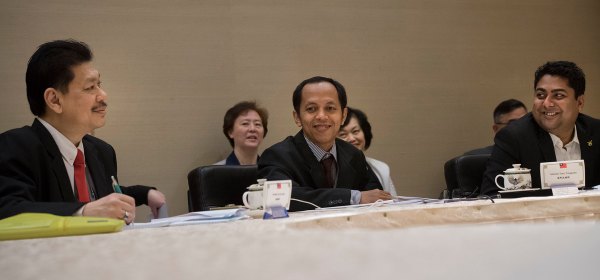
Written by Ratih Kabinawa and Jie Chen. President Lee Teng-hui transformed ROC Taiwan’s foreign policy from a rigid “man and bandits don’t co-exist” mindset, a dictum which defined the Chiangs’ era, to one focusing on pragmatic diplomacy. This stance emphasised flexible ways to promote Taiwan’s international standing as its own legitimate sovereign state. President Lee used Taiwan’s achievement as a new democracy with impressive economic and technological prowess to win fresh international sympathy and support.

In Memoriam: Lee Teng-hui and the Democracy that he built

Written by J. Michael Cole. On July 30, former president Lee Teng-hui, whom many regard as the father of Taiwan’s democracy, passed away at the age of 97. Lee leaves behind a nation that is markedly different from what it was when he entered politics decades ago. No figure—none—has had as major an impact on Taiwan than Lee, whose decisions in the crucial period between the late 1980s and early 1990s determined the future course of the nation and propelled into the “third wave” of democratisation.

In Memoriam Lee Teng-hui, 1923 – 2020

Written by Gerrit van der Wees. On July 30 2020, Taiwan’s “Father of Democracy,” former President Lee Teng-hui passed away in Taipei at the ripe old age of 97. He served as the country’s President from 1988 until 2000 and guided its transformation from a repressive authoritarian dictatorship that had been imposed on the island by the Chinese Nationalists of Chiang Kai-shek after World War II, to the vibrant democracy that is Taiwan today.

Taiwan’s Post-Election Economic Woes

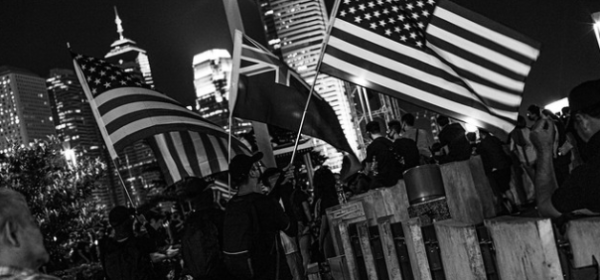
Written by John F. Copper. Had the economic numbers not been in their favour, would they have lost the election? Hardly. The fact the U.S. supported President Tsai and her party was an overwhelming advantage, as was China alienating Taiwan’s voters with its harsh statements and actions, which were further exacerbated with anti-China protests in Hong Kong. Both were critical factors. Finally, the KMT was very divided with its top leaders fighting among themselves.

Is the best friend of Taiwan in Europe the Czech Republic?

Written by Richard Q. Turcsanyi. Perhaps in the clearest form, the Czech Republic symbolises contradictory attitudes towards Beijing and Taipei found in former Communist countries in Central and Eastern Europe (CEE). While for part of the society Taiwan symbolises own rejection of Communist past and sympathy towards humanistic ideals, others are not willing to endanger promises of benefits (real or imaginary) of pragmatic developing relations with China.

Clash of Mask Diplomacies? The COVID-19 and Changing Perceptions of China and Taiwan in Central and Eastern Europe

Written by Tamás Peragovics and Ágnes Szunomár. It has become a truism that China’s mask diplomacy seeks to enhance the country’s global standing in the wake of the Covid-19 pandemic. By exporting medical aid and equipment, the Beijing Government rushes to the rescue of countries still struggling to contain the virus. Positioning itself as saviour rather than villain, China’s motivation is to cultivate a global aura of blissful ignorance with regards to the outbreak’s early mismanagement, including the silencing of Chinese whistle-blowers who emphasized contagion risks and tried to warn of the severity of the new pathogen.

In between giants: how a EU-Taiwan partnership could ensure digital benefits for all

Written by Maaike Okano-Heijmans and Brigitte Dekker. The protection of digital freedom of speech, transparency and inclusiveness is at stake as governments resort to (sometimes intrusive) digital means to monitor and combat the coronavirus. At the same time, economic competitiveness in the digital age requires innovative approaches, as the US-China rivalry profoundly reshapes the global tech landscape and global governance. This is where Taiwan and the European Union (EU) have similar interests and stand to benefit from exchanging best practices.

The EU and Taiwan – Realpolitik Trumps ‘Values Diplomacy’

Written by Michael Reilly. The European Union’s relations with China are currently at their lowest level since at least the Tiananmen Square massacre of 1989, if not earlier. Growing disillusion with China’s economic and predatory business policies under Xi Jinping had already led to the EU branding China a ‘systemic rival’ in 2019. Since then, unease has only grown and relations further soured, most recently over China’s crude attempts to use the Coronavirus pandemic for propaganda purposes, followed by its imposition of a draconian National Security Law on Hong Kong in disregard of its obligations under the Sino-British Joint Declaration of 1984.

Taiwan and Europe: An Uneasy History

Written by Ian Inkster. The historical relations of Taiwan with Europe are by no means unproblematic. When free of Chinese imperial power, Taiwan became subject to the western Great Powers and then to an expanding, industrially founded Japanese colonialism and militarism. At this point, relations with Europe were commercially close but politically and culturally distant. Led by Britain, the European involvement in Taiwan was never truly benign. After the war of 1937-45, Europe’s interest in Taiwan was principally as a developing economy that traded in a range of complementary goods and services.

Prospect of Malaysia as the Gateway for Taiwan’s New Southbound Policy (NSP) Push

Written by Karl Chee Leong Lee. Despite lingering pessimism surrounding the impact of COVID-19 on Southeast Asia’s economy, Malaysia has unexpectedly enjoyed a new wave of Taiwanese investment. According to official figures released by the Malaysian Investment Development Authority (MIDA) last April, the value of inbound manufacturing-based investment from Taiwan has increased seven-fold. In 2019 Taiwan became the fourth largest FDI source for Malaysia’s manufacturing sector after China, the US and Singapore.

Beyond Economics: The Value and Meaning of the New Southbound Policy

Written by Dr. Alan H. Yang and Tung Cheng-Chia. Great power competition between the United States and China has intensified under the backdrop of the Covid-19 pandemic. Whether in the World Health Organization or the United Nations, this intensification is compelling states to reorient their political alignment. Taiwan needs to reflect on and strategically reposition itself in this geopolitical tug-of-war. A top priority for the island-nation is to strengthen its links and influence in Asia.

1 60 61 62 63 64 93