The Last Trump: Or, Taiwan as a Potential Pawn on a New Chess Board

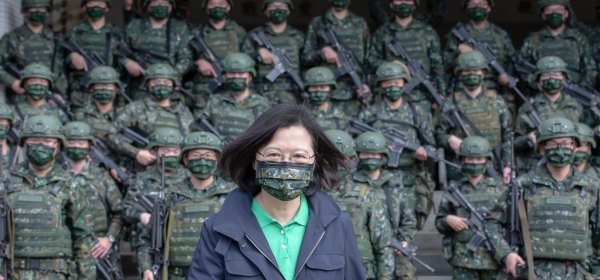
Written by Ian Inkster. As Joseph Cummings has summarised recently for Redaction Politics, ‘experts believe that Mr Biden’s policy will fall short of provocation of mainland China and Mr Trump’s open empowerment of Taiwanese militarisation,’ and there is little reason yet to discount that view. The fact that the US has approved recent arms purchase deals with Taiwan may mean no real change in the long history of less-than-best military techniques being sold off to Taiwan as part of the old cold-war alliance.

Something, Nothing, or Everything? The Recall Vote of DPP’s Taoyuan City Councillor Wang Hao-Yu

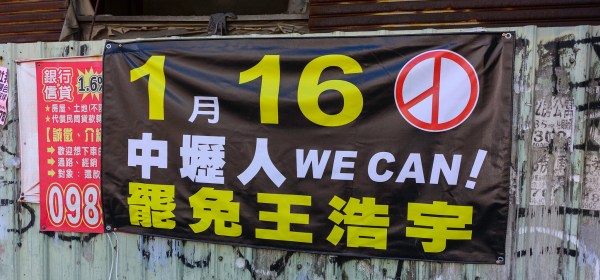
Written by Chieh-chi Hsieh. On 16 January, Taoyuan city councillor Wang Hao-yu of the Democratic Progressive Party (DPP) was revoked by a whopping 84,582 ‘in-favour’ ballots. This was a staggering contrast to the 16,292 ballots received that won him his re-election merely two years prior. This election makes Wang the first city councillor from one of Taiwan’s six special municipalities to be recalled. More importantly, one can tentatively make a case that this is an important success for opposition parties such as the Kuomintang (KMT) and other pan-blue parties (e.g., People First Party) regaining political clout against the incumbent DPP government.

Unjust Deserts: Japan’s Taste for Modernity and Its Satisfaction Through Taiwanese Sugar Plantations

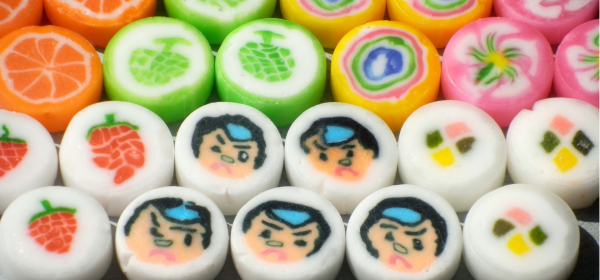
Written By Lilian Tsay. The Japanese empire’s importance placed on the Taiwanese sugar industry can be seen in the design of the 1935 “40 years of colonial rule” exhibition, which had a whole section dedicated to the sugar industry and provided free sugar water to visitors. The sugar industry was a crucial part of the colonial economy; it also heavily impacted Japan’s dietary customs. Japan did not produce its own white sugar. Before the Meiji era, deserts in Japan were made using either dark sugar from Okinawa, wasanbon from Shikoku, or from white sugar imported from Southern China. Just as described in “Southward Expansion to Taiwan,” only with Taiwan’s help could Japan’s confectionery industry successfully develop alongside the expanding Japanese empire.

“Eating Spinach”:The Taiwanese Working in Philippines Gambling Industry. Part II

Written By William Kung 孔德廉. Regarding the dramatic changes brought about by the “spinach industry,” Wang Weiren, an old overseas Chinese who has lived in the Philippines for 60 years, described it as “locusts crossing the border.” Although the gambling industry has helped drive obvious GDP growth in the Philippines, the economic gains have not been shared by the public at large. Instead, it has been concentrated in the hands of a few Chinese business owners. Not only that, a large number of Chinese ethnic groups in the industry are not prepared to integrate into the local area. Instead, they are reluctant to change their ways and prone to conflict with the locals. If China and the Philippines were ever to join forces to crack down on illegal businesses, the first thing to bear would be the Philippine economy, which is currently overly dependent on the gambling industry.

“Eating Spinach”:The Taiwanese Working in Philippines Gambling Industry. Part I

Written By Willian Kung. Ten years ago, Many Chinese, Malaysians, and Indonesians left their hometowns and moved to the Philippines to chase the gold rush triggered by online gambling. In recent years, the latest wave has attracted many Taiwanese. According to statistics from the Philippine Immigration Bureau, in 2018, more than 200,000 Chinese workers applied for work visas, 90% related to online casinos. There are also many Taiwanese living in the Philippines. In 2016, the Taiwan Economic and Cultural Office in the Philippines issued a message stating “recently, there has been an increasing number of Taiwanese people going to the Philippines to work in the gambling industry, please be wary that risks often outweigh the rewards. Many have had their passports detained.”

What Is the Public Perception of Taiwan’s COVID-19 Policies, Along With Its Impact on Evaluations of President Tsai Ing-Wen?

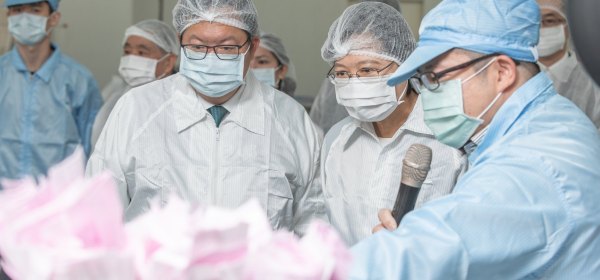
Written by Timothy S. Rich and Madelynn Einhorn. How does the Taiwanese public view COVID-19 policies and do these efforts boost evaluations of President Tsai Ing-wen? Taiwan received international acclaim for its aggressive response to the pandemic. Such policies included standard social distancing and mask mandates seen in most countries, with centrally coordinated quarantine and contract tracing policies, and fines of over $3000 US for violating quarantines. Due to these efforts, people in Taiwan are 3,400 times less likely to die from COVID-19 than people living in the U.S.

The Risky Business of Importing Pigs: The Story Of Taiwan’s First Insurance Company

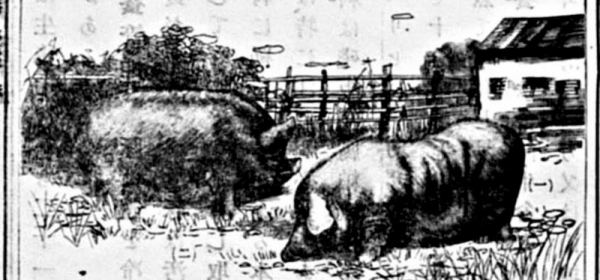
Written by Ko Lien. The demand for pig and pork products increased, but businessmen had begun to import pigs from across the strait since supplies have dwindled. As refrigeration technology was still in its infancy at this point, live pigs were imported. However, many overdue would die on the journey to disease or ship wreckage. In response to this, Taiwan’s first-ever insurance company was founded for protecting against pig loss.

Rebellion, Loyalty, and Paths into Adulthood: Entering the Lifeworlds of Wanhua’s Wondering Youths

Written by Peijun Guo. As the rumbling from the exhaust engine ripped through the peaceful night, many youths are gathered in convenience stores and community parks of Taipei’s Wanhua district. Some smoke, some mess around, and then eventually the group moves on to the next place to hang out and waste some time. This group of youths who do not get on well at school and who wander about the city streets are part of the background murmur of parts of urban Taipei. They wander about as if they are waiting for something, whether it is to go to school, to find a job, or just for the juvenile detention center to take them in.

Living with and through Patriarchy: My Experience as a Migrant Worker and Migrant Wife in Taiwan

Written by Nguyễn Thị Thanh Hà and Isabelle Cheng. It has been more than three decades since Southeast Asian nationals began to work and establish their families in Taiwan. Men and women from the Philippines, Thailand, Indonesia, Vietnam and Cambodia fill the labour shortage in construction, fishing, manufacturing, care and agricultural industries, whilst the women became members of Taiwanese society because of their marriage and family formations. This ongoing regional migration flow has enriched the socio-cultural landscape of Taiwan, where multiculturalism becomes the prevailing normative value that respects and appreciates differences. Nevertheless, this development has not been smooth or unchallenged.

Protecting the ‘Orphans’: Advocacy Networks and Labour Movements in Taiwan

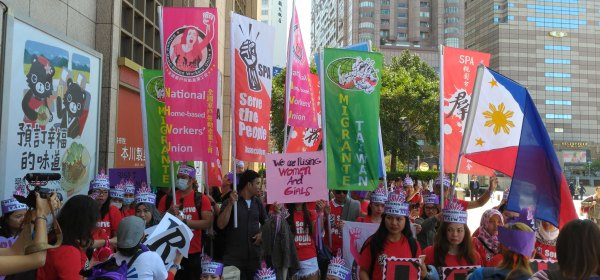
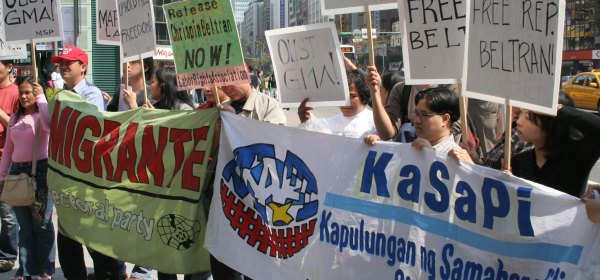
Written by Ratih Kabinawa. In an attempt to raise awareness about the lives of marginalised groups in Taiwan, the Taiwan Studies Programme at the University of Nottingham, U.K., organised a movie screening and discussion – Migrant Lives Matter: ‘Nine Shots’ – that showcased the dark side of migrant labour recruitment and employment in Taiwan. The film reveals some perspectives from different stakeholders, including labour advocacy networks, in addressing problems related to Taiwan’s labour migration system. Using the movie as a prompt, this article explores various advocacy networks and migrant labour movements in Taiwan. Why and how do these networks emerge and organise themselves? What are their motivations and activities? And how do these networks advocate for policy change and work to build solidarity to empower migrant workers?

Imagining a Tragedy in Cyberspace: Online Postings after the Death of an Undocumented Migrant Worker

Written by Isabelle Cheng. On 31 August 2017, Nguyen Quoc Phi, an undocumented Vietnamese worker, was shot dead by a policeman in Hsinchu, northern Taiwan. Public responses to Phi’s death were polarised between pro-police campaigners, who supported the police’s use of force, and human rights activists, who emphasised the plight of migrant workers who are exploited by brokers and employers and who are regulated by a hostile guest worker system. This polarisation is also evident in cyberspace. The reporting of Phi’s death in September 2017, the sentencing of the policeman in July 2019, and the deaths of George Floyd and Rayshard Brooks in the U.S. in May and June 2020 prompted Taiwanese netizens to comment on PTT.

Give Him a Kite to Go Home: An Interview with Tsai Tsung-Lung about His Pilot Documentary ‘Nine Shots’

Interviewed, translated and edited by Isabelle Cheng. On 30 October 2020, the Taiwan Studies Programme hosted a webinar after the online screening of a pilot documentary Nine Shots (槍響之前) directed by Tsai Tsung-lung. This essay is an interview with Tsai about this pilot documentary, which discusses what, if not who, was responsible for the tragic death of Nguyen Quoc Phi. The latter was an undocumented Vietnamese migrant worker who was shot dead by the police, firing nine shots in 12 seconds, on 31 August 2017 in Hsinchu, northern Taiwan.

1 8 9 10 11 12 22