Deviation or Continuation of Tsai’s Approach to Cross-Strait Relations? A few hints from President Lai’s Inaugural Address

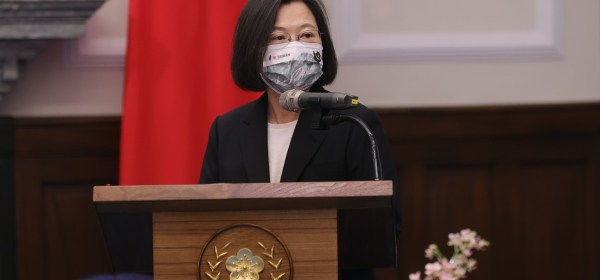
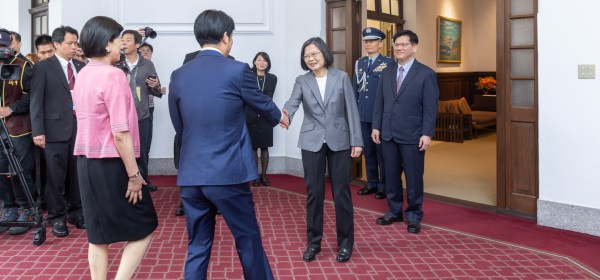
Written by Dr Chieh-chi HSIEH. Based on President Lai Ching-Te’s inaugural speech, this article argues that Lai is likely to adopt a ‘passive responsiveness’ approach when engaging with the Chinese government in the next four years. This is a continuation of President Tsai’s strategy on cross-strait relations, only responding firmly when the circumstances are pertinent.
Taiwan People’s Party as the Kingmaker: What future holds for the party?

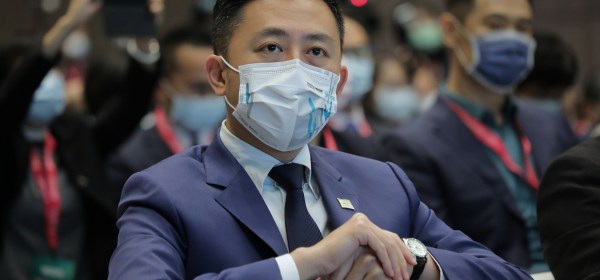
Written by Brian Hioe. The TPP has proven that it is a force with staying power in Taiwanese politics, then–for at least the next four years. Questions about the long-term viability of the party still remain. This is particularly regarding the party’s relationship with its chair, Taipei mayor Ko Wen-je, and how the TPP will relate to the KMT as the larger party in the pan-Blue camp.

Why are the 2024 elections seemingly less competitive than the 2020 elections?

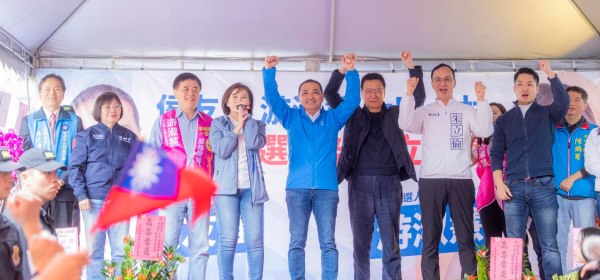
Written by Brian Hioe. Compared to the 2020 elections, it has often been remarked that the 2024 elections have been decidedly less competitive. Certainly, this does seem to be true, in that for most of the election cycle, DPP presidential candidate Lai Ching-te has been ahead. Nevertheless, what are the structural factors at work here, which differentiate the 2024 elections from the 2020 elections? We might take a look.

Digital Ministry, Disinformation Regulation, Douyin, and Data Breaches. 2022 in Taiwanese Digital Politics.

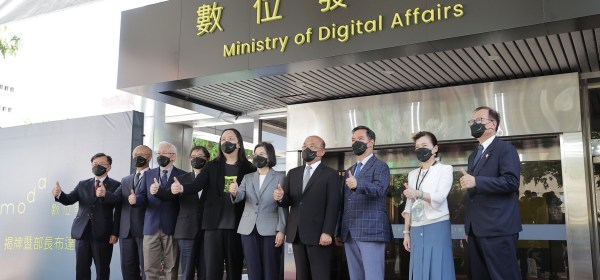
Written by Sam Robbins. Recent data breaches in Taiwan have also highlighted the difficulty of increasing Taiwan’s overall cybersecurity. In December, Legislator Chiu Hsien-Chih revealed that the personal data of over 23 million Taiwanese people (effectively the entire population of Taiwan) had been leaked online. This data seems to have come from Taiwan’s household registration system. When the leak was first revealed in October, Taiwan’s interior ministry denied any wrongdoing or that the data came from their database. After investigation, the ministry claimed they could find no record of any breaches or anomalies in their system.

Taiwan’s mid-term elections: Most politics is local, the KMT remains a force to be reckoned with, and the DPP needs to regroup

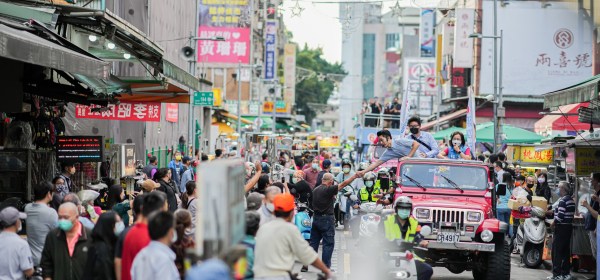
Written by Gerrit van der Wees. The main indicator of how well the parties did, was the number of city mayor and county magistrate positions they gained or lost: the ruling DPP went down from their current number of seven positions to five, while the opposition KMT went down from their current number of 14 to 13, with two of the remaining seats going to independents, and one, Hsinchu City, to the Taiwan People’s Party of Taipei mayor Ko Wen-je. In one location, Chiayi City, the election had to be postponed until December 18 because of the death of a mayoral candidate.

Can g0v Be Replicated Abroad?

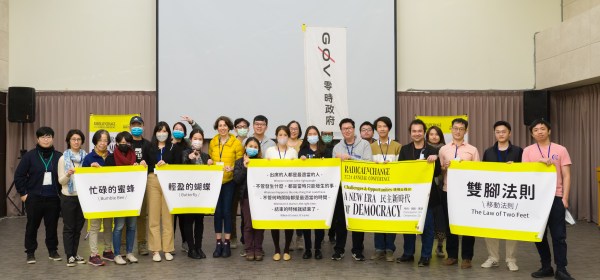
Written by Sam Robbins. The best answer is thus that g0v could be replicated abroad, but it should not be. G0v is unique in the specific ways it approaches problems but thoroughly un-unique in being a group of activists dedicated to solving problems. We cannot forget the second part of this when we reflect on the first part. How activists come together to work towards a common goal depends deeply on political contexts. Tech and civil society can collide in a range of different forms. A look at the Association for Progressive Communication (APC) members, a global network of civil society groups promoting equality through information and communications technology, also reveals that many groups are already engaging with digital technology as a liberating tool.

1 2 3 4 5 22