The Aversion of the Fourth Taiwan Strait Crisis: Nancy Pelosi’s Daring Visit to Taiwan

Written by Lt Col JS Sodhi (Retd). Abhijit Naskar’s quote, “Peace is a state of mind, but in a world where the state controls the mind, peace remains an inconvenience”, is apt for China’s aggression in its quest to take over Taiwan. As the Speaker of the House of Representatives of the USA, Nancy Pelosi, in an exemplary show of guts and grit, visited Taiwan despite the Dragon spewing fire, thereby sending a stern and strong message to China that the USA stands in total solidarity and support to Taiwan and any misadventure and misdemeanour by China on Taiwan will be dealt with swiftly and surely.

Pelosi’s Taiwan Visit: More Symptom than Cause of the Trouble in US-China Relations

Written by Jacques deLisle. The August 2022 visit to Taiwan by United States House Speaker Nancy Pelosi has been characterized as “reckless” and even risking war or, at least, a dangerous military incident between the US and China. On the other hand, Pelosi’s trip has been celebrated for standing up to Chinese bullying or even a political victory born of an unforced error by Xi Jinping’s overreaching. Such dire or triumphalist views risk overlooking the broader and deeper meanings of Pelosi’s brief sojourn in Taipei: It is more a symptom than a cause of a deeply troubled and increasingly troubling US-China relationship; its most significant consequences are likely more complex and indirect.

How Democracy Boosts Taiwan’s National Security

Written by Jie Chen and Ratih Kabinawa. Taiwan has become widely regarded as an exemplary consolidated democracy, albeit with some defects. In Freedom in the World 2022 report, Freedom House gives Taiwan a 94 of 100 ratings, meaning the country counts as fully free. Freedom House also notes that “Taiwan’s vibrant and competitive democratic system has allowed three peaceful transfers of power between rival parties since 2000, and protections for civil liberties are generally robust”. Taiwan’s democratic standing has become more pronounced considering the rapid mainlandisation of Hong Kong under the repressive National Security Law.

Taiwan’s Security in Light of the Ukraine War: Military Manpower and Asymmetric Defence

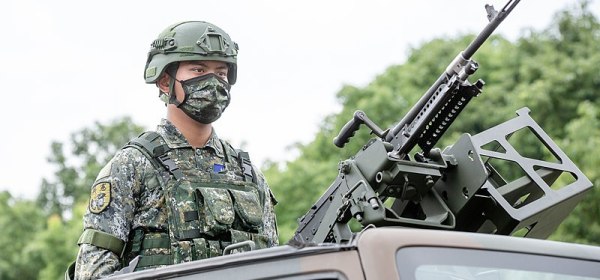
Written by Tzu-yun Su. As a result of the war in Ukraine, Taiwan’s security has gained more attention and support. So naturally, any assistance in democratic defence is welcome in Taiwan. But honestly, Taiwan’s defence plan is designed for the worst-case scenario: to defend itself alone without foreign military aid. That is to say, with military investment projects and manpower system reform, the island can effectively build asymmetric capabilities to improve defence capabilities. This will have a better chance of defeating the invaders and establishing Taiwan’s security.

Bad Timing or an Opportunity: Taiwan’s Military Service System Reform after the Ukrainian War

Written by Ming-Shih, Shen. The outbreak of the Russia-Ukraine war is a reality check for Taiwan. Because Ukraine’s defensive posture is just like Taiwan’s, it also needs to mobilise reserve soldiers on the battlefield to defend its homeland. The professional performance of Ukraine reserve soldiers has stimulated Taiwan to start the reform of the defence mobilisation system. If it is necessary to improve combat power by extending the time of military service, Taiwan should act boldly without worrying too much about political factors.

Ukraine War and Conscripts: Lessons Taiwan Should Not Learn

Written by Shih-Yueh Yang. By preserving the Chinese identity, Taiwan can mitigate its political differences with the Mainland and thus be the sustenance of the whole Chinese people for a free, democratic, and equally prosperous China. With such a great and just cause for the future of the Chinese nation, Taiwan will get its strongest defence, and the danger of wars will also be minimized in the first place.

Conscription in Taiwan and the war in Ukraine

Written by Jyh-Shyang Sheu. With the military threats from China, Taiwan needs to enhance its military capabilities, or more precisely, enhance and rebuild its capabilities. The restoration of one-year conscription might solve the problem of limited human resources. Still, as evidenced by the war in Ukraine, other actions could serve to improve security in Taiwan further.

Changes and Continuity in Support for Self-Defence Among Taiwanese Following the Russia-Ukraine War

Written by Kuan-chen Lee. Following Russia’s ongoing invasion of Ukraine, many observers have pointed out that Kyiv’s ability to mobilise the entire population to resist the invasion is one of the main reasons why it has been able to prolong the war. Moreover, they suggest that Taiwan learn from Ukraine’s model of all-out resistance against a more powerful enemy. However, do the Taiwanese have the same determination to resist aggression as the Ukrainians have shown? Furthermore, how has the Russia-Ukraine War affected the willingness of the Taiwanese people to fight against aggression?

What Does the Ukraine Crisis Tell Us About the Fate of Taiwan?

Written by Raian Hossain. The Russian invasion of Ukraine raises a serious concern over international peace, security, and stability. This led to numerous debates among analysts, academics, and journalists over the possibility of Beijing’s aggregation toward Taipei. There are good reasons why such concerns are in discussion. Chinese fighters’ incursion of Taiwan’s Air Defence Zone has become a regular practice in recent times. Hence, these lead toward analysing the possibility of the Peoples Republic of China (PRC) invasion of the Republic of China (ROC), often known as Taiwan, using the lens of security, political economy, and diplomacy.

Ukraine and Taiwan: Comparison, Interaction, and Demonstration

Written by Yu-Shan Wu. Comparisons have been made between Ukraine and Taiwan, with the ominous implication that Taiwan may become Ukraine in the foreseeable future, i.e., a weak country attacked by its much stronger neighbour. Most of the comparisons are shallow in that they simply draw on the obvious power asymmetry that exists between Russia and Ukraine and between mainland China and Taiwan, as well as the hostile intention of the mighty country toward the lesser power. However, the structural similarities between the two cases run much deeper.

Bridging Islands of/beyond Borders: Dongyin and Yonaguni

Written by Yi-Yu Lai. While the COVID-19 has stopped many individuals from travelling and interacting over the last two years, some cultural exchanges that we never expected to see have emerged during the pandemic. For example, on February 18th, 2022, people in Dongyin, an insular township in Taiwan’s Matsu Islands, had their first online workshop with those from Yonaguni, an island that belongs to Okinawa. Both islands are considered frontiers in their respective countries, and they had many comparable fates throughout history. Therefore, such a cultural exchange between the islands was particularly impressive because it was an activity with the islands as the focal point.

1 4 5 6 7 8 13