Gay Jouissance: Queering the Representation of Same-sex Desire in 1990s Taiwan Literature

Written by Yahia Zhengtang Ma. The last decade of the twentieth century was an especially interesting time in the emergence of ‘tongzhi literature’. This genre consists of literary works that ‘deal with homosexuals and homosexuality’ in Taiwan when queer cinema was introduced to Taiwan via Hong Kong. The 1990s are widely considered the golden age of tongzhi literature, animated by such widely-celebrated literary works by Ta-wei Chi, Chu T’ien-wen, Qiu Miaojin, among many others. However, existing scholarship on this has primarily emphasised the complexity of the tongzhi identity, subjectivity, and discourse around tongzhi, tongxianglian and queer in solely its original Chinese texts through the lens of cultural studies and literary studies.
Maternity, a Biter Transition, an Empowering Continuum or Both? Childbirth and the Practices of Yuezi under Beauty Pressure in Taiwan

Written by Amélie Keyser-Verreault. Many feminist analyses emphasize the influence of neoliberalism in changing maternity and causing intensified beauty pressure. In this article, I seek to inaugurate a discussion of the relationship between motherhood and the quest for beauty, primarily the phenomenon of a new sexy maternity in Taiwan’s neoliberal context. Since the rapid spread of neoliberal ideology might favour the inclusion of beauty as part of human capital—and non-Western societies can be thought of as directly affected by this global beauty culture—it is relevant to observe the phenomenon of regaining one’s body.

228 Seventy-Four Years On: The Fight for Transitional Justice

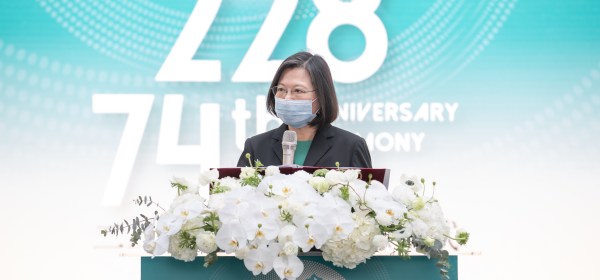
Written by Tabea Muehlbach. February 28, 2017, marked the 70th anniversary of the 228 Incident, a bloody crackdown on Taiwanese civilians by Nationalist troops in 1947. In 2017, Tsai Ing-wen’s spoke for the first time as a president at the central commemorations in the 228 Peace Park in Taipei. Such ceremonies had become a regular annual instalment not long after Lee Teng-hui apologises to the victims in 1995.

Taiwan’s Non-Traditional Diplomacy During the Pandemic: The Case of Mexico

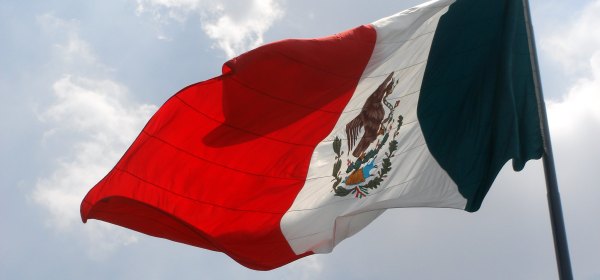
Written by Fabricio A. Fonseca. In the spring of 2020, the social media accounts of the Taipei Economic and Cultural Representative Office (TECRO) in Mexico City began to share posts made by Mexican federal legislators. In these posts, they showed appreciation for the donations made by Taiwan’s representatives in the country under the difficult circumstances posed by the COVID-19 pandemic. Initially, those donations consisted of food baskets and eventually included thousands of face masks. The different images of people across Mexico receiving boxes with the slogan “Taiwan Can Help” (TCH) made me think about how authorities on the island were using different instruments associated with non-traditional diplomacy.

Music as Political Commitment: The Reception of Pablo Casals in Taiwan before the 1970s

Written by Min-Erh Wang. Historical musicologists focus on studying Western classical music written by Western or Western-trained composers, while ethnomusicologists primarily concentrate on traditional and vernacular music research. Against this background, music scholars in Taiwan tend to pay attention to the musical works and composers or the cultures of traditional genres, such as nanguan and the music of aboriginal people, while leaving the reception of Western classical music overlooked. However, from the late nineteenth century onwards, Western classical music has deeply rooted in Taiwan as well as other East Asian countries as part of the modernisation agenda. Furthermore, during the Cold War, Western classical music was adopted by both the US and Soviet Russia to disseminate their influence over Third World countries.

Rethinking Self-Identity and Taiwanese Indigenous Musicians’ Contemporary Presentation on Social Media

Written by GuoTing Lin (Kuing). This work uses digital ethnography to consider how Taiwanese indigenous musicians utilise Facebook as their primary official platform for audience communication. I go about this by analysing cover images, profiles, photos, and feeds on Facebook, which is used to depict the details of the texts, photos, and videos. It thus shows the self-presentation and the communication of Taiwanese indigenous musicians concerning cultural and social issues. Moreover, I argue that indigenous musicians perform their identity through online self-presentation in everyday life.

When 50 Steps is Further than Taipei: Indigenous Contemporary Art and Temporal Orientation

Written by DJ Hatfield. Over the past ten years, images of Indigenous people have increased both in Taiwan and international representation. Indigenous people appear in depictions of Taiwan’s relationships to Southeast Asia and the Pacific, in promotions of Taiwan as a tourist destination, in discourses of sustainability, and images of environmental protest. In relationship to these representations of Indigenous people, Taiwanese Indigenous contemporary artists maintain an ambivalent footing, aware that current indigenous visibility rearticulates Taipei (here referring broadly to settler power) rather than displacing it.

Continuities’ Strategy through Poetry’s Writing, Translation and Editing of the Translingual Poet Ch’en Ch’ien-wu 陳千武 (1922-2012)

Written by Sandrine Marchand. In Taiwan, 1945 marks the end of the Japanese colonisation. For many Taiwanese intellectuals and writers, it also means the abandonment of the Japanese language for Mandarin. But a language cannot be erased as quickly as architecture or other material goods. The language of childhood – the language of education – stubbornly persists. After this initial silent period, in the 1970’s – thanks to the Nativist movement – there has been a revaluation of pre-war Taiwanese writers gathered under the appellation of “a translingual generation” as they emerged from the shadows.

Victims without Perpetrators: Slovakia’s and Taiwan’s Lack of Retributive Justice

Written by Dominika Remžová. Despite the recent 228 Incident commemoration, along with the latest exonerations of White Terror political victims, the lack of retributive justice from criminal trials or other perpetrator-focused measures remains the case in Taiwan. In fact, the legality of the only perpetrator-focused act related to the KMT’s party assets has been continually contested by the party, despite the ruling of the Council of Grand Justices that upheld the constitutionality of the act’s provisions. A similar lack of retributive justice occurred in another country with a recent authoritarian past, Slovakia

Xi Jinping’s 2.0 version of the “Letter to Compatriots in Taiwan”

Written by Simona A. Grano & Helena Y.W. Wu. On January 2, 2019, Xi Jinping held a speech to commemorate the famous “Letter to Compatriots in Taiwan” of 1979. In this letter, he defined unification across the Taiwan Strait as “the great trend of history.” He also warned that attempts to facilitate Taiwan’s independence would be met by force. Not only this, but he also called for “unification under the ‘one country, two systems’ formula.”

1 3 4 5 6 7 35