Taiwan’s Response to the Coronavirus Challenge of 2020

Written by Tsung-Mei Cheng. Taiwan government’s most favoured policy for fighting Covid-19 initially is to prevent it from entering Taiwan in the first place, according to Ming-Liang Lee, former health minister, “Czar of SARS” — commander-in-chief in the debacle against Taiwan’s 2003 SARS epidemic, and now a senior adviser to Taiwan’s President Tsai Ing-wen. To this end, Taiwan implemented strict travel advisories and entry protocols tiered by the risk level of the countries in question.

Taiwan’s participation in the WHO in the outbreak of the coronavirus: the Old Global Health vs. the new

Written by Kai-yuan Cheng. Perhaps most fundamentally, Taiwan needs to make young Taiwanese believe that, despite our sad past and difficult present, going into global health as a Taiwanese is a promising career filled with opportunities and excitement. Building a global health-informed civil society will appeal to the new generation of governance bodies whose more flexible frameworks are ready to engage Taiwan, not necessarily because of the globalist ideal of leaving no one behind or the humanitarian concern for the Taiwanese population health, but because we have something to offer.

Dispelling the monolith: The geopolitics of language in Taiwan and Hong Kong

Written by Justin Kwan. In an attempt to reach audiences in Taiwan and Hong Kong, China has attempted to use both Hokkien and Cantonese in its messaging through media and popular culture, eliciting mixed responses from locals in both places. In the case of Taiwan, Beijing resorted to a strategy of direct coercion in 2018, when it released a dubbed propaganda video in Hokkien titled ‘God of War’. The video featured bomber aircrafts flying around Taiwan, a warning from Beijing for the islands Taiwanese-speaking activists to curb their so-called ‘pro-independence’ activities.

Jay Chou’s China Wind Pop Made in Taiwan and Its Transnational Audiences

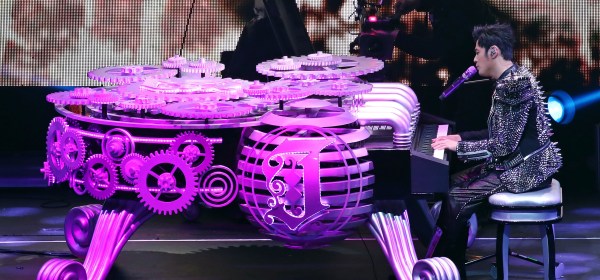
Written by Chen-yu Lin. It is evident that “being Chinese” today can influence both music production and perceptions. The chapter argues that the construction and perception of Chineseness through popular music is multidimensional, whether the investigation concerns a China Wind song or a person’s experience of it. It also further explores other dimensions to be considered alongside the sonic journey music provides.

City Pop in Taiwan: old mainstreams becoming new indies

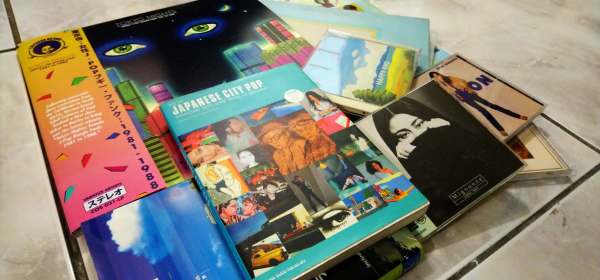
Written by Yan-Shouh Chen. As City Pop become more known to Taiwanese indie music lovers, unveiling J-pop history might not be enough. Some fans turned their eyes toward Taiwanese artists that are good at creating groovy melodies. These artists might consider themselves as R&B and Hip Hop rather than City Pop, but the boom did them a favour, and now the spotlight is on them.

Breakthrough the thinking of “indigenous music” as a style of music

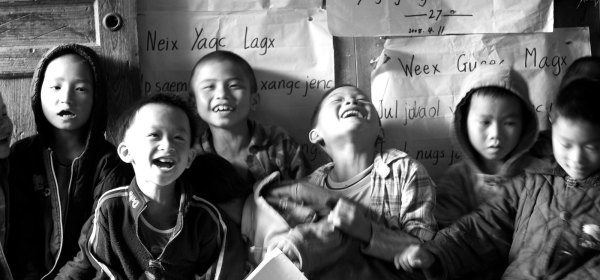
Written by Kuing, GuoTing Lin. Music is in full blossom in Taiwan, as evidenced by the vibrant contemporary Taiwanese music being produced by its indigenous musicians, which has spurred a rich cultural dialogue surrounding their production. Thus, in 2019 a diverse indigenous subjectivity has begun to enter the Taiwanese pop music market through new albums. Hence, it is worth exploring how this phenomenon differed from previous eras when albums were dominated by indigenous languages, and what this new phenomenon offers regarding a reflection of indigenous cultural consciousness.

Unpacking ‘Indie Music As Cool Ambassadors’ – Reflections on Taiwan’s Cultural Export Policies 2010-Present

Written by Jocelle Koh. During my time as a university student, what I would have given to have a copy of Routledge’s latest edition to their ‘Made in…’ series, ‘Made in Taiwan’. It would have been handy! As a student doing my thesis on the Taiwanese music industry in a university about as far removed from the topic as you can get, procuring the Taiwanese instalment of this academic series – completely in English and geared towards advanced understandings of Taiwanese popular music – would have saved me a lot of trouble.

Taiwanese Popular Music as World History

Written by Eva Tsai. Sure, I had an agenda: First, I wanted to create at the time—with popular culture details—a sense of the social and cultural space. Second, I wanted to suggest that any entry point is a good entry point into Taiwanese popular music, so long as it is put into a historical and geopolitical context, along with developing a curiosity and mindfulness about what else was going on when it was made and circulated. Such was the spirit we carried into Made in Taiwan: Taiwanese popular music as world history.

Writing History Within/Outside of Taiwan: A Postcolonial Perspective on Shawna Yang Ryan’s Green Island (2016) and Wu Ming-yi’s The Stolen Bicycle (2015) – Part 1

Written by Ti-Han Chang. From a global perspective, today’s Taiwan is known for its cultural and ethnic diversity, its complex political relationship with China, and its recent achievements in socio-political democratisation (for instance, the Sunflower student movement and the legalisation of same-sex marriage). Yet, not many people have come to know contemporary Taiwan through its postcolonial literature, which, for me, is an important field that foregrounds Taiwan’s significance in the geographical context of the Asia Pacific in modern time.

Why I Wrote Taiwan: Nation-State or Province? 7th Edition 

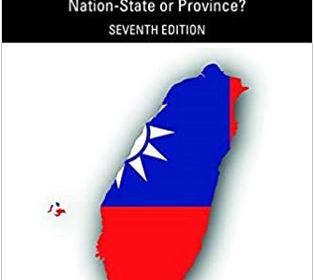
Written by John F. Copper. In 1990 when I published the first edition of Taiwan: Nation-State or Province?, friends and colleagues asked me why I wrote this book and the reason I chose such a title. I replied that a publisher, Westview Press, asked me if I could pen a book on Taiwan that assessed its unusual status in the world community, it being a possible trigger to an East-West conflict, and also a work that might serve professors looking for a reliable source on Taiwan they could teach from. The book sold well and five years later the publisher asked for an updated edition, to which I obliged.

Why are Taiwanese Politicians Collaborating with Youtubers?

Written by Sam Robbins. Taiwanese politics has been digital as long as it has been democratic. Taiwan’s first direct presidential election in 1996 was hotly debated on popular BBS systems of the time. More recent elections have been fought on blogs, PTT, facebook and elsewhere. Taiwanese politicians have always been looking for new methods to connect with voters and make themselves visible in an ever-changing digital landscape.

1 7 8 9 10 11 35