Is Han Kuo-yu a Populist?

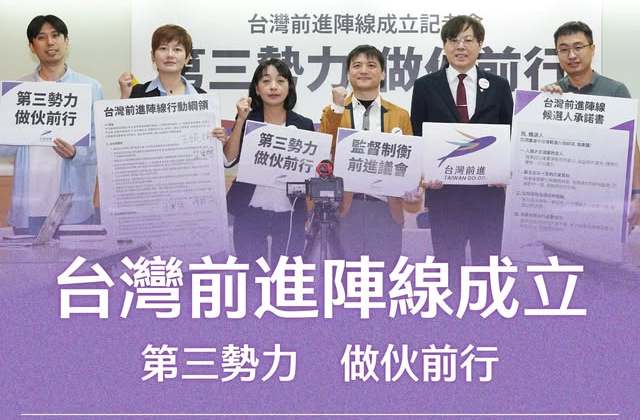
Written by Gunter Schubert. Unlike many populist leaders, Han’s public speeches have not been xenophobic, nor has he polemicised against LGBTQ rights (though he has promised to undo recent legislation allowing same-sex marriage should he be elected president). Moreover, his support for the ‘1992 consensus’ sounds more opportunistic than driven by pan-Chinese nationalism and his commitment to cross-Strait economic exchange does not prove that he supports ‘unification’ or wants to cosy up to the Chinese Communist Party.

The Youth Ambassadors and Taiwan’s Performative Cultural Diplomacy: “Some of the dancing, yeah, I don’t really understand [it]”

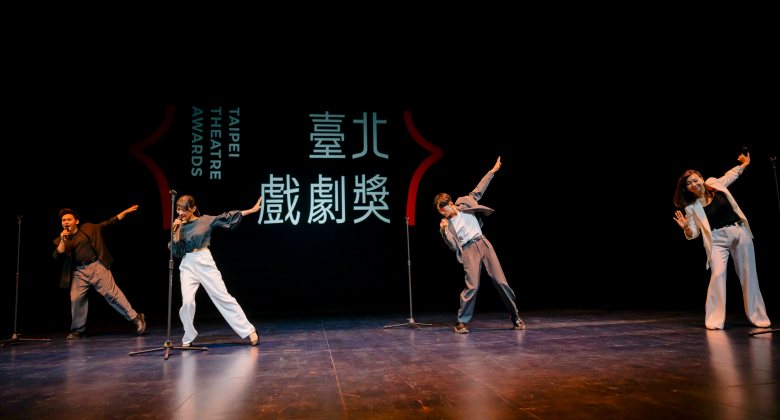
Written by Jess Marinaccio. Attention to cultural representation is critical to creating a more equitable Taiwan, especially given Taiwan’s settler-colony status. However, problems of cultural (mis)representation focus the Taiwan’s Youth Ambassadors project on the domestic sphere, suggesting that culture is an ineffective tool in Taiwan’s foreign affairs.

Beijing’s Rise and Taiwan’s Decline in Africa: What Does the African University Tell Us?

Written by Tobi Oshodi. China has positioned itself among many African leaders as the most strategic player on the continent; a leading development partner. As the former Senegalese President, Abdoulaye Wade, bluntly put it: a one hour meeting with former Chinese President Hu Jintao in the executive suite of his hotel in Berlin was more useful than the G8 meeting “where African leaders were told little more than that G8 nations would respect existing commitments.”

The Turkish Understanding of “One China”: Turkey’s Delicate Policy Balance between Taiwan and China

Written by Selcuk Colakoglu. After ceasing all diplomatic relations in 1971, Ankara and Taipei needed to re-establish their relations in the late 1980s to address both countries’ rising economic potentials. This period saw many Western countries severing their relations with Beijing over Tiananmen Square in 1989, and Ankara’s relationship with Beijing become strained in the early 1990s due to the Xinjiang Uyghur issue.

Taiwan and the Vatican: Relations from Past to Near Future

Written by Alexandre Tsung-ming Chen. During the last five years relations between the Vatican and the People’s Republic of China (PRC) have developed at a dramatic pace. Many observers have been surprised at this series of events, even questioning whether the Holy See and PRC will normalise relations in the near future. Since the number of countries officially recognising the Republic of China (ROC) in Taiwan has fallen from 22 to 17 in the last two years, the Vatican-PRC diplomatic warming has caught Taipei’s attention and contributed to concerns of a diplomatic crisis.

What Brings the US and Taiwan Close Together?

Written by Yu-Hua Chen. “It is time for the US to abandon Taiwan.” The past decade has frequently seen influential scholars and experts on US-China relations propose this sort of argument. Ten years ago, Bill Owens suggested that America should start treating China as a friend and therefore halt its arms sales to Taiwan and review the outdated the Taiwan Relations Act (TRA). Bruce Gilley sold an idea of “the Finlandisation of Taiwan” in Foreign Affairs in 2010.

Challenges to Taiwan’s Diplomatic Recognition

Written by Timothy Rich. Currently only seventeen countries maintain formal diplomatic relations with Taiwan. So how should Taiwan maintain these formal relations? Absent Chinese pressure, most countries would likely recognise Taiwan. However, China rejects the possibility that a country could recognise both China and Taiwan…

1 108 109 110 111 112 135