Indigenous Youth Actions in Taiwan: Connecting Our Voices to the Global Stage 

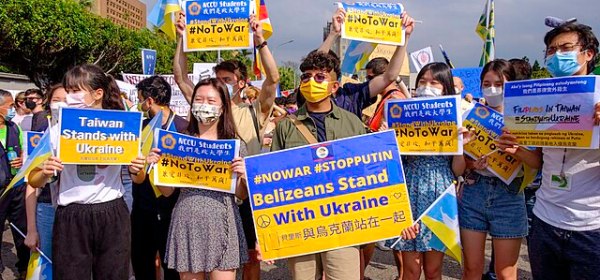
Written by Sra (Bo-Jun Chen). Taiwan’s Indigenous peoples are becoming increasingly concerned with various global issues that are also highly pertinent to our own situation in Taiwan, such as environmental, human rights, and cultural heritage issues. In recent years, for instance, Indigenous youth in Taiwan have realised the significance of language and identity revitalisation, which may assist us in combating oppression. Moreover, we have found that the insensitivity of our lands and ignorance of our history pose a far greater threat to us than the plundering of our resources and hazards to our lives. Some Indigenous youth are thus committed to overcoming obstacles influenced by colonialism and strive to bring our voices and agendas to the global stage. Through our participation on the international stage, we aspire to be heard and have more conversations about similar difficulties. 

The Mysterious Tsou Shaman: The Guardian of Traditional Culture

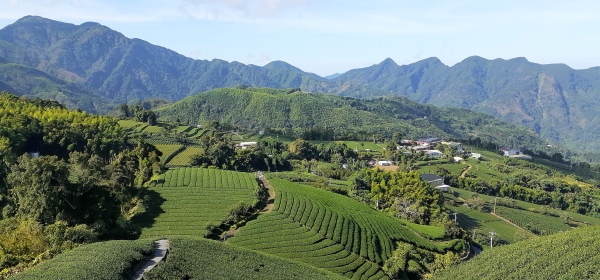
Written by tanivu yasiungu and Aaron Valdis Gauss. Living high up in quiet Ali Mountain, the Tsou shamans intimately connect with the earth and the ancestral spirits. But, of course, they are also connected with the most beloved god of the Tsou tribe––Hamo. Another important role of the Tsou shamans is to preserve, perpetuate and affirm Tsou myths, thereby maintaining a connection with the ancestors. Tsou shamans believe that working with nature is the most suitable way for everyone to live. We, the Tsou people, have always believed that being simple and pure in our beliefs is the only way to maintain the closest relationships with our god Hamo.

Progress or Not? An Assessment of the Significance of Liz Truss’ Taipei Visit

Written by Milo Hsieh and Wei Azim Hung. At a time when Downing Street seeks to recalibrate its relationship with Beijing, Liz Truss’ Taipei trip has raised eyebrows and controversy in London as well as provoked strong condemnation from Beijing. For Taiwan, the trip shows that yet another former official sees Taiwan as an important part of their agenda as world leaders increasingly make Taiwan a priority destination.

Provocations: Taiwan Amidst Trust, Truss and the G7

Written by Ian Inkster. Liz Truss led her charge into Taiwan on 16 May with the notion of Britain backing a Taiwan move to join the Pacific trade block, the CPTPP, against the present neutral position of the British Tory government under Rishi Sunak. This immediately provoked the Chinese to label her ‘sinister’. The point being that this was merely a Trussian wedge into her major provocation, that there is a ‘fatalism in the free world that somehow a Chinese takeover of Taiwan is inevitable’. Dangerously, Truss seems to have failed utterly (and almost certainly deliberately) to distinguish commercial and political, even military, aggressions, and to that extent, the danger of such an intervention should, of course, be noted.

Liz Truss: Fighting for Taiwan or Personal Credibility?

Written by John Burn. It was already clear from her recent speech to conservative think tank The Heritage Foundation in Washington DC that Liz Truss – the UK’s shortest-serving Prime Minister of all time – is trying to develop her image beyond the country’s shores. Being responsible for one of the most disastrous economic policy outlines in the UK’s history in her mini-budget upon coming to office, she lost public confidence and the confidence of the Conservative Party in very short order, resulting in her dismissal after 44 days in office.

Going for Low-Hanging Fruit, Deliberate Strategy, or Path Dependency?: Liz Truss’ Visit to Taiwan

Written by Brian Hioe. Former UK prime minister Liz Truss arrived in Taiwan on May 16th for a five-day visit. Truss’ main purpose in visiting was to give a speech at the invitation of the Prospect Foundation, a think tank close to the Tsai administration. In addition, Truss met with President Tsai Ing-wen, Vice President William Lai, and other high-ranking officials.

Truss Visits Taiwan: Worth or Trouble?

Written by Huynh Tam Sang and Phan Van Tim. Liz Truss’s journey is in the limelight as the first ex-British prime minister to set foot in Taiwan nearly thirty years after Margaret Thatcher’s visits in the 1990s. Nonetheless, the worth of Truss’s five-day sojourn is a contentious issue. From one perspective, Truss’s visit is deemed immensely significant, exemplifying the UK’s unwavering backing for Taiwan amidst escalating Chinese pressure, given her enduring advocacy for a democratic Taiwan. But, conversely, others argue that her visit merely inflamed the already high-strung tensions between China and Taiwan.

An Instagram comeback tour or a sincere bid to strengthen democracy in East Asia? Liz Truss’s Taiwan visit exposes growing Conservative Party tensions over China, but either way, Taiwan still wins.

Written by Max Dixon. Liz Truss, MP for South West Norfolk and British Prime Minister for 44 days, visited Taiwan last week, between May 16th and May 20th, meeting with senior officials, including William Lai, the frontrunner to replace current President Tsai Ing-wen, and giving a keynote speech to the Prospect Foundation that called for a more stringent British approach to China. Ostensibly the visit of a former Prime Minister has been heralded as a coup for Taipei in emboldening the position of Taiwan in the global imagination amidst growing Chinese assertiveness; indeed, the Ministry of Foreign Affairs has welcomed Truss’ visit.

Leveraging Cultural Exports for Resilience: Insights from Taiwan and South Korea

Written by Tommy Hall and Margaret Siu. Global discussions about Taiwan often focus on an invasion scenario, and many observers wonder if Taiwan is adequately preparing for war. These discussions often dissect Taiwan’s hard power—military and economic factors that may dissuade Beijing. However, soft power is crucial in conflicts between imbalanced parties. Current discussion would benefit from diversifying outside hard power calculations and examining Taiwan’s soft power. Taiwan should apply lessons from South Korea’s model to bolster its ability to co-opt global support. Describing Taiwan’s soft power vision and comparing both nations’ top-down cultural promotion efforts is helpful.

KMT’s Lost Opportunity to Reinvent Itself Again for Survival

Written by Chieh-Ting Yeh. If—and it’s a big if—the KMT could reinvent itself again, it could find a way to shed the old rifts between the ideological and the opportunistic camps. It could present a platform that is clear in its stance on major social issues. It could take the lead in reviewing its own past as a perpetrator of human rights abuses, even if just to get the issue off its back. It could convince Taiwan’s voters that its China policy is no longer motivated by the older generation’s national identity crisis but based on a pragmatic approach to protecting Taiwan’s sovereignty and security. It could be hopeful. But looking at how the KMT finally settles on its presidential candidate, the KMT still has a very long way to go—and not very much time.

Will the KMT’s Generational Divide Harm its 2024 Election Prospects?

Written by Andrew LaRocca. Caesar, The Planet of the Apes protagonist who incites a rebellion to usher in a new civilization, was recently drawn into the KMT’s internal debates when Taipei City councillor Hsu Chiao-hsin changed her Facebook profile picture to Caesar amidst her escalating battle with senior legislator Fei Hongtai. In the comments, netizens joked: “How many terms can upper leaders serve? How old are those seniors?” Hsu’s Caesar reference reflected a sentiment expressed by many Taiwanese youths: the KMT and its leaders are out of touch with Taiwan’s younger generations.

The KMT Selects Its Presidential Candidate: Can Uniting All Non-Green Friends Make Taiwan Go Blue in 2024?

Written by Jasper Roctus. The results of the KMT’s ambiguous drafting (徵召) procedure of its presidential nominee, which commenced after its leadership took control of the process, should be announced by May 20. The KMT’s selection committee nevertheless already appears reluctant to accept Terry Gou’s eccentric rhetoric and, most prominently, fears electoral outfall over his close China ties. Gou himself also frequently alludes to his extensive bonds with the Chinese mainland by boasting about the leverage he holds in solving the hostile status quo across the Taiwan Strait. Considering that the KMT is still reeling from the landslide defeat of Han Kuo-yu in 2020, its last maverick businessman presidential nominee, the selection of the softer-spoken Mayor Hou as its candidate for 2024 appears to be a foregone conclusion. By early April, the KMT had allegedly already reached an internal consensus on its candidate – a clear reference to being ready to select Hou.

1 37 38 39 40 41 134