Taiwan’s Security in Light of the Ukraine War: Military Manpower and Asymmetric Defence

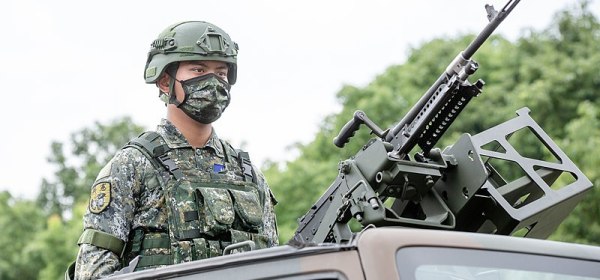
Written by Tzu-yun Su. As a result of the war in Ukraine, Taiwan’s security has gained more attention and support. So naturally, any assistance in democratic defence is welcome in Taiwan. But honestly, Taiwan’s defence plan is designed for the worst-case scenario: to defend itself alone without foreign military aid. That is to say, with military investment projects and manpower system reform, the island can effectively build asymmetric capabilities to improve defence capabilities. This will have a better chance of defeating the invaders and establishing Taiwan’s security.

Changes and Continuity in Support for Self-Defence Among Taiwanese Following the Russia-Ukraine War

Written by Kuan-chen Lee. Following Russia’s ongoing invasion of Ukraine, many observers have pointed out that Kyiv’s ability to mobilise the entire population to resist the invasion is one of the main reasons why it has been able to prolong the war. Moreover, they suggest that Taiwan learn from Ukraine’s model of all-out resistance against a more powerful enemy. However, do the Taiwanese have the same determination to resist aggression as the Ukrainians have shown? Furthermore, how has the Russia-Ukraine War affected the willingness of the Taiwanese people to fight against aggression?

Taiwan’s Enduring Controversy on Absentee Voting and the Role of Media

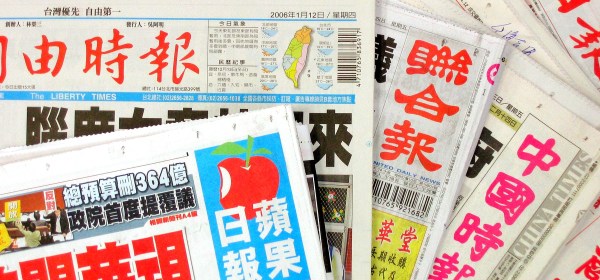
Written by Julia Marinaccio and Jens Damm. However, Taiwanese journalism also did its share. Like the political party system, Taiwan’s existing media landscape is ideologically divided over the question of how to fashion cross-Strait relations. Through their ideological orientation paired with a lack of investigative journalism, they act as mouthpieces of political parties. In doing so, they reinforce existing political cleavages rather than exercising their role as informants and watchdogs.

‘Today’s Ukraine is Tomorrow’s Taiwan’?

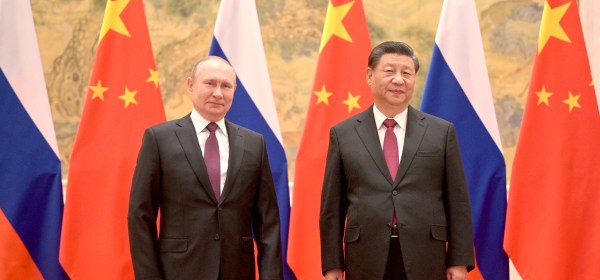
Written by Chieh-chi Hsieh. In sum, there is no reason to believe that imminent conflict in the Taiwan strait would occur after the Russia-Ukraine war outbreak. However, it is imperative to underscore that the proposition is not formed based on comparing Taiwan’s relative advantages over Ukraine. Instead, it is underlined by how the ongoing war has been perceived by not only Taiwan’s general public and government but also Xi and the CCP.

Ukraine and Taiwan: Comparison, Interaction, and Demonstration

Written by Yu-Shan Wu. Comparisons have been made between Ukraine and Taiwan, with the ominous implication that Taiwan may become Ukraine in the foreseeable future, i.e., a weak country attacked by its much stronger neighbour. Most of the comparisons are shallow in that they simply draw on the obvious power asymmetry that exists between Russia and Ukraine and between mainland China and Taiwan, as well as the hostile intention of the mighty country toward the lesser power. However, the structural similarities between the two cases run much deeper.

Hong Kong and Taiwan, Past and Present

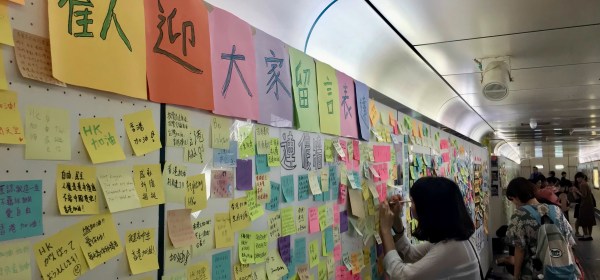
Written by Jieh-min Wu. The deterioration of the situation over the last two years has been largely shaped by the global geopolitical environment, with growing Sino-American tensions or the “New Cold War” playing a critical part in Beijing’s decisions on Hong Kong. Given that the Xi regime is the source of Hong Kong’s political authority, the situation is unlikely to change unless Beijing loosens its grip. Even so, things can be done to preserve a glimmer of hope for the future of democracy in Hong Kong.

Hong Kong is the Canary in the Coalmine: Why We Must Take Xi Jinping’s Words Seriously When It Comes to Taiwan

Written by Dennis Kwok and Johnny Patterson. A little more than a year after the introduction of Hong Kong’s National Security Law, Taiwan does indeed seem to be the next target of an increasingly assertive Chinese foreign policy. PLA warplanes now regularly breach Taiwan’s air defence identification zone, often more than 150 in a row. At the same time, Taiwan has invited US marines to help shore up the island’s military forces. Throughout all of this, the aggressiveness of the rhetoric surrounding these issues continues to ratchet up.

No Island Left Behind: Cross-Strait Relations in China’s National Museums

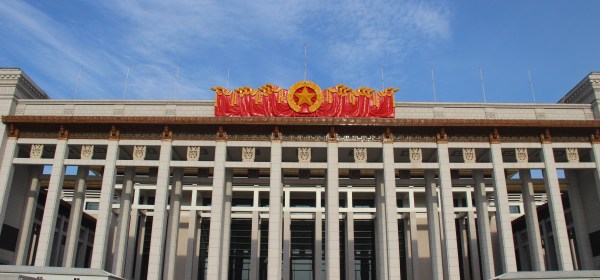
Written by Shih Chang. On October 25th, 2020, an exhibition commemorating the 75th anniversary of the recovery of Taiwan from Japanese colonial rule was held at the National Museum of China. The exhibition is divided into six sections that aim to show the “complete history” of the island of Taiwan from ancient to modern times. The first four sections: “Treasure Island, Taiwan,” “Nine States of Common Sorrow,” “Protecting Sovereignty against Japanese” Sovereign,” “Long Song as a Sword,” “Taiwan fending off the Japanese,” and “Cross-Strait Dreams,” objectively recreates the history of Taiwan’s “return to the motherland” and the development of cross-strait relations.

Chang Ya-chung’s Rise and Eric Chu’s Cross-Strait Vision

Written by Mingke Ma. Surprisingly, competition became fierce after the first Television policy debate on 4th September for the 2021 KMT Party Chairperson Election. The difference in support ratings on the opinion poll for the two leading candidates—former New Taipei City mayor Eric Chu and former KMT chairperson Hung Hsiu-chu’s policy advisor, Professor Chang Ya-chung—had been zigzagging within the error range of 3 per cent.

Does Eric Chu’s New Leadership Role Depend on the ‘China factor’?

Written by Chia-hung Tsai. On 25 September 2021, the Kuomintang (KMT), the main opposition party, voted on the chairperson. As a result, Eric Chu (朱立倫), the former KMT chairman and ex-vice premier, was elected with 85,160, or 45.8 per cent of the votes. This election draws domestic and international media attention because the result will influence the upcoming referendums, local elections, cross-Strait relations, and even US-Taiwan relations.

Now That the Race is Over, What Kind of Chair will Chu be?

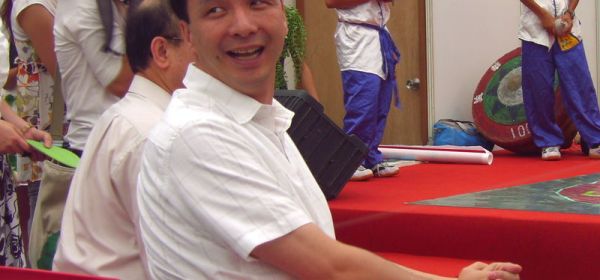
Written by Nathan Batto. Eric Chu 朱立倫 was elected KMT party chair on Saturday in a surprisingly contentious race. When Chu announced his entry into the race, the former New Taipei mayor, vice premier, presidential candidate, and KMT party chair was the favourite to win. However, most people expected his primary competition to be the incumbent party chair Johnny Chiang 江啟臣 rather than Chang Ya-chung 張亞中, an intellectual from the extreme unification wing of the party.

1 4 5 6 7 8 12