The 1992 Consensus and the Future of the Cross-Strait Relationship: Examining the Stakes for Taiwan’s Application for UN Membership

Written by Joshua Bernard B. Espeña and Chelsea Anne A. Uy Bomping. The 1992 Consensus has framed the status quo of the Cross-Strait relationship for decades. However, more recently, rising nationalisms and geopolitical developments have expedited the erosion of the consensus. Moreover, the United States’ (US) commitment to Taiwan is ambiguous, despite the Trump administration adopting a more hardline stance against China. These factors complicate Taiwan’s quest for membership in the United Nations (UN), and add to doubts as to whether the consensus is still a source of stability in the Cross-Strait relationship.
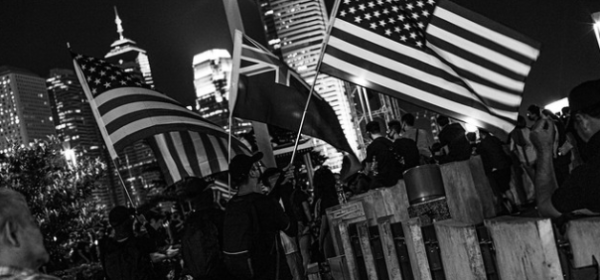
Today Hong Kong, Tomorrow Taiwan”: Taiwan’s Strategic Conundrum

Written by Ferran Perez Mena. During the past year, the Hong Kong protests, along with the newly approved National Security Law, have generated much anxiety in Taiwan. They have been perceived by both the DPP’s political elite and the Taiwanese public as a premonition of what lies ahead for Taiwan. One of the popular slogans of the protests, “Today Hong Kong, Tomorrow Taiwan” (今天的香港,明天的台灣), perfectly epitomises the widespread unease that such political events are producing and the apparent inevitability of Taiwan’s downfall.

President Tsai Needs to Choose her Allies Wisely in the Post-Pandemic US

Written by Fumiko Sasaki. The Trump administration has intensified its anti-China campaign. Consequently, rhetoric has been strongly pro-Taiwan. Due to the increased negative sentiment toward China in the U.S., the presidential candidate from each party will need to take a tough stance toward China to win the election. Regardless of the election outcome, President Tsai Ing-Wen should not anticipate such trends to continue and must be wise in aligning with allies inside the U.S.

Tsai’s Second Term and the Taiwan Strait: Greater Clarity, Same Challenges

Written by J. Michael Cole. The first four years under the Tsai Ing-wen administration have brought greater clarity regarding Beijing’s attitude toward Taiwan and its democracy. Although in the months prior to her inauguration on May 20, 2016, it was still possible to imagine that the two sides could find a modus vivendi despite Beijing’s longstanding antipathy toward the Democratic Progressive Party, Beijing almost immediately adopted an unforgiving course of action which soon poisoned the relationship.

Prospects for President Tsai Ing-wen’s Second term

Written by Gerrit van der Wees. Her overwhelming victory in the elections already gave President Tsai Ing-wen a solid mandate to push domestic reforms with greater vigor, while the country’s excellent performance in combating the Coronavirus crisis gave Taiwan an unmatched international visibility, which will help in pushing back against China’s mounting political and economic aggressiveness.

Is Taiwan Prepared to Cope with a Post-COVID Economy?

Written by Harry West. The Coronavirus pandemic has presented the world with challenges the likes of which have rarely been seen before. COVID-19 — a disease for which a vaccine is yet to be found — has killed over 300,000 people and infected millions more. As well as the human cost, the virus has had a significant impact on the global economy, with governments across the world implementing social distancing measures as a means for combatting the spread.

How is Taiwan Facing the Coronavirus?

Written by Josie-Marie Perkuhn. As a precaution, most flights have been suspended, and entry spots have restricted access, such as maritime passages via Kinmen, Matsu or Penghu Island. President Tsai also assured that “as long as the two sides fully communicate and cooperate, I do believe that we will be able to take good care of our people”. However, controversy arose when on February 3rd evacuees arrived. Three of the 247 people on the charter flight had not been on the priority list, which Taiwan provided to China, and one was tested positive, becoming the 11th patient in Taiwan to be diagnosed.

Time To Bring Taiwan In From The Cold: Start Working Towards A Normalization Of Relations

Written by Gerrit van der Wees. A recent episode in Prague illustrates in two important ways that China’s relations with the West are changing fast. It shows the need for the US and Western Europe to reimagine relations with Taiwan, bring Taiwan in from the cold of political isolation, start working towards a normalization of relations, and find a rightful place for that democratic country in the international family of nations.

The DPP’s Electoral Victory as a Political Regression?

Written by Ian Inkster. The conclusion is that the DPP should take the risk of dropping the rhetoric of China whilst seeking ways of beginning more positive diplomatic exchanges. And this should be undertaken on a broad basis. DPP negotiations that are not within a reasonably broad-based consensus at home are unlikely to progress far, for domestic quarrels do not make for confident diplomacy on either side of a table.

A clash or reconciliation of nationalisms across the Taiwan Strait?

Written by Zhidong Hao. In 2014, the Umbrella Movement in Hong Kong failed to persuade the Beijing government to grant them full universal suffrage for the election of the chief executive. Since then the so-called high degree of autonomy guaranteed by the Basic Law was eroded so much that Hong Kong was becoming more like Macau. Macau has been touted by the Central government as a perfect model of ‘one country, two systems’, but in reality, it is more like a model of ‘one country, one and a quarter systems’, i.e. an authoritarian system plus some press freedom.

Taiwanese perceptions of diplomatic recognition

Written by Timothy S. Rich. Taiwan must find new strategies in order to strengthen formal and informal ties. However, it should not over rely on expanding unofficial relations with the US or overlook the inconsistencies of Trump’s foreign policy that could impact Taiwan. For example, the Trump Administration’s decision to cut hundreds of millions of dollars in aid to El Salvador, Guatemala, and Honduras for two consecutive years provides a greater opportunity for Chinese influence in the region and greater pressure on Taiwan’s remaining diplomatic partners.

Why I Wrote Taiwan: Nation-State or Province? 7th Edition 

Written by John F. Copper. In 1990 when I published the first edition of Taiwan: Nation-State or Province?, friends and colleagues asked me why I wrote this book and the reason I chose such a title. I replied that a publisher, Westview Press, asked me if I could pen a book on Taiwan that assessed its unusual status in the world community, it being a possible trigger to an East-West conflict, and also a work that might serve professors looking for a reliable source on Taiwan they could teach from. The book sold well and five years later the publisher asked for an updated edition, to which I obliged.

1 6 7 8 9 10 12