Taiwan’s Food Culture as a Cure for Overtourism

Written by Gita T. This article argues that Taiwan has a chance to avoid overtourism and achieve ESG goals by leveraging its food culture. Taiwan’s snack-based dining offers a natural way to spread visitors beyond overcrowded sites. This could include gamified snack trails, an authentic cultural experience, and curated insider routes for continuity travellers.

How Young Taiwanese Women’s Views on Romantic Romance Are Shaping Taiwanese Society

Written by Elspeth Lewis. Taiwan has the lowest birthrate in the world. This article explores this trend by putting women at its centre, challenging what we thought we knew. Beyond the vague idea of becoming more liberal, it explores the difference between the younger generation and their parents. Moreover, the traditional society does not condone the newly created ideas around dating, sex and relationships either.

Be Water: The Dragon’s Identity and Pride Flow Across Borders

Written by Meng Kit Tang. This commentary explores how Bruce Lee’s legacy offers a compelling, non-political model for redefining Chinese identity in Taiwan.  By reframing Chinese identity as values-based, Lee serves as a bridge across generations, borders, and political divides. The article proposes civic and youth-centred initiatives that leverage Lee’s enduring appeal to foster intergenerational confidence, cross-cultural empathy, and peaceful dialogue in the Taiwan Strait.

Taiwanese Theatre’s Struggle: The 228 Incident and White Terror Era

Written by Yin-Chen Kang. This year marks the 76th anniversary of the February 28 Incident, also known as the 228 Incident. Occurring 76 years ago, this event was sparked at the end of February, leading to the KMT military’s brutal campaign in March against those they considered dissidents, resulting in the slaughter of numerous civilians. This marked the beginning of an extended period of White Terror. While the incident profoundly impacted Taiwanese society, many people may not be aware of the significant consequences of the 228 Incident and the ensuing White Terror on the development of modern Taiwanese theatre.

Hybrid Taiwanese Opera: The Vitality of “Opeila”

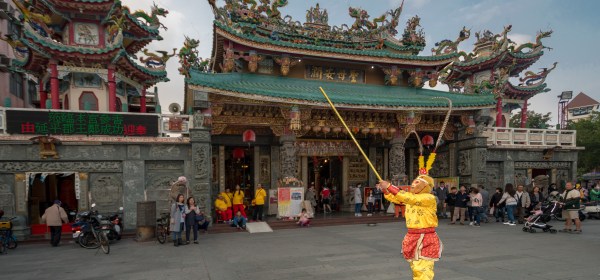
Written by Jasmine Yu-Hsing Chen. In Taiwan, outdoor Taiwanese opera performances next to temples have been essential to Taiwanese religious traditions for decades. Most troupes adhere to the etiquette of performing “classical plays for matinees and opeilas for evening performances.” Unlike performances in the afternoon, which are mostly classical repertoires based on books and legends, evening performances are always energetic. With the accompaniment of an electronic piano and jazz drums, the actors on stage sing pop songs and dress in shining sequin robes, fancy suits, or colourful Japanese costumes. This hybrid performance style has been called “opeila” (oo-phiat-a), which is phonetically adapted from the Japanese pronunciation of “opera” (o-pe-ra オペラ) in Taiwanese. This unique subgenre of Taiwanese opera has livened memories in numerous Taiwanese people and is one of the most concrete testimonies of vital Taiwanese culture.

What Are Taiwanese Comics?

Written by Adina Zemanek. It can be argued that the above are examples of creativity driven by state-led ideological aspirations, which cannot find a wide readership in Taiwan. However, they are intensively promoted to international audiences and may shape their perception of Taiwanese comics. At the same time, the number of such works and the state-encouraged discussions may ultimately lead to a shift in local audiences’ expectations.

The Transformation of Taiwan-Japan Relations from a Historical Perspective

Written by Li-Hsuan Cheng. On July 8th 2022, Abe Shinzo, the longest serving prime minister in postwar Japan, was assassinated while campaigning for an LDP candidate in the coming election for  Upper House. While this tragic incident shocked countries worldwide, few societies like Taiwan showed such strong and wide remorse. Even in Japan, where Mr Abe had enjoyed unprecedentedly high and long support, like most leaders of democratic countries, he could not escape scandals and policy failures that eventually damaged his public support. However, despite some criticisms of Abe’s attitude toward war responsibilities in Taiwan, the mainstream society largely held a very favourable view toward him. One obvious reason is the significant progress in the Japan-Taiwan relation during his terms as prime minister.

Where did the Greatest Art Piece Come From? From Taiwan’s Music Industry to Jay Chou’s Latest Album 

Written by Dr Chen-Yu Lin. his strategy to project Chineseness as a globalising project was best exemplified by Jay Chou’s appearance on the Nasdaq screen at Time Square in January 2019. He was voted the most influential Chinese singer on Kugou (酷狗), the Chinese streaming service owned by Tencent ( 騰訊). However, other than his name, the text shown on the Nasdaq screen alongside a photo of Chou is all in Chinese. Such a projection of a globalising Chineseness caters to the hopes of the well-educated and well-travelled Chinese newly rising classes.

The Changing role of Laotian Coffee in Taiwan 

Written by Chen Szu-An, Translated by Sam Robbins. According to data from the Lao Coffee Association, Taiwan was one of the earliest to enter the Laotian market and invest in coffee production after the government allowed foreign investment in the year 2000. There was even a period where some in Taiwan dreamed of becoming a major player in the development of Laotian coffee. In contrast with the Laotian beans that were first imported to Taiwan as cheap goods, as Taiwanese consumers became more accepting of the idea of “specialty coffee”, Taiwanese business people started to repackage Laotian beans.

At the Consumer’s Convenience – What the Convenience Store in Taiwan Offers

Written by En-chi Chang. The convenience store in Taiwan has been part of daily life in Taiwan. To stay competitive, convenience store retailers remain focused on providing customers with convenient offerings. The current trend echoing the international retail development is the digitalisation of products and customer services. Nevertheless, development such as unmanned stores and metaverse is still in the infant stage. It is exciting to observe whether Taiwanese consumers will well receive services such as 7-Eleven’s X-Store and FamilyMart’s O2 Meta and whether other convenience store retailers will follow this development.

Two Young Indigenous Scholars are Promoting Indigenous artists – in Taiwan and Beyond.

Written by Fanny Caron. Lin and Ismahasan’s academic disciplines and the career path they have chosen to highlight a change in Taiwan Indigenous studies on an international level. These choices enable them to play a part in shifting the discourse on Indigenous Peoples from “objects” of study to active “subjects” of their own (counter-) narrative, supporting their affirmation of Indigeneity and tribal sovereignty.

1 2 3 6