#MeToo in Taiwan’s Music Industry: After Making Waves, Can We Forge a Better Workplace?

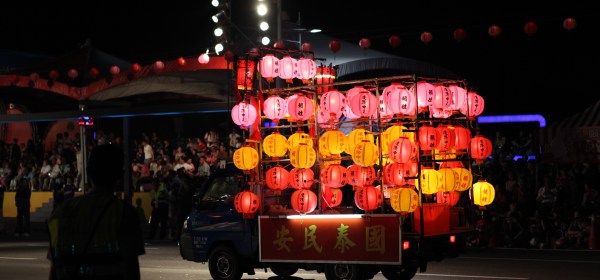
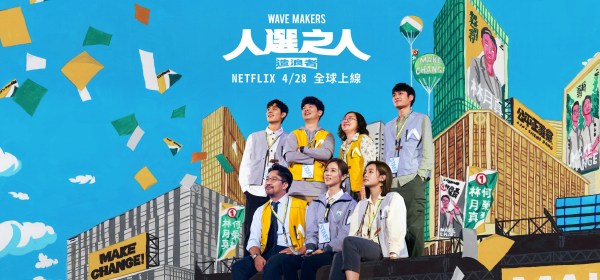
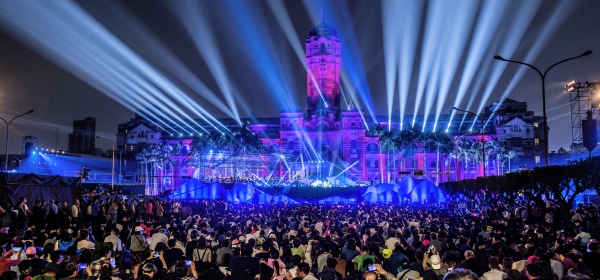
Written by Chen-yu Lin. In 2023, a watershed moment emerged in Taiwan’s #MeToo movement with the resounding success of the Netflix series “Wave Makers.” The show’s resonance was profound, shedding light on sexual harassment and abuse in the workplace. This spotlight inspired survivors from politics, education, arts, and entertainment to break their silence. The waves of #MeToo allegations have not spared Taiwan’s music industry.

The Development of Taiwan Studies at Roma Tre University

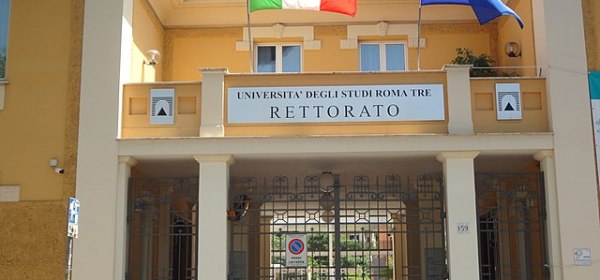
Written by Rosa Lombardi and Silvia Schiavi. Since 2012, Roma Tre University carried out a series of activities to promote the knowledge and dissemination of Taiwanese culture and literature, contributing to the development of Taiwan studies in Italy. Before that, there was very little or no space devoted to Taiwanese literature in Italian universities, and courses in modern and contemporary Chinese literature mainly still deal with Chinese mainland literary production. Given this scarcity of studies on Taiwan in Italy, Prof. Rosa Lombardi and Dr Silvia Schiavi have promoted and implemented a series of events to raise awareness about the island and foster a better understanding of the Sinophone world through the introduction of Taiwan’s rich culture, history and literature to the students and the general public.

Time Travel Dialogue of Two Iconic Artists: Emily Carr (Canada) & Chen Cheng-Po (Taiwan)

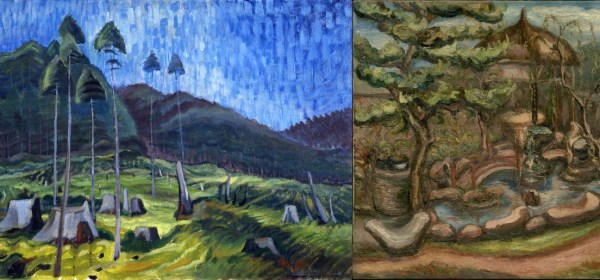
Written by Charlie Smith. Emily Carr (1871-1945), who grew up on the West Coast of Canada, made her mark with vivid paintings of local scenery. She depicted changes in the landscape of British Columbia, touching upon industrialization. Carr was strongly influenced by Fauvism, which was advanced by Henri Matisse, André Derain, and other artists in France. Similarly, Taiwanese artist Chen Cheng-po (1895-1947) devoted much of his career to painting the natural landscape in bold, vivid colours. His oil paintings touched upon industrialization in Taiwan, and he, too, was influenced by Fauvism. 

A Dialogue between Taiwan and Canada

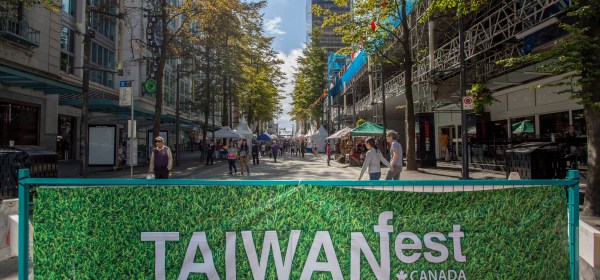
Written by Chee-Hann Wu. The world is filled with diverse cultures and histories, each with its unique narratives and connections. This special issue explores Taiwan and Canada’s fascinating cultural and historical ties. Despite their geographical distance, these two nations share surprising parallels that have shaped their identities and fostered mutual understanding. From immigration patterns to artistic influences, this special issue demonstrates how the cultural and historical connection between Taiwan and Canada is a testament to the power of shared experiences and the ability of diverse nations to forge meaningful bonds.   

Leveraging Cultural Exports for Resilience: Insights from Taiwan and South Korea

Written by Tommy Hall and Margaret Siu. Global discussions about Taiwan often focus on an invasion scenario, and many observers wonder if Taiwan is adequately preparing for war. These discussions often dissect Taiwan’s hard power—military and economic factors that may dissuade Beijing. However, soft power is crucial in conflicts between imbalanced parties. Current discussion would benefit from diversifying outside hard power calculations and examining Taiwan’s soft power. Taiwan should apply lessons from South Korea’s model to bolster its ability to co-opt global support. Describing Taiwan’s soft power vision and comparing both nations’ top-down cultural promotion efforts is helpful.

Tminun: Weaving from My Heart as an Indigenous Male

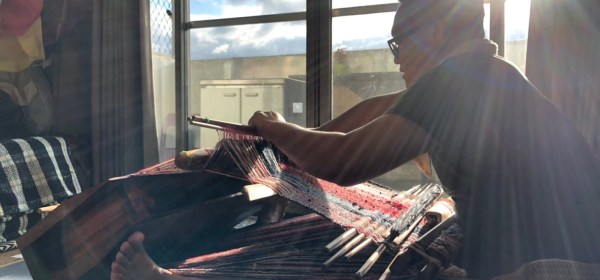
By Peydang Siyu (Chu, Hao-jie); translated by Huang, Hsing-hua. I am a member of the Truku people; the twelfth officially recognised Indigenous nation in Taiwan. We believe in our ancestors’ spirits (utux rudan) and adhere to their teachings (gaya) throughout our entire lives. Cloth weaving (tminun), similar to facial tattooing (ptasan), is a significant part of Truku culture, and many of our customs are related to it. For example, there is a strict gender division of labour in traditional Truku society, with men hunting and women weaving. Men were prohibited from learning how to weave or even touching the tools. As a male, it wasn’t until 2018 did I dare to learn it. But once I began, I never stopped. It was definitely a dream-come-true journey that I would forever remember.

Encountering Ancestors Along the Path of Weaving

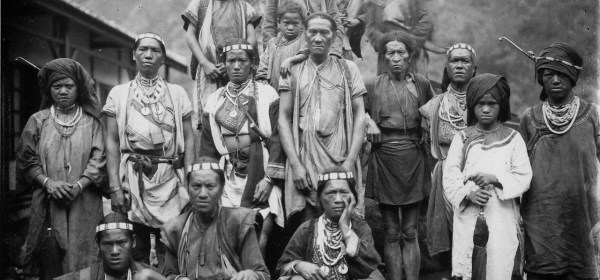
Written by Langus Lavalian. Ibu is currently the youngest weaver in Haitutuan Township. When she was learning to weave with our grandmother, she had a dream in which she met a silent elderly female who requested Ibu to watch her weaving process. Traditionally, outsiders are not allowed to watch or learn the weaving process. However, this old lady appeared to be weaving purposely for Ibu and instructing her step by step. Since taisah, which refers to dream, is vital to the Bunun, Ibu believes that this is the path guided by our ancestors. 

A sketch of Taiwanese Christianity

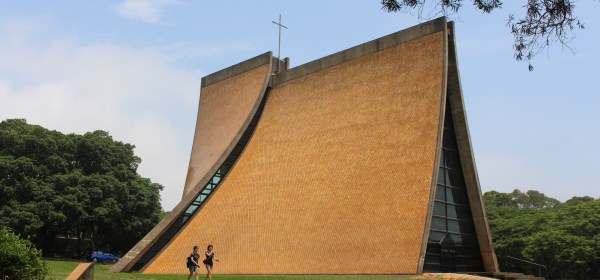
Written by Wen-Hsu Lin. According to statistics from 2017, about 6% of the Taiwanese populace are Christian. Despite having a history dating back several centuries, Taiwan’s Christian community remains largely understudied and rarely discussed. Scholars have tried to better understand this group using survey data. Through the data, we first reveal the demographic characteristics of Taiwanese Christians. More importantly, under the well-documented trend that the country  has become more secularized, we further investigate whether Christian faith still matters to Christians’ behaviour and attitude toward social issues.  

Towards a Better New Normal: The Solidarity of Differences and Cultural Safety of Public Health  

Written by Po-Han Lee. The ethical imperative of the human rights-based approach to public health requires the ‘acceptability’ (including cultural appropriateness) of health policymaking, impact assessment, and care services. In this context, Cultural competence in public health practices is concerned with ‘health for all’ through ‘safety for all’. That is, the principle of cultural safety, along with awareness of intersectional marginalisation, is to eliminate health inequities due to systemic racism and eventually decolonise public and global health practices.

TAKING A LEAF OUT OF TAIWAN (AND VIETNAM): HOW “TAIWANESE” IS TAIWANESE BUBBLE TEA? 

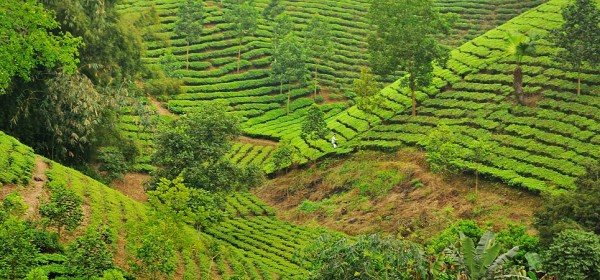
Written by Kuan-Ren Yun (雲冠仁), translated by Sam Robbins. As Bubble tea has taken over the world and increasingly become a symbol of Taiwan, this unique Taiwanese flavour has only been possible by importing large qualities of tea leaves, including the Vietnamese tea leaves that so many Taiwanese have grown sceptical of. Taiwanese people have felt pride in the success of bubble tea sales, but they also continue to reject foreign tea leaves and see them as only authentic when only Taiwanese tea leaves are used.

Taking a leaf out of Taiwan (and Vietnam): How “Taiwanese” is Taiwanese bubble tea? 

Written by Kuan-Ren Yun (雲冠仁), translated by Sam Robbins. When I was in Vietnam from 2016 to 2018, there was a time of immense market transformation underway that raised a very interesting question: The now-famous “Taiwanese bubble tea” had become reliant on Vietnamese tea leaves in Taiwan, and it was only after the transition to Vietnamese tea leaves was made could Taiwanese bubble tea be produced at such a scale to become a global phenomenon.

1 2 3