Why Taiwan’s Family Businesses Still Rule and Why It Matters

Written by Zong-Rong Lee. As part of the Taiwan Insight–IJTS special issue on the Topical Section “Transitions and Challenges in Taiwan’s Economy and Society,” this article presents Zong-Rong Lee’s study on Taiwan’s enduring family capitalism. It traces how political patronage, kinship networks, and market reforms sustained family dominance, raising concerns about competition and long-term adaptability.
Introduction to The Topical Section on ‘Transitions and Challenges in Taiwan’s Economy and Society’ 

Written by Zong-Rong Lee and Thung-Hong Lin. This article introduces the Taiwan Insight–IJTS special issue on the Topical Section “Transitions and Challenges in Taiwan’s Economy and Society.” Initiated as an open invitation to scholars worldwide, the Topical Section reflects on Taiwan’s economic transformation, convening debate on structural shifts, their consequences, and the pressing challenges shaping Taiwan’s future. 

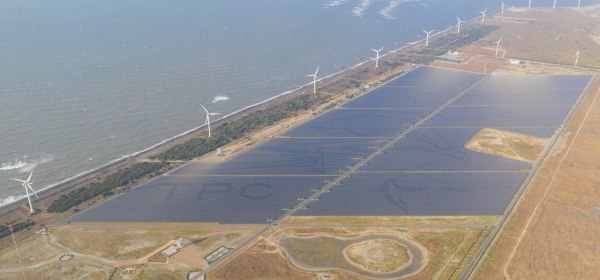
Crops, Houses, or Panels? The Land-Use Conversions of Taiwan Farmland

Written by Tsai Chia-Shen. Decades after opening to free trade, Taiwan’s food sufficiency rate has slid and maintained between 30-35% after 2003 (CoA 2020), reflecting a severe food insecurity status that has raised public concern over the quantity and quality of farmland. Although referring to other lately industrialised countries, it is prevalent that the agricultural share of GDP shrinks in the history of industrial transition, the decrease of employment in the agricultural sector still indicates the risk of losing food security, food sovereignty, and even State sovereignty.

President Lee Teng-hui as a Scholar- A Recollection and Tribute: part I

Written by Frank S.T. Hsiao The year 2000 saw the first peaceful regime change from the long-governing KMT (in power since first coming to Taiwan in 1945) to the Democratic Progressive Party (DPP). All these were accomplished adroitly without bloodshed. He did not even have his own political clique, military backup and secret service supports. Unquestionably, Lee was indeed one of the greatest politicians in the World. The Taiwanese and foreign media have very well documented all these achievements. What is seldom mentioned is his academic achievements and scholarship in the field of Agricultural Economics and his various writings.

Welfare State System Development in Taiwan: The Causal Determinants of the Past and the Future

Written by Christian Aspalter. Taiwan today has a relatively comprehensive welfare state system due to the work of Lee Teng-Hui and millions of Taiwanese. These citizens pushed the very same man to open and safeguard the process of democratisation back in the late 1980s, and to set up the first major system of the Taiwanese welfare state, the universal National Health Insurance, back in 1996. Lee listened to what people wanted, and that means all of the Taiwanese people, not just the elite, the ancient regime of the Kuomintang (KMT) or the business tycoons. Other leaders behaved quite differently.

Does the state of the economy matter when explaining presidential approval ratings in Taiwan?

Written by Eric Chen-hua Yu. Empirical studies on presidential approval ratings in the US and other OECD countries have long concluded that the state of the economy is an important factor explaining the rise and fall of presidential approval ratings. Specifically, when economic conditions are good, the sentiment toward the president will be positive. In light of this correlation, does the presidential approval rating in Taiwan follow such a pattern?