After Fukushima, Japan is Re-investing in Nuclear. Why Won’t Taiwan?

Written by Lena McEachern. This article argues that Taiwan should reinvest in nuclear energy for its energy security in the current geopolitical climate. It is also a relatively environmentally clean energy source. Although the referendum to open Maanshan reactor did not reach the legal threshold necessary to pass, the DPP should build momentum towards restarting decommissioned reactors.

KMT Likely to Cry Foul Over Referendum Decision by Central Election Commission

Written by Brian Hioe. The Central Election Commission (CEC) has approved a referendum on resuming operations for the recently shuttered Ma-anshan nuclear power plant, while rejecting a referendum on capital punishment. Although the KMT pushed for both referendums as part of its electoral strategy, it did not appeal to the general public with either referendum, perhaps reflecting weakness of the KMT at the local level.

Semiconductor and Renewable Energy: Taiwan-Vietnam Cooperation under New Leadership

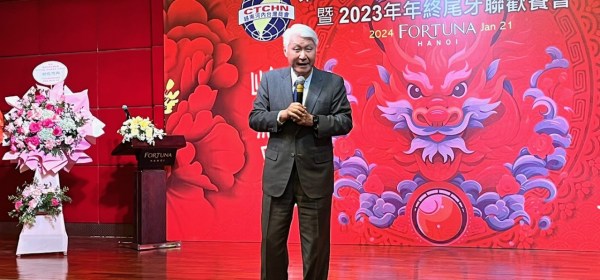
Written by Tran Thi Mong Tuyen. Since the 1990s, Taiwan’s government has championed the “Go South” and “New Southbound” policies, catalyzing Taiwanese entrepreneurship across the Association of Southeast Asian Nations (ASEAN). Vietnam, boasting a stable economy, ample labour force, a youthful demographic, and rich natural resources, has emerged as a prime destination. This article focuses on the recent cooperation between Taiwan and Vietnam in different industries, and proposes potential future collaborative opportunities between the two.

Taiwan’s energy policy at the crossroads in the presidential election in 2024? 

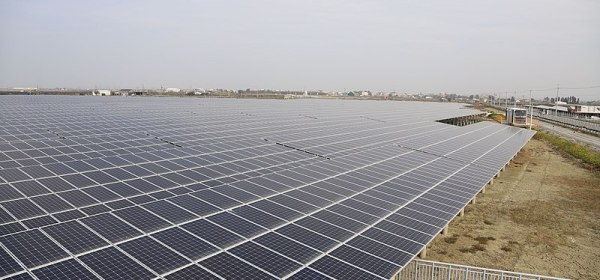
Written by Anthony Ho-fai Li. Energy policy remains a highly controversial policy arena in Taiwan after democratisation, given its importance for Taiwan’s security, environmental sustainability and economic development. Under the presidency of Tsai Ing-wen, the agenda of “Nuclear-free Homeland 2025” (2025非核家園) proposed by the Democratic Progressive Party (DPP) in 2016 has been subject to political challenges, which involved the debates about the use of nuclear energy beyond 2025 and the reduced capacity of coal-fired electricity plants for air pollution mitigation. The policy strategy to replace nuclear energy with rapid solar energy development has also faced enormous social challenges as its large-scale installation conflicts with the existing land uses. 

The Democratic Progressive Party’s Nuclear Policy Dilemma: An Unwavering Anti-Nuclear Stance Amidst Self-Contradictory Policies

Written by Minfan Yu. On May 28th, the DPP-affiliated presidential campaign candidate William Lai Ching-Te (賴清德) stirred controversy by responding to a question about whether the cross-strait tensions faced by Taiwan had resulted in a shortage of natural gas for electricity production. Despite being a staunch advocate for green energy and consistently promoting an anti-nuclear stance, Lai’s answer suggesting the potential reactivation of nuclear power plants in emergency situations appeared contradictory to the DPP’s anti-nuclear policy.

Energy transition in Taiwan: Generating electricity with love, or inclusive public engagement?

Written by Anthony H. F. Li. A stable electricity supply is vital for national security, economic development as well as the everyday lives of citizens in Taiwan. Since the Democratic Progressive Party (DPP) pursued an ambitious policy to decarbonise the electricity sector with renewable energies and to phase out nuclear energy by 2025, the discussion on whether Taiwan is facing a shortage of electricity amidst the process of energy transition emerges on the social agenda from time to time.

Taiwan-UK Offshore Wind Cooperation Successes Should be Big News at COP26

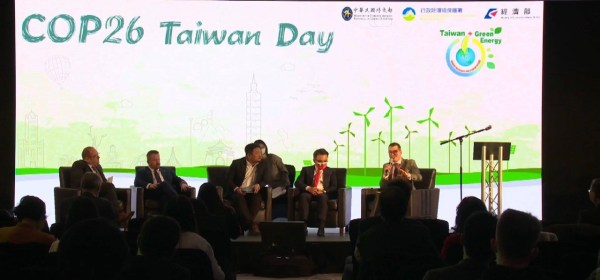
Written by Col. Bob Stewart and Lord Rogan. With the COP26 Conference in Glasgow fast approaching, the UK Government has made the challenge of addressing climate change a priority for post-Brexit Britain. It is one of the platforms being used to launch ‘Global Britain’ back onto the world stage, and there is a great deal riding on COP26 delivering tangible results that can make a real difference in the years ahead.

Taiwan’s Perfect Storm: Covid Spikes, Water Shortages, and Power Outages

Written by Denis Simon. In early 2021, Taiwan’s health care system was ranked number one globally for the third year in a row by NUMBEO’s Annual Online Survey. Its overall performance buoyed the island’s ability to consistently earn such a high ranking during the first 12-14 months of the Covid-19 global pandemic beginning in 2020. Taiwan officials initially were able to ward off any significant damage from the pandemic by pursuing a highly aggressive strategy to keep the virus at bay. While other international rankings, such as the World Index of Healthcare Innovation, do not rank Taiwan as number one in its rating system, there is consensus across the board internationally that the government has proven itself highly effective at managing its single-payer health care system, mainly due to its innovative approach to digital health records.

The Political Aspect of Taiwan’s Energy Policy and Reliance on Natural Gas

Written by Milo Hsieh. Recently, discussions around energy have emerged again as interest groups fight over whether it is right for the Tsai administration to install a new natural gas receiving station in Taoyuan near an algae reef habitat. Although the term “algae reef (藻礁)” became social media’s hot topic in Taiwan for a while—similar to how “Salmon” has grabbed the attention of many these past weeks—underlying energy issues have not really been discussed.

1 2