After Fukushima, Japan is Re-investing in Nuclear. Why Won’t Taiwan?

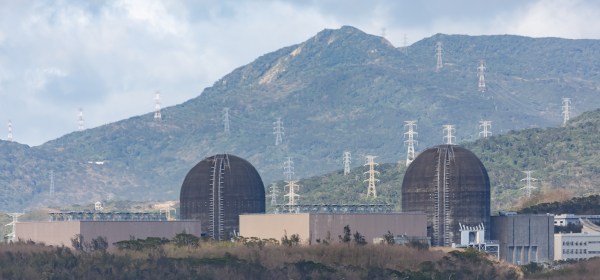
Written by Lena McEachern. This article argues that Taiwan should reinvest in nuclear energy for its energy security in the current geopolitical climate. It is also a relatively environmentally clean energy source. Although the referendum to open Maanshan reactor did not reach the legal threshold necessary to pass, the DPP should build momentum towards restarting decommissioned reactors.

The Democratic Progressive Party’s Nuclear Policy Dilemma: An Unwavering Anti-Nuclear Stance Amidst Self-Contradictory Policies

Written by Minfan Yu. On May 28th, the DPP-affiliated presidential campaign candidate William Lai Ching-Te (賴清德) stirred controversy by responding to a question about whether the cross-strait tensions faced by Taiwan had resulted in a shortage of natural gas for electricity production. Despite being a staunch advocate for green energy and consistently promoting an anti-nuclear stance, Lai’s answer suggesting the potential reactivation of nuclear power plants in emergency situations appeared contradictory to the DPP’s anti-nuclear policy.

Energy transition in Taiwan: Generating electricity with love, or inclusive public engagement?

Written by Anthony H. F. Li. A stable electricity supply is vital for national security, economic development as well as the everyday lives of citizens in Taiwan. Since the Democratic Progressive Party (DPP) pursued an ambitious policy to decarbonise the electricity sector with renewable energies and to phase out nuclear energy by 2025, the discussion on whether Taiwan is facing a shortage of electricity amidst the process of energy transition emerges on the social agenda from time to time.

The Limits of “Ecological Development”: Making Existing Lifeworlds Visible on Taipei’s Shezidao

Written by Aaron Su. In March 2023, yet another round of protests broke out in response to development plans on Taipei’s Shezidao, a flood-prone peninsula on the outer edges of the city home to over 11,000 residents. Spanning multiple mayoral regimes, the Taipei government’s plans to construct on the currently development-restricted Shezidao has been met with dissatisfaction time and again from its residents, who worry about how seemingly optimistic promises of uplift and revitalization spell evictions and other drastic changes to their existing economies, social networks, and modes of life. 

Excavating Ancient Knowledge: Climate Action and the Practice of Sustainability

Written by Chung-chun Wang. Since museums are highly and closely related to society and the public with their transformation, the new definition demonstrates that accessibility, inclusiveness, diversity and sustainability are the key aspects that echo the contemporary trends. Therefore, museums usually aim to include these notions in their plans, research, and exhibitions. For example, the emphasis on “environmental education” is widely seen in museums, as it is directly linked with sustainability associated with the current energy and food crises. In this regard, how does archaeology, a discipline considered an old, ancient, and mysterious field with studying prehistories and peoples, respond to the vision of sustainability?

A plant out of water: Taiwanese greens in Thailand

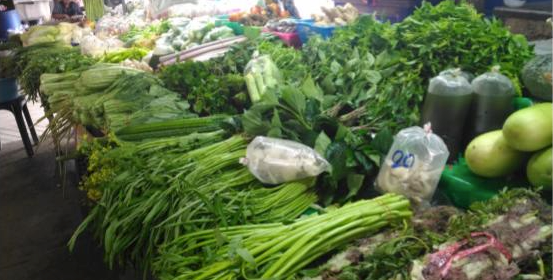
Written by Angel Chao (趙于萱), translated by Sam Robbins. In supermarkets in Thailand, you can find Thai hydroponic vegetables labelled as ‘Taiwanese greens.’ Why? Because these plants are grown in Thailand by Taiwanese businesspeople who brought Taiwanese hydroponic technology to Thailand, using Taiwanese equipment to grow crops in Thailand.

Food, Politics and Solidarity Economies in Taiwan

Written by I-Liang Wahn. Food plays a central role in Taiwanese culture, with the evolution of Taiwanese cuisine mixing multiple historical influences and constituting unique identities. But food is also increasingly a political topic and a field for solidarity economies. The politics of food was especially brought to the fore in three developments last year: a series of political events around food, the celebration of a milestone by two independent food media, and an academic conference devoted to food activism.

Taiwan’s Green Efforts

Written by Chien Te Fan. Taiwan, also known in Europe as Formosa in the mid-16th century, is an island country with rich biodiversity. However, in the Pacific Rim seismic zone and the main path of typhoons in the Northwest Pacific region, Taiwan has been one of the most vulnerable countries threatened by the current climate crisis. Therefore, since the late 19th century, Taiwan has been striving to maintain its precious natural resources and resilience to survive the effects of industrialisation and adapt to climate change.

Is Taiwan Ready to Go Net-Zero by 2050?

Written by Ming-sho Ho. On Earth Day (April 22) of 2021, Taiwan President Tsai Ing-wen unveiled the goal of realizing carbon neutrality by 2050. By then, Taiwan is expected to absorb or eliminate all locally generated greenhouse gas to reduce the net emission to zero. Tsai reiterated this pledge in the National Day (October 10) speech. The government is also preparing to amend the 2015 Greenhouse Gas Reduction and Management Act (GGRMA) by stipulating the net-zero commitment and adopting the measure of carbon pricing. As the world leaders are gathered for the Climate Change Conference of the Parties (COP26), more than 130 countries made official promises to go net zero.

Covid-19 and the Environmental Impacts of Domestic Tourism

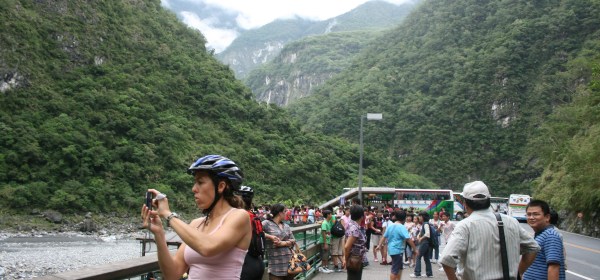
Written by Tzu-Ming Liu. The outbreak of COVID-19 has significantly affected Taiwanese’ travel destination choices. One of the most significant changes is the recent boom of citizens’ participation in nature-based outdoor recreation. These changes have clear influences on the environment. Some are positive, and some are negative. This impact can be observed in Taroko National Park and Yushan National Park. However, for destinations that have been heavily impacted by tourism, such as Lanyu, the sudden tourist increase makes environmental problems much worse.

Tao People’s Fight for Environmental Justice and Subjectivity on Orchid Island

Written by Mei-Fang Fan. At the meeting of the Presidential Office Indigenous Historical Justice and Transitional Justice Committee in March 2018, the convener of the cabinet-level Fact-Seeking Committee and other committee members urged the government to formulate compensation regulations as soon as possible to compensate the Tao tribe. The Executive Yuan had approved guidelines for the compensation and that a fund management board that includes residents will be established. However, Tao elder anti-nuclear activists said that the Tao tribe rejects the compensation at a protest in front of the Executive Yuan on 29 November 2019.

1 2 3 4